Languages
Tuesday, April 23, 2024



News and Views from the Global South

Q&A: Land and Victims Law Crucial for Millions of Displaced Farmers in Colombia
The Victims and Land Restitution Law, signed Friday by Colombian President Juan Manuel Santos, "is an important message for reconciliation in the country," said lawmaker Guillermo Rivera, one of the sponsors of the law.
COLOMBIA: Displaced Campesinos Want a Say on Land Restitution Bill
The Colombian government has been extolling a bill on Victims and Land Restitution which is being debated in Congress and is receiving extensive media coverage. But the demands of the victims themselves, forcibly displaced campesinos, are falling on deaf ears.
HEALTH-COLOMBIA: Controversy Still Surrounds Malaria Vaccine Pioneer
The announcement of progress towards making synthetic vaccines against 517 infectious diseases, and the award of an international prize for his work have stirred up lively controversy around Colombian pathologist Manuel Elkin Patarroyo, a malaria vaccine pioneer.COLOMBIA: Return of Land to Displaced Farmers Picks Up Steam
"Wholesale land titling" Colombia's Minister of Agriculture and Rural Development Juan Camilo Restrepo announced Tuesday, adding that titles would no longer only be handed over to individuals who file land claims, but to entire groups of people in specific rural areas.
Colombia: World Leader in Forced Displacement
"We want to shout out to the world, and no one will be able to keep us silent: forced displacement is still happening in Colombia, which is why we are asking for solidarity. We aren't terrorists, we aren't criminals; we are farmers whose dignity and rights have been stolen from us."COLOMBIA: Increasingly Broad Social Movements Fight Mining
Social mobilisation against gold-mining is growing in Colombia, which is now one of the world's biggest per capita polluters of mercury, used in artisanal mining, according to the United Nations Industrial Development Organisation (UNIDO).COLOMBIA: Food Prices Rise after Record Rains
Food prices are set to rise in Colombia, due to the combined effects of soaring international prices and local crop losses after nine months of devastating rains. The government expects food prices to rise three percent in February, while independent analysts forecast an increase twice as high.
COLOMBIA: New Boost for Rural Women
"It sounds nice, but it’ll be tough to implement"; "the most important thing is to translate into reality": These statements by rural women leaders in Colombia sum up the reaction of activists to the government’s decision to revive and refinance a special fund for projects in the countryside led by women.
COLOMBIA: Voices of Women Peace Activists Silenced
"When we women speak out, without showing fear, we pay a high price: living with that fear," says one peace activist in Colombia. "The threats will not stop us from working for peace and social justice," says another.
COLOMBIA: Santos Inherits Country of Economic Contrasts
During the eight years that Álvaro Uribe governed Colombia, annual economic growth averaged 4.3 percent. Nevertheless, President Juan Manuel Santos, who was sworn in on Saturday, has taken over a country with the highest unemployment rate in Latin America.COLOMBIA: Dismal Human Rights Record Has Not Dented Uribe’s Popularity
Colombian President Álvaro Uribe ends his second consecutive term Saturday with 75 percent approval ratings and strong international support reflected by his designation this week as vice chair of a United Nations-appointed international panel to investigate Israel's attack on a flotilla of ships carrying humanitarian aid to Gaza in May.
COLOMBIA: Report Suggests “Correlation” between U.S. Aid and Army Killings
"There are alarming links between increased reports of extrajudicial executions of civilians by the Colombian army and units that receive U.S. military financing," John Lindsay-Poland, lead author of a two-year study on the question, told IPS.
COLOMBIA: Midwives Seek Legal Recognition, Respect
In Colombia, western medicine has nearly succeeded in pushing midwives -- "parteras" or "comadronas," as they are known in Spanish -- out of existence. But some tenacious practitioners are pushing for a law to formalise the role of midwife as a health worker.
COLOMBIA: Drug Trade’s Hold on Football Persists
Football, the most popular sport in Colombia, has been subject to heavy pressures from drug trafficking since the mid-1970s. A new study shows that the illicit trade continues to tarnish the upper echelons of this sport.
COLOMBIA: Initiative for Water as a Human Right Sinking in Congress
Colombian civil society organisations gathered more than two million signatures to ask Congress to hold a referendum on a constitutional amendment that would make access to water a fundamental human right. But Congress gutted the draft referendum bill this week by eliminating the clause on water as a human right.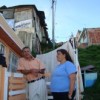
COLOMBIA: After Forced Displacement by Conflict, Relocation by Landslide
More than 380 families -- some 2,000 people -- in this vast working-class district on the fringes of the Colombian capital that is home to hundreds of thousands of people displaced by the armed conflict are to be relocated after landslides caused by leaking water pipes.
Women Punished Twice Over in Colombia’s Prisons
"Loss of freedom should not mean loss of fundamental rights," Diana Sánchez, a lawyer with the Political Prisoners Solidarity Committee (CSPP), told IPS. "But in Colombia prisoners are punished twice over: with a prison sentence, and with restrictions on their other rights."COLOMBIA: FARC Calls for Prisoner Swap After Releasing Moncayo
Hopes that a humanitarian prisoner-for-hostage swap may be negotiated in Colombia before August added to the emotion over the release of Sergeant Pablo Emilio Moncayo by the FARC guerrillas Tuesday and his reunion with his family after more than 12 years in captivity in the jungle.COLOMBIA: Rebels Release Wounded Soldier
After Colombia’s FARC rebels released 23-year-old soldier Josué Daniel Calvo, Colombian President Alvaro Uribe said he is not opposed to a humanitarian swap of imprisoned insurgents for hostages, as long as the guerrillas do not return to the fighting.COLOMBIA: Who Cares About the Victims of Forced Displacement?
"Why is the government, which is so generous towards the richest sectors of the economy, so stingy towards the displaced?" asked activist Marco Romero at the presentation of a new report on the dire situation faced by the millions of Colombians who have been forced out of their rural homes by the country's nearly half-century old armed conflict.RIGHTS-COLOMBIA: Soldiers Accused of Extrajudicial Killings Freed
Over the last two weeks, 31 Colombian soldiers accused of the forced disappearance and murder of 11 young men from the poor Bogotá suburb of Soacha have been released from prison on the grounds that they were not formally indicted within 90 days of their arrest, as established by Colombian law.« Previous Page — Next Page »







The Week with IPS

NEXT STOP - SDGs
Tracking global progress towards a sustainable world
Tracking global progress towards a sustainable world
