Languages
Saturday, April 20, 2024



News and Views from the Global South

Declining Majority Still Supports “Active” U.S. Role in World Affairs
Despite elite concerns about growing “isolationism” in the U.S. electorate, nearly six in 10 citizens believe Washington should “take an active part in world affairs,” according to the latest in a biennial series of major surveys of U.S. foreign-policy attitudes.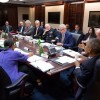
Obama’s Anti-ISIS Strategy Met with Scepticism
U.S. President Barack Obama’s new strategy to “degrade, and ultimately destroy” the Islamic State of Iraq and Syria (ISIS) is being met with widespread scepticism among both hawks and doves, as well as regional specialists.
Global Commission Urges Decriminalisation of Drug Use
A top-level international panel called Tuesday for a major shift in global drug-control policies from prohibition to decriminalisation and regulation.
ISIS Carrying Out Ethnic Cleansing on “Historic Scale”
While the administration of U.S. President Barack Obama ponders broader actions against the Islamic State of Iraq and Syria (ISIS), Amnesty International Tuesday accused the group of carrying out ethnic cleansing in Iraq on a “historic scale.”
Obama Mulling Broader Strikes Against ISIS?
This week’s video-taped beheading of a U.S. journalist by the Islamic State of Iraq and al-Sham (ISIS) has spurred renewed calls for President Barack Obama to broaden Washington’s military efforts to strike the terrorist group, including in Syria.
Public Offers Support for Obama’s Iraq Intervention
Despite rising criticism of his foreign policy– even from his former secretary of state – U.S. President Barack Obama’s decision last week to carry out airstrikes against Islamic State of Iraq and al-Shams (ISIS) militants in northern Iraq enjoys relatively strong public support, at least so far.
Qualified Backing for Obama’s Iraq Intervention
U.S. President Barack Obama’s authorisation of limited military action in northern Iraq, announced in a national television address late Thursday night, has so far received support – albeit highly qualified in some cases -- from across the mainstream political spectrum.
Africa Activists Urge Obama to Act on Extractive Industries Law
As the three-day U.S.-Africa Leaders Summit got underway here Monday, anti-corruption activists urged President Barack Obama to prod a key U.S. agency to issue long-awaited regulations requiring oil, gas, and mining companies to publish all payments they make in countries where they operate.
U.S. Summit Seeks to Play Catch-Up in Africa
Despite worsening crises in Ukraine, Gaza, and elsewhere in the Middle East, the administration of President Barack Obama hopes next week to focus at least some more positive attention on Africa.World Bank Board Declines to Revise Controversial Draft Policies
A key committee of the World Bank’s governing board Wednesday spurned appeals to revise a draft policy statement that, according to nearly 100 civil-society groups, risks rolling back several decades of reforms designed to protect indigenous populations, the poor and sensitive ecosystems.U.S., Obama’s Image Remains Positive Worldwide
While Republicans and other right-wingers claim that President Barack Obama has inflicted unprecedented damage on Washington’s global reputation, a major new global survey suggests that the image of the U.S. remains generally positive.Bahrain’s Expulsion of U.S. Official Sets Back Ties, Reform Hopes
Monday’s expulsion order by Bahrain against a visiting senior U.S. official has set back tentative hopes for internal reforms that could reconcile the kingdom’s Sunni-led government with its majority Shia community and drawn a sharp protest from Washington.U.S.: What Is the Greatest Threat of Them All?
This month’s stunning campaign by Sunni insurgents led by the radical Islamic State of Syria and the Levant (ISIL) against the mainly Shi’a government of Iraqi President Nouri Al-Maliki is stoking a growing debate here about the hierarchy of threats facing the United States in the Middle East and beyond.In Latest Republican Split, Tea Party Takes on Export-Import Bank
U.S. Big Business is going all out to protect a favoured government agency, the 80-year-old Export-Import Bank (Ex-Im), from a full-fledged assault by the populist “Tea Party” wing of the Republican Party.
Obama, Rights Groups Protest Egypt Sentencing
The administration of President Barack Obama joined international human rights groups around the world in “strongly condemn(ing)” Monday’s conviction and sentencing by an Egyptian court of three Al Jazeera journalists and 15 others for their alleged association with the outlawed Muslim Brotherhood.
Neo-Cons, Hawks Can’t Get No Iraq Traction
Despite their ubiquity on television talk shows and newspaper op-ed pages, neo-conservatives and other hawks who propelled the U.S. into war in Iraq 11 years ago are falling short in their efforts to persuade the public and Congress that Washington needs to return.International Cooperation on Key Issues Fell in 2013
International cooperation on key global challenges declined in 2013, according to a new “report card” released here Friday by the influential Council on Foreign Relations (CFR).Arab Publics Prefer Light U.S. Footprint, Even in Syria
In contrast to some of their leaders, people across the Arab world prefer President Barack Obama’s efforts to reduce Washington’s military footprint in the Middle East to the approach favoured by neo-conservatives and other U.S. hawks, according to the latest in a series of surveys of Arab public opinion released here Tuesday.Obama Stresses Multilateralism over Militarism at West Point
U.S. President Barack Obama Wednesday stressed multilateralism over militarism in what was billed as a major foreign policy address and a rebuttal to an ever-louder chorus of criticism, mostly by Republicans and neo-conservatives, that his tenure has been marked by weakness and retreat.Obama Announces Final Afghanistan Withdrawal by End-2016
U.S. President Barack Obama announced Tuesday his intention to withdraw all U.S. troops from Afghanistan by the end of 2016.Sanctioning Venezuela Unlikely to Defuse Tensions
Pending legislation calling for U.S. President Barack Obama to impose sanctions against key Venezuelan officials is unlikely to defuse the ongoing crisis there and could prove counter-productive, according to both the administration and independent experts here.
« Previous Page — Next Page »





The Week with IPS

NEXT STOP - SDGs
Tracking global progress towards a sustainable world
Tracking global progress towards a sustainable world
