Languages
Tuesday, June 9, 2026



News and Views from the Global South

Lahore’s Smog: With the Sun Out, the Government Lifts Restrictions
Atif Manzoor, 45, the owner of the renowned blue pottery business in Multan, had every reason to feel cheerful last week when the sun finally came out. For a good three weeks, the city of Sufi shrines had been shrouded in an envelope of thick smog.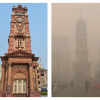
Lahore’s Dangerous Smog: Where Disease and Death Stalk
"It's been horrible; I've been sick on and off for the last 10 days," said 29-year-old asthmatic Natasha Sohail, who teaches A-Level students at three private schools in Lahore. Last week, her condition worsened with a vertigo attack and fever. “It’s criminal what is happening here,” said an incensed Sohail, referring to the “band-aid measures” taken by the Punjab government.
Climate Change Poses Yet Another Stumbling Block for Pakistani Sportswomen
Goalkeeper Rehana Jamali, 17, is jubilant. Her team came in second in the All Sindh Women Hockey Tournament, held last month.
Small Farmers Feeling Climate Change Heat Find Little Support From the State
The over 20 million residents of Pakistan’s port city of Karachi, in Sindh province in particular, have been experiencing brutal heat since May. But they are not the only ones bearing the brunt of high temperatures and humidity. Up to 15,000 cattle died due to scorching heat mixed with high humidity which Shakir Umar Gujjar, president of the Cattle and Dairy Farmers Association, Pakistan, said was “no joke”.
Indignity, Disease, Death—The Life of a Sewer Worker in Pakistan
A dark head emerges, followed by the torso. The balding man heaves himself up, hands on the sides of the manhole, as he is helped by two men. Gasping for breath, the man, who seems to be in his late 40s, sits on the edge, wearing just a pair of dark pants, the same color as the putrid swirling water he comes out from.
Fine, Sanctions, or Waiver: Iranian Gas Will Come at a Price for Pakistan
When Iranian President Ebrahim Raisi visits Pakistan this week (April 22, 2024), experts say the two issues topmost on his mind that he will want to discuss with his Pakistani counterpart, President Asif Ali Zardari, will be border security and the Iran-Pakistan gas pipeline.
Why Farmers in India and Pakistan Are Shifting to Natural or Regenerative Farming
Nine years ago, farmer Sultan Ahmed Bhatti gave up tilling the soil and using most fertilizers and pesticides on his farm in Doober Bhattian, Pakistan. His brothers at first derided him. But soon, his first experiment with growing wheat on raised beds was a runaway success. “We produced more wheat than what we grew on ploughed, flat land,” he said.
In Pakistan, Death Can Be Just a WhatsApp Share Away
Justice Zafar Yab Chadhar's March 6 order sentencing 22-year-old Junaid Munir to ‘be hanged by his neck till he is dead’ on charges of sharing blasphemous material over WhatsApp was devastating for his family. “The earth moved from underneath my feet,” is how 57-year-old Chaudhry Munir Hussain, Munir’s father, described his feelings as he heard the judge read out the judgment that day in a court in Gujranwala, a city in Punjab province.
International Women’s Day, 2024
In a Fearless Gesture, Woman Police Officer Averts Mob Lynching
Since the start of the year, there has been very little to celebrate for Pakistanis. Disrupted social media, escalating electricity, fuel, and food prices, and newly-held elections mired in controversy. But then, Assistant Superintendent of Police (ASP), Syeda Shehrbano Naqvi, did something that brightened the days of despair.
The 31-year-old’s courageous overture and foresight in the face of a potentially explosive situation have given Pakistan a reason to stand among the countries on this year’s Women’s Day with pride.

Snow Tales: ‘Too Little, Too Late,’ Say Climate Experts
Alpine skier, 28-year-old Muhammad Karim, has spent the winter with his eyes skyward, wishing and hoping for deep and abundant snow. “My bread and butter depend on the snow,” said the Olympian, who is also a ski trainer, at Naltar Ski Resort, in the valley by the same name nestled in the Gilgit-Baltistan’s Karakoram mountain range.
Mass Protests Send Message of Solidarity with Palestinian People
To mark the International Day of Solidarity with the Palestinian people condemning Israel’s war on Gaza, protests were held on Wednesday across the globe, from Tokyo to Manila, Tehran and Beirut, Stockholm and London, and in Harare, Johannesburg, Quezon City, and Milan.
COVID-19 Vaccine Hesitancy: Sharing ‘Real-Time’ Data, Consistent, Simple Messaging Helps
After months of warding off appeals from his employers to get vaccinated for the COVID-19 disease, Mohammad Yusuf, 24, working as a live-in domestic worker in Karachi’s Clifton area, finally relented and got his first shot.
South Asian Community Health Workers Say Their Work is Work
“Professionally, I am still where I was 23 years ago when I started working as a lady health worker (LHW),” said a disgruntled Yasmin Siddiq, 47, from Karachi. “I will probably retire in the same capacity, as a Grade 5 government servant, without any hope for upward mobility.”
A Shot in the Arm Can Prevent Cervical Cancer
“Listen to your body, and if there is anything strange happening, do not ignore it,” is the advice of 57-year-old Afshan Bhurgri, a cancer survivor.
Vaccination Is the Best Bet Against Drug-Resistant Superbugs — Experts
The first thing you notice about eight-month-old Manahil Zeeshan is how tiny she looks on the adult-size hospital bed at the government-run Sindh Institute of Child Health and Neonatology (SICHN) in Korangi, a neighbourhood in Karachi.
Star Wars Director Sharmeen Obaid-Chinoy — Symbolises A Litany of Firsts For Women
The announcement by Lucas film’s president, Kathleen Kennedy, about the upcoming three new live-action Star Wars films was enough for lawyer Maliha Zia to get euphoric.
Afghan Refugees Fear Return as Pakistan Cracks Down on Migrants
“If I return to Afghanistan, the Taliban will kill me; I’m prepared to stay in a prison in Karachi than face those ruthless people,” said 24-year-old Afghan refugee, Sabrina Zalmai*, referring to the recent crackdown on hundreds of Afghans residing without proper documents in the metropolis, who are being arrested and then deported back to Afghanistan.
Pakistan’s 10 Billion Dollar Flood Funding Question
Terming the recent international donors’ conference held in Geneva a “success” after Pakistan was able to secure 10 billion US dollars, Prime Minister Shehbaz Sharif has promised “every penny” of the pledges will be used towards rehabilitation of flood-hit people.
Swat Women Won’t Be ‘Duped’ by Militants This Time
The rise in militancy in Swat still haunts many locals with flashbacks of what they went through 15 years ago.
Pakistan’s Transgender Legislation in the Line of Fire
It has taken four years for some politicians to oppose a landmark law protecting the rights of transgender persons, saying it's against Islam and the country's constitution.
Sindh’s Faulty Drain Cannot Cope With Climate-Induced Deluge
Last week, for at least six days, hundreds of flood-affected villagers from around the outskirts of Pangrio, a sleepy town in the Sindh province, blocked the main artery – the Thar Coal Road – connecting Badin to neighbouring district of Tharparkar – not allowing any traffic to pass.« Previous Page — Next Page »


The Week with IPS

NEXT STOP - SDGs
Tracking global progress towards a sustainable world
Tracking global progress towards a sustainable world
