Languages
Wednesday, April 24, 2024



News and Views from the Global South
IBSA - Brazil
Brazil Active in Effort to Widen Global Access to Medicines
Brazil is keen to take part in the international effort to expand access to medicines and to produce its own drugs, and will start by becoming the world supplier of medicines to treat Chagas disease.Emerging Markets Hit Economic Stage Like a Tonne of BRICS
Headlines this week have been saturated with protests against unaffordable food, unfair taxes and unsustainable austerity measures, with one distinct difference setting these stories apart from countless others in recent history.BRAZIL-AFRICA: Teaching Diplomacy
African countries are increasingly taking up Brazil's offer of training in the art of diplomacy, seeing it as a partner that could help them set up or improve their own foreign service institutes.
/CORRECTION/*Q&A: “Brazil Could Mediate Between Juba and Khartoum”
The world's newest nation, South Sudan, is seeking support from Brazil – the first country in the world to recognise the new nation – in learning the art of diplomacy and defusing tensions and persistent conflicts.
BRAZIL: African Refugees in the Amazon
Wilson Nicolas, from the Democratic Republic of Congo (DRC), was the first African refugee to find his way to Brazil's Amazon jungle region, and seems to have started a trend.Brazil Plans to Wind Down Peacekeeping Force in Haiti
At a time when the United Nations peacekeeping mission in Haiti has once again been drawing attention for alleged abuses, Brazilians have begun to ask themselves whether their first experience in leading such a force has brought them more headaches than prestige.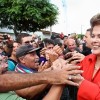
BRAZIL: Rousseff Winning Allies in Undeclared War on Corruption
Brazilian President Dilma Rousseff is starting to gain support for a war on corruption that she is quietly waging.IBSA: ‘Cash Grants Must Back Food Access’
Studies by the India-Brazil-South Africa (IBSA) Academic Forum on food security issues in the three countries suggest that providing food access works best when backed by cash transfers.
Neglected Diseases Group Seeking Child-Friendly AIDS Drugs
A scientific alliance in which developing countries are playing a key role has taken on the challenge of producing paediatric AIDS drugs, an area that is no longer a priority for pharmaceutical companies because mother-to-child transmission of HIV has virtually been eliminated in the industrialised world.SOUTH AMERICA: Leap in Mercosur Bloc Exports “Not Just Commodities”
The boom in exports from South America's Mercosur trade bloc is due not only to commodities sold to China and other large emerging economies, but also to industrial goods bound for other Latin American and Caribbean markets.China, India Score With Untied Aid
Armed with a smile, Don Marut exposes the pitfalls of Western aid to developing countries. At a conference here, the Indonesian recalled the story of how 40 electric-train carriages were sent from Germany to his country for a journey to nowhere.Brazil Revs Up South-South Cooperation
As one of the world's emerging economic powerhouses, Brazil is vigourously pursuing one of the key economic objectives on the U.N.'s development agenda: South-South Cooperation.
South America Unites Against “Irresponsible Debtors” in the North
Default, insolvency, fiscal irresponsibility, debt crisis and similar terms form part of the vocabulary used to describe countries in the developing South in the 1980s and 1990s. A decade later, the world seems to have turned upside down.
BRAZIL: World Cup, Olympic Social Legacy Thrown in Doubt
Community organisations say the major infrastructure works for the 2014 football World Cup and 2016 Olympic Games in Brazil do not reflect the spirit of the social legacy promised by the government and business community, which project 68 billion dollars in economic benefits from the first event alone.BRAZIL: Nuclear Subs to Defend Oil, Project Global Power
Plans for a Brazilian nuclear submarine that had been postponed since the 1970s are beginning to materialise, as the nuclear-propelled sub is regarded as a strategic necessity to guard Brazil's deep water oil reserves, and to project global power.Washington Urged to Recognise Brazil as Global Power
The United States should recognise Brazil as a global power and treat it accordingly, concluded a major new report issued by the influential Council on Foreign Relations (CFR) here this week.BRAZIL: The ‘Happiest’ Emerging Nation
The reputation of Brazilians as cheerful, happy-go-lucky people is starting to be reflected in the cold reality of statistics. A study has put numbers to that state of well-being by quantifying the significant reduction in social inequality in the last few years, an area in which South America's giant has outdone other emerging nations.TRADE: Brazil and Africa Ready to Do the Samba
African trade with India and China flourished over the past decade but, with unemployment rising and industrialisation failing to take hold, cracks are appearing in Africa’s much-vaunted "Look East" doctrine. Meanwhile, from across the Atlantic, Brazil is making inroads into the continent.Navigating Challenges, Brazil Steps Up AIDS Response
Long heralded as a model for the global response to HIV/AIDS, Brazil is intensifying its actions, at home and abroad, in the face of potential setbacks including an arising need for new treatment regimens, the resultant increase in drug prices and the debate over intellectual property rights.BRAZIL: Rousseff Wants Those Who Have More to Pay More
The Brazilian government of Dilma Rousseff is attempting to push through long-delayed reforms of the tax system, which is one of the most onerous and unequal in the world, with a tax burden as heavy as that of many rich countries, but accompanied by deficient public services.CUBA: South-South Diplomacy Props Up Economic Modernisation
The diplomatic offensive undertaken by Cuba in recent weeks is propping up the most important medium-term development programmes implemented as part of what the Raúl Castro government describes as the "updating" of the economic system without abandoning socialism.« Previous Page — Next Page »






The Week with IPS

NEXT STOP - SDGs
Tracking global progress towards a sustainable world
Tracking global progress towards a sustainable world
