Languages
Monday, October 12, 2026



News and Views from the Global South
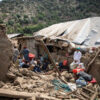
Afghan Women Die Needlessly After Natural Disasters
In normal times, women in Afghanistan face dire living conditions relative to their counterparts in other parts of the world, given the iron grip of Taliban repression. However, the powerful 6.0-magnitude earthquake that struck the eastern Afghan provinces of Kunar, Nangarhar, and Laghman at the end of August was out of the ordinary.
Education Cannot Wait Interviews Tom Dannatt, Founder and CEO of Street Child
Tom Dannatt is a Founder and CEO of Street Child, an international non-government organization active in over 20 disaster-hit and lowest-income countries – working for a world where all children are ‘safe, in school and learning’. Tom founded Street Child in 2008 with his wife Lucinda and has led the organization since its inception. Street Child leads the civil society constituency within ECW’s governance and, accordingly, Dannatt represents the constituency on the Fund’s High-Level Steering Committee.
No Progress Without Women’s Freedom
In recent weeks, the walls of the Afghan capital have been plastered with slogans about women's hijab: “Unveiling is a sign of ignorance”; “Hijab is a father's honour and the pride of Muslims”.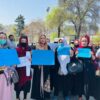
Afghan Women to the International Community: Real Action, Not Mere Sympathy or Words of Condemnation
This year marks the fourth anniversary of the Taliban retaking power in Afghanistan. All these years have been one long nightmare for the women of Afghanistan, the ones who have borne the brunt of oppression – arguably the worst of its kind anywhere in the world.
Education Cannot Wait Interviews Dr. Faiza Hassan, Director of the Inter-Agency Network for Education in Emergencies
Dr. Faiza Hassan is the Director of the Inter-Agency Network for Education in Emergencies (INEE). A chemical engineer who transitioned into education leadership, Dr. Hassan brings close to 20 years of diverse experience in education, social policy reform and humanitarian response. She has a proven track record in strategic management, technical leadership and driving impactful, large-scale complex programmes.
International Day of the World’s Indigenous Peoples 2025

Artificial Intelligence is changing how we live, learn, work - and who gets heard. It holds promise for humanity but, without safeguards, it risks becoming a new tool of domination.
Small-Scale Enterprise Becomes a Beacon of Hope for Afghan Women
It was a sunny winter day in Kabul. I decided to step out and take a stroll around my surroundings. With my long dress and hijab on, I left the house. Since I was not too far from home, I did not need the company of a Mahram, a male guard, by my side – a strict restriction placed on Afghan women by the Taliban.
How the Commonwealth Climate Access Hub Reaches the Most Vulnerable
The Commonwealth Climate Access Hub responds to the needs of its member countries, including their most vulnerable people to build resilience and climate-smart communities.
Managing Underdevelopment: What Two Decades of ODA Debt Reveal
Imagine investing US$14 billion, or even slightly less, to achieve universal literacy in 17 African countries where more than half the adult population still cannot read or write . Pair that with another US$36 billion to connect Africa’s landlocked nations through 12,000 kilometres of new railway lines along priority transport corridors.
Broadcasting Hope: Women’s Voice Radio Helps Afghan Teen Reclaim Her Future
Mehrangiz is a sixteen-year-old girl from Badakhshan, a province in the northeastern Afghanistan famed for its rubies, jewels, and a land of love and beauty.
Environment Day – 2025
Plastic pollution is choking our planet. An estimated 400 million tonnes of plastic are produced every year. Less than 10% is ever recycled.

Climate Justice: Island Resilience
In a world where headlines warn of rising seas, dying reefs, and vanishing species, it’s easy to think the story ends in loss. But what if the frontlines of climate change were also frontiers of hope?
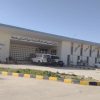
Malnutrition Plagues Children and Pregnant Women in Afghanistan
Bibi Gul, a pregnant woman from Helmand’s Marja District, walked two hours to reach the nearest health center in search of treatment for her moderate malnutrition.
Education Cannot Wait Interviews Tom Fletcher, Under-Secretary-General for Humanitarian Affairs and Emergency Relief Coordinator
Tom Fletcher is the United Nations Under-Secretary-General for Humanitarian Affairs and Emergency Relief Coordinator, OCHA. He started his official duties on 18 November 2024.
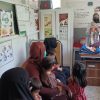
The Taliban Took Everything – Even My Hope
Rukhsar (pseudonym), 27, is a widow and sole breadwinner for a family of five. She recounts her life story under Taliban rule, a reality faced by thousands of women in Afghanistan.
World Press Freedom Day 2025
Freedom of the press is facing growing threats across the world. Authoritarian regimes still imprison, silence, and kill journalists.

The World Bank, at 80, and the True Goals of Multilateral Cooperation and Global Development
The Rogun Dam in the mountains of Southern Tajikistan, if ever completed, would be the tallest dam in the world. Late last year, the World Bank committed almost $3 billion to finance its development, claiming the project would benefit locals.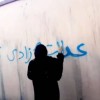
Afghan Women Defy Taliban Repression With Underground Protests
“Even if our murals don't change much, they will surely leave a mark - at least on the mind of one Taliban member who sees them.” These words from Afghan women activists reflect the bold and creative tactics they continue to use in their resistance against the Taliban's oppressive regime.
Taliban View Even Women’s Cosmetics as a Threat to Their Rule
Women in Afghanistan have borne the brunt of the Taliban’s extremist Islamist rule. Four years on, there appears to be no end in sight.
Education Cannot Wait Interviews Sigrid Kaag, Chair of the ECW High-Level Steering Group
Sigrid Kaag is the new Chair of Education Cannot Wait’s High-Level Steering Group. Kaag brings a wealth of experience in political, humanitarian and development affairs, as well as in diplomacy. In 2025, she was appointed by United Nations Secretary-General António Guterres as the UN Special Coordinator for the Middle East Peace Process, a.i. Kaag has just concluded her mandate as Senior Humanitarian and Reconstruction Coordinator for Gaza, a role she held since 2024. She served as the first Deputy Prime Minister and first female Minister of Finance in the Dutch government starting in January 2022. Prior to this, she was Dutch Minister for Trade and Development Cooperation from October 2017 until May 2021, and Minister for Foreign Affairs until September 2021.[related_articles]
Young Women in Afghanistan Driven to Suicide Amid Widespread Frustration
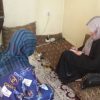
Azar Shaimaa sits in grief, her voice trembling with sorrow as she recounts the devastating loss of her daughter, Benazir. A bright ninth-grade student, Benazir took her own life. Just three years earlier, Shaimaa lost her husband in a car accident.« Previous Page — Next Page »





The Week with IPS

NEXT STOP - SDGs
Tracking global progress towards a sustainable world
Tracking global progress towards a sustainable world
