Languages
Monday, October 19, 2026



News and Views from the Global South
SDGs for All
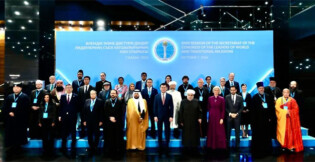
Kazakhstan Has Spent 23 Years Bringing Faiths Together. Now Comes the Harder Part.
In a world increasingly divided by war, political distrust and competing ideologies, Kazakhstan has spent more than two decades pursuing an unusual diplomatic undertaking: keeping representatives of different religions in conversation.
For Pakistan Rising Fistula Cases Make SDG 3 Goal Elusive
“You’re living a life drained of joy,” is how Shehnaz Sher Ali describes her “perpetually wet and stinky” existence. “I wouldn’t wish it on my worst enemy,” says the 35-year-old, who travelled by bus for more than 12 hours with her husband from their village in Rahim Yar Khan, Punjab, changing diapers whenever possible to keep the smell from reaching the fellow passengers.
Forty Years of the ‘Right to Development’: When Growth Excludes, Is It Still Development?
World leaders have warned that the most vulnerable people have been left behind as the right to development has promised more than it has delivered, with development seemingly the preserve of the superrich and powerful.
Central Asia Marks 20 Years of Its Nuclear-Weapon-Free Zone With Renewed Call for Disarmament
Twenty years after five Central Asian states signed a landmark treaty banning nuclear weapons across their region, their foreign ministers have used the anniversary to warn that faltering arms-control agreements, nuclear modernization and deepening international mistrust are placing global security under growing strain.
Beyond the Death Penalty Debate: Human Dignity and Justice in Japan
A symposium examining Japan’s death penalty through the lens of human dignity was held on September 5 at Joseph Hall of St. Ignatius Church in Yotsuya, Tokyo.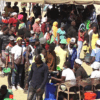
South Africa’s Anti-Immigrant Violence Slows SDG Goals, Rips Apart Africans’ Free Movement Call
When the Malawian government announced the conclusion of the repatriation of its citizens trapped in anti-immigrant violence against foreign Africans in South Africa on August 12, 2026, it had brought home 56,723 nationals, according to data from the Department of Disaster Management Affairs.
From Castel Gandolfo to Campidoglio: Call for Human Dignity to Be at the Heart of the AI Revolution
After two days of debate at an international conference devoted to the challenges of artificial intelligence (AI), nuclear war and global security, Nobel laureates, former heads of state and government, scientists, human rights defenders, religious leaders and representatives of civil society adopted a joint declaration, calling for it to be based on human dignity.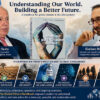
Understanding an Interconnected World
When Roberto Savio begins talking about The Global Citizen Handbook, he does not begin with the book itself. He begins with today’s young people.
In West Africa’s Benin, Women Make Centuries-Old Salt Production Methods Sustainable
It is barely noon, and a group of women sit near the beach on the outskirts of Djégbadji village, in West Africa’s Benin, sifting through mounds of salt harvested from the Gulf of Guinea’s ocean.
‘The World Knows What Must Be Done’: New SDG Report Urges End to Wars and Greater Investment in People
As the world enters the final years before the 2030 deadline for achieving the Sustainable Development Goals (SDGs), a latest United Nations report has revealed that economic uncertainty, climate change, conflict and growing geopolitical tensions are causing hurdles for the countries to meet the targets.
Scarcity of Treatment Makes Syrians More Vulnerable to Mental Health Crisis
The protracted years of conflict in Syria have inflicted profound scars that transcend physical destruction, permeating the psychological well-being of millions.
Stateless at Home: Kenyan Somalis Struggle to Reclaim Citizenship from Refugee Records
In 2006, Amina Saida was only two years old when her parents moved to the Dadaab refugee camp in northern Kenya, near the border with Somalia.
How a Handful of Fishers Show How Harpooning Can Be Ecologically Sustainable
Sudhi Kumar animatedly moves his hands, resembling a graceful dance performance, as he demonstrates how a fishing harpoon is used. He has been on a brief hiatus from harpooning, owing to the recent rough nature of the sea, and doesn’t have the tool with him as we speak. But more than three decades of experience using harpoons is apparent in how vividly he uses his body to mimic the process.
Tanzanian School Launches Energy Club to Promote Clean Cooking
A cloud of steam rises from a giant aluminium pot as Maria Joseph, a middle-aged cook in a toque blanche and faded apron, plants her feet firmly on the tiled kitchen floor. With both hands clasped around a wooden paddle, she plunges deep into the mound of rice, threatening to burn at the bottom.
Can “Human Fraternity” Move Peace?
As wars drag on and the international order grows increasingly unstable, Abu Dhabi has been offering a different kind of narrative. It sought to recognize early efforts at reconciliation, bring religious leaders into the same space, and place former adversaries under the same spotlight. At the heart of the February 4, 2026 Zayed Award for Human Fraternity ceremony was an attempt to make visible, in a public setting, the choice of moving in the direction of easing conflict.
When Drought Steals Childhood: How Climate Shocks in Northern Kenya Are Testing the SDGs
Every morning before sunrise, 10-year-old Amina Adan walks away from school and toward a shrinking water pan on the outskirts of Rhamu, Mandera County. By the time her classmates would be opening exercise books, Amina was already balancing a yellow jerrycan almost half her size.
Faith Leaders Endorse Fossil Fuel Non-Proliferation Treaty at COP30
Decades ago, a little girl was born in a place called Cleveland, Ohio, in the heart of the United States of America. Born to a woman from the deep South, the place of Martin Luther King, her mother left her ancestral lands for the economic opportunities in the north.
At Rome’s Colosseum, Faith Leaders Confront a World at War — and Dare to Speak of Peace
In the shadow of Rome’s Colosseum — once a monument to imperial violence — religious leaders from across the world gathered this week to deliver a message that felt both ancient and urgent: peace must once again become humanity’s sacred duty.
XDR-TB Drug Trial Participants Continue to Celebrate its Success
When Tsholofelo Msimango joined a small trial of a new drug regimen for tuberculosis (TB) treatment a decade ago, she had no idea whether the medicines she was about to be given would help her.
Toxic Air in Tanzania’s Port City Threatens Millions, Researchers Warn
On a hot afternoon in Kariakoo, Dar es Salaam’s bustling commercial hub, the air is a swirling mix of diesel exhaust, charcoal smoke and dust kicked up by the shuffle of feet. Traders tie handkerchiefs over their noses to deter haze from drifting into their throats and lungs.
Peacebuilding: The Missing Peace in COP30 Climate Ambition
Peacebuilding, conflict prevention, and crime prevention are no longer niche security concerns—they are global imperatives for sustainable climate action. From the migration crisis in Venezuela to the deforestation-driven conflicts in the Amazon, to organised crime in Central America, the ripple effects of instability and environmental degradation are felt far beyond national borders. In 2025, nearly 80% of countries experiencing risks to peace remain off-track to meet the Sustainable Development Goals (SDGs). Addressing these challenges isn’t just about safeguarding peace, stability and development. It’s also about ensuring sustainable climate action.Next Page »





Leave No One Behind: IPS and Soka Gakkai Partnership
The United Nations adopted the Sustainable Development Goals (SDGs), which consist of 17 goals and 169 targets, in September 2015.
The Millennium Development Goals (MDGs), agreed upon in 2000, among other things, aimed to halve poverty and hunger by 2015.
The 2030 Agenda is the successor to these MDGs. It covers a wide range of important themes, such as climate change and disasters, in addition to a series of pressing issues left unresolved by the MDGs. It aims to end poverty, protect the planet, and ensure prosperity for all by 2030 as part of a new sustainable development agenda.
Soka Gakkai supports the realization of Sustainable Development, focusing on education as a central approach.

As a backdrop to this approach, lies Buddhism belief that "all people equally possess Buddha's nature and thus unlimited potentialities" and an outlook that emphasizes the interconnectedness of one's own life and the lives of others. These tenants serve as the foundation for Soka Gakkai’s promotion of the SDGs, which can curb discriminatory and destructive actions directed towards the natural environment.
The 2030 Agenda's pledge that "no one will be left behind' strongly resonates with the crucial Soka Gakkai mission.
The stories on the mini-site will provide in-depth news and analysis by professional journalists who constitute INPS Japan's the global media network partners, including IPS NORAM, and viewpoints of representatives of the United Nations, governments, think-tanks and other civil society groups well-versed with issues of SDGs.

The Week with IPS

NEXT STOP - SDGs
Tracking global progress towards a sustainable world
Tracking global progress towards a sustainable world
