Languages
Friday, October 23, 2026



News and Views from the Global South
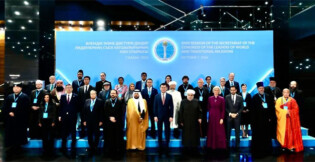
Kazakhstan Has Spent 23 Years Bringing Faiths Together. Now Comes the Harder Part.
In a world increasingly divided by war, political distrust and competing ideologies, Kazakhstan has spent more than two decades pursuing an unusual diplomatic undertaking: keeping representatives of different religions in conversation.
From Vienna to New York: Nuclear Governance Faces New Tests Ahead of First TPNW Review Conference
The international nuclear order is facing another test as governments move from an inconclusive review of the Nuclear Non-Proliferation Treaty (NPT) in New York to renewed disputes over safeguards and nuclear security in Vienna—and toward the first Review Conference of the Treaty on the Prohibition of Nuclear Weapons (TPNW) later this year.
Central Asia Marks 20 Years of Its Nuclear-Weapon-Free Zone With Renewed Call for Disarmament
Twenty years after five Central Asian states signed a landmark treaty banning nuclear weapons across their region, their foreign ministers have used the anniversary to warn that faltering arms-control agreements, nuclear modernization and deepening international mistrust are placing global security under growing strain.
Beyond the Death Penalty Debate: Human Dignity and Justice in Japan
A symposium examining Japan’s death penalty through the lens of human dignity was held on September 5 at Joseph Hall of St. Ignatius Church in Yotsuya, Tokyo.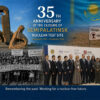
35 Years After Semipalatinsk, Kazakhstan’s Nuclear Choice Still Challenges the World
Across the vast steppe of northeastern Kazakhstan, the scars of the Cold War remain visible. At the Semipalatinsk Nuclear Test Site, the Soviet Union conducted 456 nuclear tests between 1949 and 1989, exposing nearby communities to radiation and leaving health and environmental consequences that have endured across generations.
Hiroshima’s Question: Will We Continue to Live Under the Nuclear Shadow?
This year’s Hiroshima Peace Declaration did not begin with words of remembrance alone. It opened instead with what the declaration called “military invasions using nuclear weapons as tools of intimidation,” “imperious actions by major powers in violation of international law,” and the failure of the Nuclear Non-Proliferation Treaty, or NPT, Review Conference — for the third consecutive time — to adopt a final document.
From the Nuclear Age to the Age of Artificial Intelligence: Can Humanity Build a New Architecture for Peace?
More than eight decades after the atomic bombings of Hiroshima and Nagasaki ushered humanity into the nuclear age, the world is confronting another technological revolution whose consequences extend far beyond science and industry.
Understanding an Interconnected World
When Roberto Savio begins talking about The Global Citizen Handbook, he does not begin with the book itself. He begins with today’s young people.
Japan and Kazakhstan: A Partnership for an Age of Energy Insecurity and Nuclear Risk
The relationship between Japan and Kazakhstan is often described in terms of diplomacy, investment and regional cooperation. But at a time of growing geopolitical uncertainty, it deserves to be understood in broader terms: as a partnership linking cities, resources, technology and peace.
Japan and Kazakhstan Draw Closer as Iran Crisis Reshapes Energy and Security Priorities
As tensions surrounding Iran deepen and uncertainty spreads across global energy markets, Japan is once again confronting a structural weakness: its heavy dependence on Middle Eastern oil.
Can “Human Fraternity” Move Peace?
As wars drag on and the international order grows increasingly unstable, Abu Dhabi has been offering a different kind of narrative. It sought to recognize early efforts at reconciliation, bring religious leaders into the same space, and place former adversaries under the same spotlight. At the heart of the February 4, 2026 Zayed Award for Human Fraternity ceremony was an attempt to make visible, in a public setting, the choice of moving in the direction of easing conflict.
Central Asia–Japan Leaders’ Summit in Tokyo Backs Trans-Caspian Corridor; Tokayev Warns Nuclear Risks Are Rising
Leaders of Japan and the five Central Asian states met in Tokyo on Dec. 20 and adopted the “Tokyo Declaration,” launching a new leaders-level format under the “Central Asia plus Japan Dialogue” (CA+JAD). The declaration places at the core of cooperation two priorities: strengthening supply-chain resilience for critical minerals, and supporting the Trans-Caspian Corridor (the Trans-Caspian International Transport Route), which links Central Asia with Europe without transiting Russia.
At Rome’s Colosseum, Faith Leaders Confront a World at War — and Dare to Speak of Peace
In the shadow of Rome’s Colosseum — once a monument to imperial violence — religious leaders from across the world gathered this week to deliver a message that felt both ancient and urgent: peace must once again become humanity’s sacred duty.
Breaking the Silence in Tokyo: A Kazakh Filmmaker Confronts the Nuclear Scars Through Her Documentary “Jara”
[caption id="attachment_192574" align="alignleft" width="300"]Aigerim Seitenova stepped forward in a black T-shirt and green skirt to introduce her 31-minute documentary, “Jara – Radioactive Patriarchy: Women of Qazaqstan.” The screening event was co-organized by the Kazakh Nuclear Frontline Coalition (ASQAQQNFC), the Soka Gakkai Peace Committee, and Peace Boat, with support from Japan NGO Network for Nuclear Weapons Abolition (JANA).

Youth Lead Global Call to Support Hibakusha on UN Day Against Nuclear Test
Marking the United Nations’ International Day Against Nuclear Tests, young activists and experts gathered at the UN University in Tokyo for an event titled “The Role of Youth in Supporting Global Hibakusha.” The forum underscored how youth solidarity can amplify the voices of survivors of nuclear testing and bombings, known collectively as the “Global Hibakusha” — communities scarred by the use, production, and testing of nuclear weapons, from Hiroshima to the Marshall Islands — and strengthen global momentum toward nuclear abolition.
From Semei to Hiroshima: Astana Times Editor on Bringing Global Solidarity Through Journalism
Eighty years ago, the atomic bombings of Hiroshima and Nagasaki left a lasting reminder to humanity of the inhuman nature of nuclear weapons. Kazakhstan, too, is a nation deeply scarred by nuclear tests conducted during the Soviet era. Having covered the activities of Soka Gakkai International (SGI) in Kazakhstan—including its support for exhibitions and documentary productions on nuclear abolition in Astana—, INPS Japan recently interviewed Zhanna Shayakhmetova, editor-in-chief of The Astana Times, a leading English-language newspaper in the country that continues to convey messages of disarmament and peace to the world. In the interview, Shayakhmetova spoke about the role of religious leaders who will gather in Astana from around the world this September, the importance of passing on memories to younger generations, and the responsibility journalism holds in this endeavor.
From Deterrence to Disarmament: Global Advocates Call for Justice and Peace
Marking 80 years since the dawn of the nuclear age, peace advocates, diplomats, educators, and atomic bomb survivors from around the world gathered for the “Choose Hope” symposium on March 12–13, 2025, in Santa Barbara, California. Co-organized by the Nuclear Age Peace Foundation (NAPF) and Soka Gakkai International (SGI), the event was held at the Music Academy of the West.
Kazakhstan’s Path From Tragedy to Tolerance: Interfaith Dialogue, Peace, and Disarmament
On the windswept steppe west of Astana, President Kassym-Jomart Tokayev led a solemn ceremony this week to mark Kazakhstan’s Day of Remembrance for the Victims of Political Repressions and Famine—an annual reflection on one of the nation’s darkest chapters.
Reviving the Spirit of the Steppe: Kazakhstan Has Hosted the 5th World Nomad Games
In a vibrant display of culture and tradition, Kazakhstan recently hosted the 5th World Nomad Games in Astana, celebrating the enduring spirit of nomadic heritage against a backdrop of modernity and globalization. This biennial event, which drew competitors and spectators from around the globe, served not only as a showcase of traditional sports but also as a poignant reminder of the resilience of a culture that faced near extinction under Soviet rule.
Kazakhstan Takes Lead in Global Push for Nuclear Disarmament Amid Heightened Tensions
In a world increasingly shadowed by the threat of nuclear conflict, Kazakhstan is stepping up its efforts in the global disarmament movement. On August 27-28, 2024, in collaboration with the United Nations Office for Disarmament Affairs (UNODA), Kazakhstan will host a critical workshop in Astana. This gathering, the first of its kind in five years, is set to reinvigorate the five existing Nuclear-Weapon-Free Zones (NWFZs) and enhance cooperation and consultation among them.
Ahead of UN Summit of the Future, Mobilizing Youth for Change
In a significant precursor to the United Nations Summit of the Future slated for September, the "Future Action Festival" convened at Tokyo's National Stadium on March 24, drawing a crowd of approximately 66,000 attendees and reaching over half a million viewers via live streaming. The event, a collaborative effort by youth and citizen groups, aimed to foster a deeper understanding and proactive stance among young people on nuclear disarmament and climate change solutions.Next Page »





The Week with IPS

NEXT STOP - SDGs
Tracking global progress towards a sustainable world
Tracking global progress towards a sustainable world
