Languages
Wednesday, October 21, 2026



News and Views from the Global South
Global Governance

People Who Choose to End Their Lives
People who choose to end their lives through voluntary assisted dying typically face terminal, incurable, or debilitating conditions that cause severe physical or psychological suffering.
CHINA: ‘My Sister Has Been in a Chinese Prison for Eight Years Because I Exercised My Freedom of Speech’
CIVICUS discusses the persecution of Uyghurs and activism in exile with Rushan Abbas, an Uyghur American activist, founder and executive director of Campaign for Uyghurs and chair of the Executive Committee of the World Uyghur Congress.
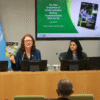
‘Prioritize Social Inclusion as Rapid Transformations Risk Leaving Millions Behind’
The United Nations Department of Economic and Social Affairs (UN DESA) new report, which addresses the rapid global transformations driven by artificial intelligence (AI), demographic shifts, climate change, and conflict, highlights the widening disparities in employment, social inclusion, and access to services.
Afghanistan’s Stolen Peace: The Women Who Refuse to Be Silenced
 When the Taliban took control of Afghanistan in August 2021, Zahra Nader was pursuing a doctorate in Women and Gender studies at York University in Canada. Nader had planned to return to Afghanistan to continue her research, possibly teach at Kabul University, and continue exploring Afghan women's role in political history.
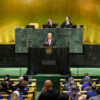
Crisis and Opportunity at the UN
At this year’s highest-profile UN event, Donald Trump publicly mused over his ‘big decision’ about whether to ‘annihilate’ Iran. Israeli Prime Minister Benjamin Netanyahu, as dozens of delegates walked out, branded those who condemn genocide in Gaza ‘moral cowards’.
UN to Launch Survey to Track Down Racism at the Secretariat
The United Nations has once again revived a longstanding problem that has been left lingering behind closed doors for decades – racism and racial discrimination at the UN Secretariat.
Dollar System Eroding Slowly, but Still Dominant
The protracted demise of dollar-gold convertibility and associated fixed exchange rates did not end dollar hegemony. With crucial and timely help from political allies, confidence in the dollar system has persisted, albeit much diminished.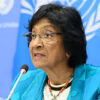
Navi Pillay’s Nobel Peace Prize Is a Vote of Confidence in a Global Legal Order under Fire
The awarding of the 2026 Nobel Peace Prize to distinguished South African jurist and international judge Navanethem “Navi” Pillay is about more than just the recognition of an exceptional individual in the global fight for justice.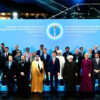
Kazakhstan Has Spent 23 Years Bringing Faiths Together. Now Comes the Harder Part.
In a world increasingly divided by war, political distrust and competing ideologies, Kazakhstan has spent more than two decades pursuing an unusual diplomatic undertaking: keeping representatives of different religions in conversation.
How AI-Powered War Drives the Critical Minerals Race
The demand for critical minerals is accelerating as world powers scramble to stay on top of emerging technologies. Meanwhile, the environment and frontline communities are paying a steep price.
A Rash of Hard-Hitting Questions—Which May Remain Evasive–for Candidates Running for UN Chief
The seven candidates, still in the running for the post of UN Secretary-General (SG), have so far faced a barrage of questions, mostly from delegates and the news media.
Ukrainian Groups Urge WHO to Act on Torture of Captives by Russian Medical Staff
More than 60 Ukrainian organisations have issued an appeal to the World Health Organisation (WHO) to help stop the torture of Ukrainians held in Russian captivity.
Prioritize Multilateralism to Resolve Iran War Deepening Humanitarian Crisis, Says OSF Vice President
Seven months into the Iran War, threats of further military escalation and stalled efforts to reopen the Strait of Hormuz have heightened fears of worsening humanitarian suffering and wider regional instability.
SUDAN: ‘It’s Shocking to Be Forced into Silence Simply Because You Are a Refugee’
CIVICUS discusses life as a refugee with an exiled Sudanese civil society activist who has asked to remain anonymous for security reasons.
The Dollar-Gold Standard’s Lingering Demise
The 1944 Bretton Woods (BW) conference accepted the US demand to use the dollar to settle international financial transactions. This arrangement would require a US balance-of-payments deficit to issue enough dollars.
Forty Years of the ‘Right to Development’: When Growth Excludes, Is It Still Development?
World leaders have warned that the most vulnerable people have been left behind as the right to development has promised more than it has delivered, with development seemingly the preserve of the superrich and powerful.
From Vienna to New York: Nuclear Governance Faces New Tests Ahead of First TPNW Review Conference
The international nuclear order is facing another test as governments move from an inconclusive review of the Nuclear Non-Proliferation Treaty (NPT) in New York to renewed disputes over safeguards and nuclear security in Vienna—and toward the first Review Conference of the Treaty on the Prohibition of Nuclear Weapons (TPNW) later this year.
A New Arms Race is Threatening to Take-off—this time in Outer Space
The world’s ongoing arms race is threatening to extend beyond planet earth—and spillover into outer space. The US has deployed weapons in space and will use them to defend American forces, Air Force Secretary Troy Meink said last week, according to Cable News Network (CNN). His comments marked the first public acknowledgment of such capabilities, though he offered no details about the weapons or when they were put into orbit.
Nature and the Environment: How Can the UN Improve Its Work on the Environment?
In March 2025, United Nations Secretary-General António Guterres launched “UN80”. Recognizing that the world is in a state of dramatic and rapid change at a time when funding for the UN is under threat from budget cuts, Guterres declared that, on the anniversary of the UN’s 80th birthday, a review of its work was long overdue. Now, UN80 is coming to a head with a set of recommendations that cover almost every aspect of the UN’s work.
US Visas for Ruthless Autocrats to Address UN – but not for Palestinian Leaders
When Yasser Arafat was denied a US visa for his second visit to New York to address the United Nations back in 1988, the General Assembly defied the United States by temporarily moving the UN’s highest policymaking body to Geneva—perhaps for the first time in UN history—providing a less hostile political environment and a platform for the leader of the Palestine Liberation Organization (PLO).
Ahead of COP17, UN Biodiversity Chief Urges Urgent Realignment of Finance with Nature Goals
The world may have enough money to protect nature. The bigger problem, according to the head of the UN Convention on Biological Diversity (CBD), is that too much of it is still being spent on activities that destroy it.Next Page »





The Week with IPS

NEXT STOP - SDGs
Tracking global progress towards a sustainable world
Tracking global progress towards a sustainable world
