Languages
Wednesday, October 21, 2026



News and Views from the Global South
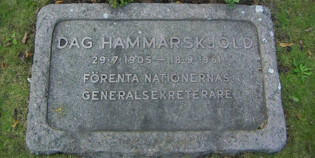
At Hammarskjöld’s Grave, Sixty-Five Years After Ndola
Late in August I stood at Dag Hammarskjöld’s grave in Uppsala. It is a quiet place, a long way from New York and from the wars the United Nations exists to prevent.
What the Sino-Russian Declaration Exposes
The joint declaration issued by Russia and China on 20 May, Joint Declaration of the Russian Federation and the People’s Republic of China on the Establishment of a Multipolar World and a New Type of International Relations, has been read in sharply different ways. Some welcome its language of sovereign equality, multilateralism and a UN-centred international order. Others dismiss it as legal rhetoric deployed in bad faith. Both responses miss the more important point.
Governing the Ungovernable
Where does real power reside in the UN development system? A new policy brief from Cepei, a Colombian development policy institute, and the German Institute of Development and Sustainability (IDOS), presented earlier in May, poses this deceptively simple question. The answer matters because institutions that cannot govern fairly or transparently struggle to sustain legitimacy, and legitimacy is essential for peace.
The UN’s Withering Vine: A US Retreat from Global Governance
The Trump administration’s recent announcement of its withdrawal from 66 international organisations has been met with a mixture of alarm and applause. While the headline number suggests a dramatic retreat from the world stage, a closer look reveals a more nuanced, and perhaps more insidious, strategy. The move is less a wholesale abandonment of the United Nations system and more a targeted pruning of the multilateral vine, aimed at withering specific branches of global cooperation that the administration deems contrary to its interests. While the immediate financial impact may be less than feared, the long-term consequences for the UN and the rules-based international order are profound.

The New Fragility: Peacebuilding Meets Digital Democracy
Established democracies are exhibiting governance stresses that were once associated primarily with fragile and conflict-affected states. Polarisation is weakening institutional trust, fragmenting civic norms, and reducing societies’ ability to solve problems collectively. This is the new fragility. At the same time, governments and civil society organisations are adopting digital tools to support public participation. These deliberative technologies hold real promise, but in polarised environments they also carry risks. Their success depends on the same principles that have guided peacebuilding efforts for decades.





The Week with IPS

NEXT STOP - SDGs
Tracking global progress towards a sustainable world
Tracking global progress towards a sustainable world
