Languages
Saturday, October 10, 2026



News and Views from the Global South

Climate Week NYC Kicks off With World Leaders’ Commitments to Action
The Climate Group’s annual conference in New York City has attracted thousands of attendees this year, among them world leaders, corporate heads, philanthropists, and climate advocates. Those leaders present at the opening ceremony of Climate Week have made clear calls to collectively tackle climate issues.
Nuclear Victims’ Experiences Must Be at the Heart of Global Efforts for Assistance and Remediation
More and more, global disarmament discussions are encompassing the humanitarian and environmental impacts of the testing and use of nuclear weapons, as it becomes clear that the legacy of nuclear weapons leaves its mark on multiple generations.
UN Declares International Day to Eliminate Child Marriage
As the 80th session of the UN General Assembly draws to a close, one of the final items in its agenda was to establish an annual observance for the elimination of child marriage, raising the global profile of a pervasive social issue.
World Humanitarian Day — Protect Aid Workers Against Drones
World Humanitarian Day celebrates humanitarian workers and the life-saving services they provide under the most complex and often dangerous conditions.
Indigenous Peoples Call for Meaningful Influence in Climate Discussions — Nia Tero
Indigenous communities have long advocated for the environment through the lens of their traditional knowledge systems and cultures. But much more work needs to be done to translate their presence into influence.
UN Artificial Intelligence Panel Launches Report Ahead of Global Conference
The acceleration of artificial intelligence (AI) and its capabilities is far outpacing governments’ capacities to effectively regulate it. Without scientific evidence to inform their policies, countries will be left at a greater disadvantage, according to the UN’s independent panel on AI.
In 2025, Government Forces were the Greatest Perpetrators of Violence Against Children in Armed Conflicts
A record number of children were subject to grave violations by parties to armed conflicts, the highest since the UN mandate for children and armed conflict (CAAC) was established in 1996.
Nuclear Nonproliferation Outcomes Stall in Backdrop of Geopolitical Strife
On principle, the nonproliferation of nuclear weapons is an issue that unites the international community. But for a select few states, these principles came with conditions and a refusal to compromise on their security strategy.
UN General Assembly Votes for Resolution on ICJ Advisory Ruling on Climate Obligations
Member states this week (May 20) deliberated over a draft resolution on states’ obligations in respect of climate change following the advisory opinion from the International Court of Justice (ICJ). The General Assembly agreed to take measures to uphold the ICJ’s advisory opinion for member states to meet their existing obligations to climate justice under international law and multilateral frameworks.
Countries Unevenly Impacted by Global Economic Shocks from Mideast Conflict
The ongoing crisis in the Middle East and the closure of the Strait of Hormuz continue to put immense stress and risk on the global economy.
Nuclear ‘Close-Calls’ Prove Deterrence No Guarantee for Peace
The consequences of nuclear warfare would transcend borders and the impact would be felt across generations. Yet knowing this, member states, including nuclear-armed states, are increasingly flouting the nuclear taboo, while also relying heavily on deterrence to prevent fallout.
‘Nuclear Weapons Are Not Just Tools of War. They Are Weapons of Mass Suffering.’
"We choose hope because despair is a form of surrender that we cannot accept,” UN Ambassador to the Philippines, Enrique Manolo, told civil society representatives and the diplomatic community, considering the question of whether to pursue nuclear disarmament in a world that is becoming more polarized on the issue.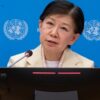
‘Significant Stress’ as UN Prepares for Nuclear Non-Proliferation Treaty Conference
The Eleventh Review Conference of the Parties to the Treaty on the Non-Proliferation of Nuclear Weapons (NPT) will meet at the United Nations in New York from 27 April to 22 May 2026. State parties to the treaty will meet with the urgent aim of finding common ground on the issue of nonproliferation.
Humanitarian Response in Lebanon ‘Under Significant Strain’ after Wednesday Airstrikes
On April 8, Israeli military forces launched the deadliest series of airstrikes on Lebanon since hostilities escalated in early March, resulting in the deaths of at least 254 civilians. This latest incident threatens to further complicate humanitarian efforts in Lebanon that are already under immense pressure.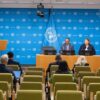
UN80: UN General Assembly Adopts Resolution on Mandate Review
UN Member States made progress toward the UN80 initiative by adopting a resolution that would implement a mandate review, which is set to pave the way to strengthen the process of mandate creation and implementation.
War in Iran, Middle East Threatens Global Agrifood Systems
The current conflict in Iran and the Middle East region threatens to disrupt the global energy and agri-food sectors, as the closure of the Strait of Hormuz affects oil and fertilizer exports for farmers during critical harvest seasons.
UN Launches 300 Million Dollar Humanitarian Appeal for Lebanon
During a solidarity visit to Lebanon, the UN chief announced a flash appeal of USD 308.3 million to support humanitarian operations there in the wake of escalated fighting.
International Women’s Day 2026: Justice for Women and Girls Needs Action and Political Will
On International Women’s Day (March 8), global leaders and advocates gather around the rallying cry to strengthen justice systems for all women and girls in a time of increasing pushbacks on gender equality.
UN: Amid Security Risks in Middle East, Humanitarian Work is Underway
As military fighting breaks out across the Middle East with increasing frequency and intensity, the United Nations promises to ramp up its humanitarian response on the ground.
UN Leaders, Diplomats Warn of Middle East Instability Following Weekend Air-Strikes in Iran
The United States and Israel launched a joint military strike on Iran on February 28. Iran followed with military strikes on Israeli bases and on Arab Gulf states, including Bahrain, Oman, and the United Arab Emirates. The realized threat of a new war has caused alarm for the security situation in the Middle East and its impact on civilian populations.
UN Pact for the Future Requires Global Solidarity and Localized Solutions
More than one year since its adoption, the UN Pact for the Future is held up as a critical framework for countries to address today’s issues through global cooperation. Its agenda for global governance and sustainable development is ambitious, and it is for this reason the Pact poses implementation challenges when it comes to the direct impact on local communities. It will require the joint efforts of governments, civil society and international organizations to achieve the goals laid out in the Pact.Next Page »





The Week with IPS

NEXT STOP - SDGs
Tracking global progress towards a sustainable world
Tracking global progress towards a sustainable world
