Languages
Saturday, October 10, 2026



News and Views from the Global South

Mayor Mamdani for New York, for Multicultural Dignity
The New York City mayoral elections captured the world’s attention with an excitement normally reserved for the United States presidential elections. It all culminated on Tuesday night with Zohran Mamdani’s decisive victory, signaling that hope was emerging after a period of anxiety and uncertainty for the United States. Zohran Mamdani will represent and govern New York City, one of the world’s wealthiest and most high-profile cities.
Nuclear Disarmament Conversations Cannot Lose Traction
In recent days, nuclear state leaders have flouted the regulations and norms around nuclear non-proliferation and are flirting more openly with nuclear might in the name of projecting strength.
UN Conference Recommits to Solidarity With Rohingyas, People of Myanmar
The international community convened for a high-level meeting at UN Headquarters, this time to mobilize political support for the ongoing issue of the persecution of the Rohingya Muslims and other minorities in Myanmar.
Beijing+30: A Culmination of International, Intergenerational Dialogue
Thirty years since the UN Fourth World Conference on Women in Beijing, the resolve that defined and united the world toward a global agenda for gender equality make it just as relevant in 2025.
UNICEF Climate Advocate Urges World Leaders To ‘Include Children’ in Climate Discussions
The UN General Assembly High-Level Week (22-30 September) has been an opportunity for the world to convene on the most pressing issues of the day, from multilateralism, global financing, gender equality, non-communicable diseases, and AI governance.
Ending Child Marriage Needs a Culture of Accountability, Respect for the Rule of Law
Global leaders came together at the sidelines of this year’s UN General Assembly to commit to ending child marriage, calling on all world leaders to make concerted efforts to ensure accountability and enforce the laws that prohibit it.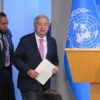
Global Military Spending Shows Misalignment of Priorities, says UN Secretary General
Global military spending has been on the rise for more than 20 years, and in 2024, it surged across all five global regions in the world to reach a record high of USD 2.7 trillion. Yet, such growth has come at the cost of diverting financial resources away from sustainable development efforts, which the United Nations and its chief warn puts pressure on an “already strained financial context.”
IPC Officially Declares Famine; More than Half a Million Starving in Gaza
The Integrated Food Security Phase Classification (IPC) has officially declared that there is famine in Gaza. The world’s biggest food monitoring system raised its classification to Phase 5, the highest level on its food insecurity scale.
Two-State Solution Conference Presents an “Exceptional Moment” for International Community – The Elders
Dignitaries across the international community have convened in New York to promote the two-State Solution - the coexistence of Israel and Palestine as sovereign states - as the only path forward to shared sustainable peace in the Middle East. Former and current leaders from 145 countries and independent groups will speak at the United Nations to demonstrate their ‘near-universal support’ and discuss the steps that need to be taken to achieve it.
Protect Women’s Rights, Especially in a Time of Equality Backlash, Say Activists
Discriminatory laws and the absence of legal protections impact more than 2.5 billion women and girls worldwide in various ways. Legal reform is paramount to securing gender equality, and the world cannot afford to roll back on decades of progress in women’s rights.
Mexico, Spain, East Africa, Awarded For their Ecosystem Restoration Programs
At the 2025 United Nations Ocean Conference (UNOC3), the United Nations Environment Programme (UNEP) and the Food and Agriculture Organization (FAO) recognized three countries and regions for their large-scale programs to restore their native ecosystems.
Nia Tero: Indigenous Guardianship the ‘Only Time-Tested Approach’ To Healthy Ocean Ecosystems
The 2025 UN Ocean Conference (UNOC3) has seen a significant presence from Indigenous peoples, who insist that their perspective and guidance be taken into account in the global efforts for sustainable ocean use and conservation. The sense of responsibility to the ocean and recognition of its history is an example that the international community can learn from.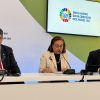
Pacific Leaders Call for Bold Climate Action in Ocean Conference
“There is no climate action without ocean action,” President Hilda Heine of the Marshall Islands told reporters, as she and other representatives of Pacific island states reiterated that countries must honor their climate action agreements.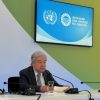
‘Ocean Health Is Inseparable From Human Health, Climate Stability’—UN Chief Urges Swift Action, Partnership for Ocean Conference
“When we poison the ocean, we poison ourselves,” UN Secretary-General António Guterres told reporters on the second day of the UN Ocean Conference (UNOC3).
UNOC3: World Leaders Recognize Urgent Need for Ocean Action
The world has converged along the Mediterranean Sea to affirm their commitments to the sustainable use and protection of the ocean.
UNOC3: Bringing Ocean Education and Science to the Global Agenda
A greater understanding and appreciation of the world’s oceans is needed to protect them. As the global community prepares to convene for the ocean conference, they must also prepare to invest in scientific efforts and education that will bolster their joint efforts.
Agenda for Nuclear Non-Proliferation Review Conference Still Unclear
The Treaty on the Non-Proliferation of Nuclear Weapons must not be allowed to collapse under the weight of geopolitical cynicism, the preparatory committee at the UN heard.
Fostering Dialogue for Disarmament Ahead of Non-Proliferation of Nuclear Weapons Review Conference
The argument for nuclear disarmament is perhaps more relevant than it has been since the end of World War II, especially in a world where there is a growing gulf between nuclear states and between nuclear states and those who don't have the weapons.
World Press Freedom Day 2025
Call to Protect Elections from AI ‘Information Pollution’
The prevalence of artificial intelligence (AI) is changing the flow and access of information, which has a wider influence on how freedom of expression is affected. National and local elections can demonstrate the particular strengths and vulnerabilities that can be exploited as AI is used to influence voters and political campaigns. As people grow more critical of institutions and the information they receive, governments and tech companies must exercise their responsibility to protect freedom of expression during elections. 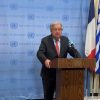
UN Chief, Brazil Gather World Leaders to Reaffirm Commitments Paris Agreement
UN Secretary-General António Guterres and President Lula da Silva of Brazil on Wednesday, April 23, held a closed-door meeting with heads of state to discuss strengthening global efforts against the climate crisis and to ensure a just energy transition.
Smallholder Farmers Are Not ‘Beneficiaries’, but the ‘Co-Creators of Change’
Eliud Rugut comes from generations of farmers, yet his family expected him to move out of their home and pursue another career.« Previous Page — Next Page »





The Week with IPS

NEXT STOP - SDGs
Tracking global progress towards a sustainable world
Tracking global progress towards a sustainable world
