Languages
Friday, October 9, 2026



News and Views from the Global South
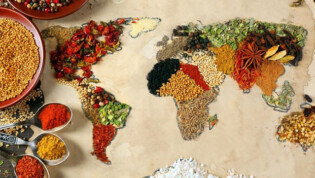
Russia Ensuring Africa’s Food Security
Within the framework of the Expert Council on Africa at Russia's State Duma, the lower chamber of parliamentarians, during its annual round-table conference, held in late May 2026, focused concretely on food security in Africa.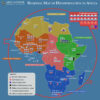
Media As Bedrock for Developing Russian-African Relations
Under the auspices of the Faculty of Journalism of Lomonosov Moscow State University, the Russian-African Club, in late April, held its IV International Forum of Journalists from Russia and Africa, which marked another historical milestone. According to an established annual tradition, discussions were focused on aspects of the media, its structure, current performance, information contents, and challenges as well as future perspectives.
Why Does African Leadership Lack Coordination on Reparations?
Professor Jude Osakwe—a Nigerian scholar at the Namibian University of Science and Technology (NUST) and Continental Chairman of the Nigerians in Diaspora Organisation Africa (NIDOAF)—has reiterated the absolute truth over Reparations for Africa, noting that African governments have consistently expressed only 'emotional solidarity' over Reparations instead of tackling and addressing, with seriousness, this pertinent issue within the context of diplomacy.
Russia Assessing the Benefits of WTO Membership
Despite consistent criticisms over its operations down the years, Russia still finds it difficult to leave the World Trade Organization (WTO), and instead assessing the opportunities and broad benefits of membership. WTO is not just an organization, but a multilateral bridge for strategic trade engagement and securing results-oriented partnerships. Certainly, unlocking and accelerating trade initiatives should be the key focus in the changing world.
Africa Squeezed Between Import Substitution and Dependency Syndrome
Squeezed between import substitution and dependency syndrome, a condition characterized by a set of associated economic symptoms—that is rules and regulations—majority of African countries are shifting from United States and Europe to an incoherent alternative bilateral partnerships with Russia, China and the Global South.
Ghana a Contender for BRICS+ Alliance
With heightening geopolitical interest in building a new Global South architecture, Ghana's administration is considering joining the 'partner states category' of BRICS+, an association of five major emerging economies (Brazil, Russia, India, China and South Africa).
French-Speaking African Nations Bartering Natural Resources for Russian Arms
At the first ministerial conference of the Russia-Africa Partnership Forum in the southern coastal city of Sochi, seeking to deepen political and business ties with African countries, Russian President Vladimir Putin in his message and Foreign Minister Sergey Lavrov in his powerful speech underlined Russia's security support to fight terrorism and extremism across Africa.
Russia-Africa: Developing Media Partnership
At a recent media briefing, Maria Zakharova, the spokesperson for Russia's Foreign Ministry, criticized the United States for its support of educational programs, media and NGOs in Africa. Zakharova argued that these efforts are part of a broader attempt by the U.S. to impose Western values and governance models on sovereign African states, framing it as a form of neo-colonialism.
What do Russia and Israel Share in Common?
Russia is pursuing, during these contemporary times, a new form of economic architecture, non-hegemonic policies and simultaneously portraying its first-class military power in the world. Russia's development paradigm is distinctively different and largely oriented towards Global South.
BRICS+ Prioritising Expansion to Fight Western Hegemony
In an interview with Sky News Arabia on September 20, Russian Foreign Minister Sergey Lavrov expressed scepticism but was straight to the point about the strategic expansion of BRICS, an association comprising Brazil, Russia, India, China and South Africa. Under Russia's BRICS presidency which began in January 2024.
What does Russia Trade with Africa?
After two symbolic African leaders' summits, Russia's trading is steadily increasing but significantly in exports of military weapons and equipment. According to Kremlin reports, Russian President Vladimir Putin said the trade turnover between Russia and African countries had increased by almost 35% in the first half of 2023 despite international sanctions.Russia Still Struggling to Gain Foothold in Africa
As Russia’s new president Vladimir Putin begins a new phase of economic growth, trade experts are keeping a watchful eye on Moscow’s policies with the African continent, which they see as a huge, untapped source of economic opportunity.Manila and Moscow Inch Closer to Labour Agreement
As the number of migrant Filipino workers in Russia inches closer to 5000, Moscow and Manila are busy negotiating a bilateral labour agreement that could allow thousands more overseas workers into various sectors of the Russian economy.Indonesia Knocks at BRICS’ Door
Indonesia’s keen interest in becoming the newest member of BRICS – a bloc of emerging-market nations comprised of Brazil, Russia, India, China and South Africa – has sparked off a round of debate on the future and efficacy of South-South groupings.BRICS Bank Could Change the Money Game
India’s proposal to set up a bank of the BRICS nations (Brazil, Russia, India, China and South Africa) will top the agenda at the summit of the group in New Delhi Mar. 28.RUSSIA-HEALTH: Censorship and Dirty Needles Fuel HIV/AIDS Epidemic
A recent government crackdown on Russian media, particularly online information portals specialising in health tips and harm reduction methods for drug users, has sparked widespread public opposition, with critics claiming that the "draconian silencing" of public health advocates could worsen an already perilous health situation in the country.RUSSIA: Putin Remains Leading Candidate in Presidential Elections
Election season in Russia promises to be stormy, as Prime Minister Vladimir Putin emerges as the leading candidate in the presidential race scheduled for March 4 and unresolved issues of voting fraud and voter manipulation spark massive protests amongst opposition groups.GEORGIA: Opposition Rallies in the Face of Repression
More than half of Georgia’s population still lives in abject poverty due to economic stagnation, worsening living standards, rising unemployment and low pay nearly nine years after the 2003 bloodless ‘Rose Revolution’ that promised post-Soviet economic revival, a new political course and better living conditions.
ENVIRONMENT-RUSSIA: Activists Protest Destruction of 500-Year-Old Forest
Environmentalists and rights campaigners have mounted pressure on the Russian government to rescind the decision to demolish more than 500-year-old woodlands to make way for the construction of a new super-highway linking Moscow with the country's northern capital, St. Petersburg.
AZERBAIJAN: Govt Fears Spread of Arab Spring
In the wake of anti-government protests by the opposition and youth activists in Baku, Azerbaijan, authorities have arrested and detained scores of demonstrators and journalists in deplorable and inhumane conditions.HEALTH: ‘Lifestyle Diseases’ Cause Two-Thirds of Deaths
Health experts from around the world have acknowledged rising numbers of ‘lifestyle’ or non-communicable diseases (NCDs) in different countries, admitted inadequate funds are the biggest obstacle in health delivery, and called on the global community to consolidate efforts to effectively tackle the problem.Next Page »





The Week with IPS

NEXT STOP - SDGs
Tracking global progress towards a sustainable world
Tracking global progress towards a sustainable world
