Languages
Wednesday, October 14, 2026



News and Views from the Global South
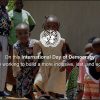
International Day of Democracy

Democracy is as much a process as a goal. For the ideal of Democracy to be enjoyed by everyone, it requires participation and support. The international community, national governing bodies, civil society, and individuals - all have a part to play.

Education Cannot Wait Interviews UNRWA Commissioner-General Philippe Lazzarini
On 18 March 2020, Philippe Lazzarini was appointed Under-Secretary-General of the United Nations and Commissioner-General of the United Nations Relief and Works Agency for Palestine Refugees in the Near East (UNRWA) by United Nations Secretary-General António Guterres. He took up his post with UNRWA on 1 April 2020.
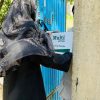
Left with Few Options: Afghan Women Turn to Risky Online Jobs Amid Taliban Ban
The Taliban's total ban on women’s employment in Afghanistan leaves few options for earning a living. Nevertheless, Afghan women are carving out niches in online business with sheer determination and perseverance.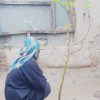
Forced Deportations Leave Afghan Women in Dire Poverty
Sarai e Shamali camp in Kabul is a temporary refugee shelter. The camp receives on average 100 Afghans a day, forcibly returned from Pakistan and Iran where most had sought asylum when the Taliban took over power in Afghanistan three years ago.
Education Cannot Wait Interviews The Sunday Times Chief Foreign Correspondent, Best-Selling Author and ECW Global Champion, Christina Lamb
Christina Lamb is Chief Foreign Correspondent at The Sunday Times and one of Britain’s leading foreign journalists as well as a bestselling author. She has been awarded Foreign Correspondent of the Year six times as well as Europe’s top war reporting prize, the Prix Bayeux, and was recently given the prestigious Lifetime Achievement Award by the British Society of Editors and the Outstanding Impact Award by Amnesty International.

UNICEF Director of Global Communication and Advocacy Naysán Sahba visits Zambia
In Zambia, over 6.5 million people need humanitarian assistance because of the drought. 3.5 million of them are children.

Stand Up and Speak Out to End Gender Apartheid in Afghanistan
For 1,000 days girls in Afghanistan have been banned from secondary school education. We must now stand up and speak out together for the girls and women of Afghanistan with a clarion call to the de facto authorities and world leaders to end the ban on girls’ secondary education in Afghanistan.
Education Cannot Wait’s #AfghanGirlsVoices Campaign Highlights Real-Life Testimonies of Hope, Courage and Resilience by Afghan Girls Denied Their Right to Education
Today, people across the globe mark a tragic milestone for human rights, children’s rights and girls' rights: 1,000 days since girls were banned from attending secondary school in Afghanistan. To commemorate and reflect on this unacceptable milestone, Education Cannot Wait (ECW), as global fund for education in emergencies and protracted crises within the United Nations, is launching the second phase of its compelling #AfghanGirlsVoices campaign.
World Environment Day 2024
Ecosystems are being threatened all over the world.
From forests to drylands.
From farmlands to lakes.

Education Cannot Wait Interviews Bruno Maes, UNICEF Representative to Haiti
Bruno Maes is the UNICEF Representative in Haiti. He officially took office in August 2020. A Belgian national, Mr. Maes previously served as UNICEF Representative in Madagascar from 2007 to 2012, in Chad from 2012 to 2015, and recently in Egypt from September 2015 to 2020.

Education Cannot Wait’s #ShareTheirVoices Global Advocacy Campaign Launched by ECW Executive Director Yasmine Sherif in Lead Up to United Nations Summit of the Future
In the lead up to United Nations Secretary-General António Guterres’ Summit of the Future, taking place on 22-23 September 2024, Education Cannot Wait is supporting the global #ActNow Campaign with an urgent call to increase funding for the +226 million crisis-impacted children worldwide urgently in need of an education through ECW’s global #ShareTheirVoices campaign.
Afghan Women Struggle with Soaring Mental Health Issues
Afghanistan is grappling with a growing crisis of mental illness, particularly among its women, as highlighted in a United Nations report. Officials from the mental health department at Herat regional hospital have observed a concerning uptick in the number of women afflicted by psychological disorders in the province.
World Press Freedom Day 2024
Journalism is in crisis - again. The challenges to press freedom are enormous and multi-faceted.

Education Cannot Wait Interviews Amy Clarke, Co-Founder and Chief Impact Officer for Tribe Impact Capital LLP
Amy Clarke is Co-Founder and Chief Impact Officer of the multi award-winning Tribe Impact Capital, a dedicated impact wealth manager and B Corps, based in London. She has over 29 years of experience in sustainability, both leading in-house teams (Microsoft and Bank of America) and as a management consultant specialising in climate and sustainability (PwC and EY). Amy serves as a Trustee to B Lab UK and is also an Advisor to fellow B Corps, Greenheart Consulting and Black Seed Ventures. She sits on the Global Steering Group of the Global Ethical Finance Initiative (GEFI) and the Investment Committee of The Blue Cross (having previously served as a Trustee). Amy has both BSc and MSc degrees in environmental studies. In her spare time, she serves as Head of Catering and Entertainment for her three-legged rescue Staffordshire Bull Terrier.

Afghan Women’s Voices Stifled as Taliban Tightens Media Controls
Since the Taliban regained control of Afghanistan in 2021, the space for women in the public sphere has significantly narrowed, with successive orders further restricting their presence in various sectors, including the media.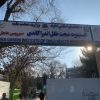
Taliban Rule Exacerbates Malnutrition Crisis: Afghan Women and Children Hardest Hit
Malnutrition in Afghanistan has reached an unprecedented level, according to United Nations humanitarian organizations. It is estimated that half of the country's population grapples with severe hunger year-round, placing Afghanistan among the top ten nations globally with the highest rates of maternal and infant mortality due to malnutrition.
Education Cannot Wait Interviews Professor Mohammed Belhocine, Commissioner for Education, Science, Technology and Innovation within the African Union
Professor Mohammed Belhocine is an Algerian national. Former Head of the Department of Internal Medicine, he held various positions in Algeria, at the Faculty of Medicine and the Ministry of Health, before joining the international civil service in 1997. Former Director of the Division of Non-Communicable Diseases at the WHO Regional Office for Africa (in Harare, then in Brazzaville), he was also WHO Representative in Nigeria and Tanzania. He ended his career as UN System Coordinator and UNDP Resident Representative in Tunisia from 2009 to 2013. From June 2015 to February 2016, at the request of the WHO Regional Director, he returned to duty as WHO Representative in Guinea, playing an active role in providing technical support and expertise to the country's response to the Ebola epidemic. In October 2021, supported by his country, he was elected to the position of Commissioner for Education, Science, Technology and Innovation within the African Union. Professor Belhocine is the father of three children and has six grandchildren.

International Women’s Day, 2024
On March 8th, we celebrate International Women’s Day. A day to honour the resilience, achievements, and potential of women worldwide. The world faces crises—geopolitical conflicts, poverty, and climate change.

IPBES Invasive Alien Species Assessment
At the tenth session of the IPBES Plenary, held in Bonn, Germany from 28 August - 2 September 2023, the IPBES Thematic Assessment of Invasive Alien Species and their Control was accepted and its summary for policymakers was approved. The Report is the result of four years of work by 86 experts from 49 countries, and synthesizes information from over 13,000 references into a comprehensive scientific assessment and concise summary document for policy makers.

In-Depth Interview with Yasmine Sherif, Executive Director, Education Cannot Wait: Getting to Know Her
Counsel Hope Yasmine Sherif is the Executive Director of Education Cannot Wait (ECW). A lawyer specialized in International Humanitarian Law and Human Rights Law (LL.M), she has over 30 years of experience with the United Nations and international NGOs.
Why Land Matters with Ede Ijjasz-Vasquez
Land rights are fundamental for three things. One: economic development. No country in the world has gone from low income to Middle income to high income without clear land and property rights and markets. It is a core part of the economy.
« Previous Page — Next Page »





The Week with IPS

NEXT STOP - SDGs
Tracking global progress towards a sustainable world
Tracking global progress towards a sustainable world
