Languages
Tuesday, September 22, 2026



News and Views from the Global South
U.S.: Calls Mount for Obama to Appoint “Truth Commission”
Eighteen U.S. human rights groups Thursday joined a former director of the Federal Bureau of Investigation (FBI) and a retired top diplomat in calling on President Barack Obama to appoint a non-partisan commission of leading citizens to examine and report on the treatment of detainees held by the United States during President George W. Bush's "global war on terror."US-ISRAEL: Storm Clouds Ahead?
After eight years of the closest possible relations, the United States and Israel may be headed for a period of increasing strain, particularly given the likelihood that whatever Israeli government emerges from last week's election will be more hawkish than its predecessor.US-VENEZUELA: Washington’s Praise of Poll Suggests Detente
Praise by the U.S. State Department for Sunday's referendum in Venezuela suggests that President Barack Obama is hoping to ease long-strained relations with President Hugo Chavez, according to regional experts here.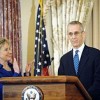
U.S.: Clinton’s Maiden Voyage Aims to Reassure Asian Allies
Hillary Clinton's maiden voyage overseas as secretary of state is designed above all to reassure Washington's key East Asian allies and China of the U.S.'s enduring interests in the region and commitment to its stability, according to regional experts here.U.S.: Rightward Shift in Israeli Polls Creates New Headaches
The strong showing by right-wing parties in Israel's elections is likely to create new obstacles to U.S. President Barack Obama's hopes for achieving a swift and substantial progress, if not a breakthrough, in peace negotiations between Israel and the Palestinians, according to most experts here.SOMALIA: U.S. Advised to Back Reconciliation Efforts
Two years after the administration of President George W. Bush backed Ethiopia's invasion of Somalia, President Barack Obama is being urged to pursue a much more flexible policy toward the East African nation than his predecessor and let Somalis, including Islamist leaders who were targeted by the invasion, sort things out for themselves.POLITICS: Israel, Iran, Pakistan World’s Least Popular Nations
Israel, Iran, North Korea and Pakistan are widely seen as exerting the most negative influence on world affairs, according to the latest in a series of annual global surveys by the BBC's World Service on popular perceptions of the world's most powerful or newsworthy nations.U.S.: Hawks Urge Boosting Military Spending
Despite a shrinking national economy and a record defence budget, U.S. neo-conservatives and other right-wing hawks are mounting a spirited - if misleading - campaign to persuade Congress that the military should get a bigger slice.
U.S.: More Troops, More Worries, Less Consensus on Afghanistan
Even as U.S. President Barack Obama prepares to deploy more military forces to Afghanistan - what he has called "the central front" in former President George W. Bush's "global war on terror" - a consensus on overall U.S. strategy there remains elusive.FINANCE: Most Citizens Kept in Dark on Govt Spending
The vast majority of the world's governments effectively deny citizens basic information they need to understand how public monies are being spent, according to a new report released here Sunday by the International Budget Partnership (IBP), a Washington-based project that works with civil society groups to promote government transparency and improve accountability.ECONOMY: IMF Predicts 2009 Growth Lowest Since World War II
Growth in the world economy will fall to its lowest annual rate since World War II in 2009, according to the latest estimates by the Washington-based International Monetary Fund (IMF) which released the latest edition of its 'World Economic Outlook' (WEO) here Wednesday.MIDEAST: Obama’s Quick Start Raises Hopes
A series of unexpectedly swift moves to begin addressing the Arab-Israeli conflict taken by Barack Obama in the week since he was sworn in as the U.S. president is being hailed by many regional specialists here who were deeply frustrated by George W. Bush's relative indifference and virtually unconditional support for Israel.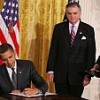
CLIMATE CHANGE: Obama Signals End to Era of Denial
Environmental activists have hailed the first moves by U.S. President Barack Obama to reduce the country's greenhouse gas emissions by setting tough new fuel efficiency and pollution standards for the country's cars and trucks, steps that his predecessor, George W. Bush, had rejected or ignored.HEALTH: Obama Lifts "Global Gag Rule"
U.S. President Barack Obama Friday lifted an eight-year ban on U.S. funding for overseas family-planning groups and clinics that perform or promote abortion or lobby for its legalisation.
U.S.: Obama Picks Israel-Arab, Afghanistan-Pakistan Negotiators
In his first major diplomatic moves since his inauguration, U.S. President Barack Obama Thursday named two accomplished negotiators, former Senate Majority Leader George Mitchell and Amb. Richard Holbrooke, as special envoys to deal with the Israel-Arab conflict and "the deteriorating situation" in Afghanistan and Pakistan, respectively.U.S.: Rights Groups Applaud Move to Halt Gitmo Trials
U.S. and international human rights groups Wednesday praised President Barack Obama's directive to immediately suspend the work of military commissions established by his predecessor, George W. Bush, to prosecute suspected terrorists at the U.S. detention facility at Guantanamo Bay, Cuba, and pressed for its earliest possible closure.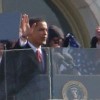
U.S.: Obama Offers Internationalist Vision
Speaking before a record crowd estimated at between two and three million people at his inauguration here Tuesday, U.S. President Barack Obama promised a foreign policy of "humility and restraint" and "greater cooperation and understanding between nations".POLITICS: Not Just the U.S. Optimistic About Obama
Perhaps never in human history have the hopes of so many people for positive change in international relations rested on one person as they do on Barack Obama, who is to be inaugurated as the 44th president of the United States Tuesday at noon Washington time.U.S.: Liberals, Realists Set to Clash in Obama Administration
Just as the foreign policy of U.S. President George W. Bush was characterised by a continuous battle for control between hawks led by Vice President Dick Cheney and realists based primarily in the State Department and intelligence community - and, in its last two years, the Pentagon - so the incoming administration may find itself split along ideological lines.US-CUBA: Obama Urged to Take Bold Steps Toward Normalisation
A broad spectrum of groups and individuals is urging President-elect Barack Obama to go beyond his campaign pledge to lift curbs on travel and remittances to their homeland by Cuban Americans and launch a much broader process of normalisation with Havana.U.S.: Clinton Stresses “Cooperative Engagement”, “Smart Power”
In the first comprehensive statement of President-elect Barack Obama's foreign policy priorities, his nominee for secretary of state, Sen. Hillary Clinton, said "cooperative engagement" backed up by what she called "smart power" will define Washington's approach to the rest of the world.« Previous Page — Next Page »


The Week with IPS

NEXT STOP - SDGs
Tracking global progress towards a sustainable world
Tracking global progress towards a sustainable world
