Languages
Wednesday, August 26, 2026



News and Views from the Global South
Water Shortage Threatens Half the Planet
The paradox of development means that world population is consuming water to excess, while 2.8 billion people don't have nearly enough, says scientist Jonathan Baillie in this exclusive Tierramérica interview.HEALTH: Climate Change Brings New Diseases
As its name suggests, the West Nile virus, a leading cause of a form of meningitis and a neuro-invasive disease, has until recently been reported mostly in tropical and sub-tropical African regions. But it is now about to become a global virus.CLIMATE CHANGE: ‘We Have Run Out of Time’
New scientific research suggests that climate change is taking place faster than foreseen in studies considered so far, according to environmental experts at a forum on climate change called by the Global Legislators Organisation for a Balanced Environment (GLOBE).CLIMATE CHANGE: Call for a Green Fund
Environmental legislators from the 13 countries with the largest greenhouse gas emissions have called for the creation of an international green fund to be included in the Copenhagen protocol on climate change. The fund would provide developing countries with financial and technical resources to create a carbon-free economy.CLIMATE CHANGE: Another Go at Cracking Those Hard Nuts
Environmental legislators from the 13 countries with the largest greenhouse gases emissions are meeting in Rome this Friday and Saturday to discuss steps towards the UN climate change conference scheduled in December in Copenhagen.ENVIRONMENT-EUROPE: The Light Could Go All Green by 2050
The EU could meet all its electricity demands from renewable energy sources such as wind and the sun by 2050 if governments take the right decisions now, leading environment and energy experts say.GERMANY: Conflict Builds Up With Obama Over Afghanistan
When U.S. President Barack Obama visits Germany this Thursday and Friday, he is likely to get a reception as warm as the demonstration of sympathy he enjoyed in July last year. And yet, Obama's high standing among Germans is likely to fall if he asks the German government to send more military personnel to Afghanistan.TRADE: EC Manufactured Bogus ‘African Business’ Support for EPAs
The exposure of the European Commission's (EC) manufacturing of African business support for the contentious economic partnership agreements (EPAs) has so far elicited little action by members of the European Parliament.
Q&A: Wanted – A Truly Clean Development Mechanism
The Clean Development Mechanism established under the Kyoto Protocol on climate change "should go beyond pure compensation" and produce "a net atmospheric benefit," argues Lambert Schneider, an expert with Germany's Institute for Applied Ecology.MAY DAY: Europeans Begin to See Red
European unions are facing a difficult choice this May Day between holding protests to protect workers' interests, or holding off to avoid a further deepening of the economic recession.
Wanted: A Truly Clean Development Mechanism
The international climate rules that emerge in 2012 should contain a reformulated Clean Development Mechanism, says German expert Lambert Schneider in this Tierramérica interview.DEVELOPMENT: The Second Scramble For Africa Starts
Sub-Saharan African countries have of late become the target of a new form of investment that is strongly reminiscent of colonialism: investors from both industrialised and emerging economies buy or lease large tracts of farm land across the continent, either to guarantee their own food provisions or simply as yet another business.IRAQ: Virtual Therapy Treats Real Agony
"Oh, dear Lord, what I am going through," 'N', a 25-year-old Iraqi from Baghdad wrote several months ago. "Am I going to see my family again? Sometimes, I even see my own dead body, lying somewhere. And I imagine the pain my death would cause to the people I love the most."
CLIMATE CHANGE: Seals in the Baltic Left without Ice
Ringed seals in the Baltic Sea are finding fewer and fewer ice caves in which to raise their young. Rising global temperatures are the problem, and in turn are depleting the main food source of the giant polar bear, say scientists.
Seals in the Baltic Left Without Ice
An apparent contradiction is determining the fate of thousands of ringed seal offspring in the Baltic Sea: due to the melting of Arctic ice they are freezing to death.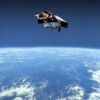
CLIMATE CHANGE: Polar Satellite Still in Planning Stage
When the European Space Agency (ESA) designed the original CryoSat ice-monitoring satellite, not all scientists accepted global warming as an urgent threat.
Q&A: Aid Effectiveness Undermined by EU and U.S. Trade Policy
Criticism against international development aid has been growing for several months, moving from down-right disapproval, shared by leftist and rightist commentators, experts and politicians in industrialised and poor countries, to partial reproaches for the fragmentation and lack of coherence in aid.ECONOMY: Left Vindicated, but Offers no Replacement
'Post-neo-liberalism' - that mouthful of a word was making the rounds at an international congress on the economic turmoil in Berlin last weekend. Just another buzzword, as some participants thought, or something necessary to describe the world past the now exposed economics of neo-liberalism?DEVELOPMENT: Aid Fragmentation Worse Despite Paris Declaration
Civil society representatives agree with the recent finding of the Organisation for Economic Cooperation and Development (OECD) that fragmentation of international cooperation has increased instead of diminished, in direct contradiction to the so-called Paris Declaration where over 100 countries called for effective dispensing of aid.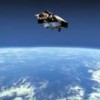
Ambitious Polar Satellite Still in Planning Stage
If everything goes according to plan, in November the European Space Agency will launch CryoSat-2, in what will be the second attempt to put a polar satellite in orbit to explore the state of the earth’s cryosphere.ECONOMY: A Fair Way to Beat the Gloom
The economic depression unfolding around the world has not touched trade in products from developing countries that certify respect for social and labour fairness, human rights and environmental standards, according to groups engaged in fair trade.« Previous Page — Next Page »


The Week with IPS

NEXT STOP - SDGs
Tracking global progress towards a sustainable world
Tracking global progress towards a sustainable world
