Languages
Friday, April 17, 2026



News and Views from the Global South

Iran Conflict: “Civil War Will Be Inevitable”
Iranian and Israeli flags fill the centre of Manchester, in northern England. There are also portraits of a king overthrown almost half a century ago and of his son, now a claimant to the throne from exile. It is yet another march of Iranians calling for Reza Pahlavi as an alternative to the regime of the ayatollahs.
Western Sahara: Half a Century of Occupation and One Last Betrayal
Ehmudi Lebsir was 17 when he trudged more than 50 kilometres across the desert to stay alive. Half a century on, the Sahrawi refugee still has not gone home to what was then Spanish province of Western Sahara.
In Gaza, “the Most Ordinary Things Can Kill”
It’s 8am when Nasser Hospital in Gaza opens its doors. Aitor Zabalgogeazkoa, Doctors Without Borders’ emergency coordinator in the besieged territory, has already been at work for more than three hours.
Polish Border Wall Puts Local Tatars on the Brink
Dzenneta Bogdanowicz never imagined she would witness the construction of a wall in the middle of nowhere, just two kilometres from her front door.
Öcalan’s Letter: Between Dismay and the Kurds’ Need to Believe
"The PKK (Kurdistan Workers' Party) should dissolve. I make this call and take historical responsibility," read the letter from Abdullah Öcalan, the imprisoned leader of the Kurdish guerrilla, on Thursday, 27 February.
Syria: Between “Collective Failure” and “World War III”
Nobody saw it coming. After years of brutal war in Syria, many believed the battle lines had stabilized, leaving only sporadic skirmishes or even the potential for negotiations.
Azerbaijan’s Climate Conference Brings a Mild Autumn for Armenians
On December 12, 2022, a group of Azerbaijani environmentalists blocked the only road connecting Armenia with the Nagorno-Karabakh enclave. The news went largely unnoticed by mainstream media, perhaps because it was difficult to understand.
Azerbaijan Turns into a “Massive Open-Air Prison” before UN Climate Change Conference
On November 20, 2023, Ulvi Hasanli, director of AbzasMedia —an independent media outlet in Azerbaijan—was arrested when he was about to board a taxi to Baku airport. Meanwhile, uniformed officers raided AbzasMedia's headquarters in the Azerbaijani capital, claiming to have found 40,000 euros in cash, which was used as evidence to accuse Hasanli of currency smuggling.
Women Take the Lead in Baloch Civil Resistance
A 30-year-old woman speaks before tens of thousands gathered in southern Pakistan. Men of all ages listen to her speech in almost reverential silence, many holding up her portrait and chanting her name: Mahrang Baloch.
The Baloch Women From Pakistan Want Their Missing Relatives Back
“We are the mothers, daughters, and sisters of the missing and murdered Baloch. We are thousands.” Mahrang Baloch, a 28-year-old doctor from Pakistan's Balochistan province, is blunt when introducing herself and the rest of a group protesting in central Islamabad.
Navigating Russian Censorship from the Polar Circle
At 400 kilometres north of the Arctic Circle, Russian journalist Giorgi Chentemirov says he had already been out of the country for six months when the Russian Ministry of Justice labeled him a "foreign agent."
Iran, a Murdered Teenager and a Fading Protest
On October 28, Armita Geravand, a 16-year-old Iranian teenager, passed away a month after she had been beaten by the police in the Tehran subway for not wearing the Islamic veil correctly.
After Nagorno-Karabakh, is Armenia Next?
On September 19, the sound of bombs reminded the world of a long-forgotten conflict. In the Caucasus, the Azerbaijan’s army was launching a massive attack against a small enclave, Nagorno-Karabakh.
In Northern Syria, Palestinians Fund Settlements in Occupied Kurdish Areas
The video shows an empty house with even the door frames and windows torn out. Graffiti on the wall recalls that the building was once requisitioned by the Sham Legion, an Islamist faction from northern Syria.
A Shipwreck in Greece Reminds Us of the Mess in Libya
A new catastrophe in the Mediterranean, this time off the coast of Greece. The number of drowned still to be determined — barely 100 survivors speak of more than 700 passengers on board— will be added to almost 30,000 lost at sea since 2014, according to the International Organization for Migrations.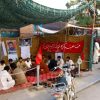
Journalists in Balochistan: Keep Quiet or Die
Geologists have described the region as the most similar to Mars on Earth. Whether it's violent sandstorms or ice found on its surface, we get more news from the red planet than from Balochistan.
Turkish Writer Pinar Selek Faces Her Fifth Life Sentence
The woman we're meeting in a house on the outskirts of Biarritz -800 kilometres southwest of Paris- is a university professor, the author of several books and hundreds of articles, and a well-known human rights activist.
The Sami People’s Fight Against Norwegian Windmills
There are 151 wind turbines and more than 130 kilometres of connection routes and power lines on the Fosen peninsula, 530 kilometres north of Oslo. Norwegian judges say that they should not be there, and the owners of those lands since time immemorial do too.
“An Israeli Senior Minister Asked Me To Commit Hate Crimes”
Harassing Palestinians, vandalizing their cars and houses, occupying their lands: Gilad Sade, a 36-year-old Israeli, recalls his day-to-day life when he belonged to a Jewish supremacist organization.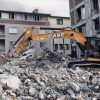
Turkey’s Shaky Foundations
Geology explains the terrible earthquake that shook Turkey and Syria on February 6 with academic coldness: the Arabian, Eurasian and African plates pressure the Anatolian plate. On the surface, geopolitics resorts to concepts like "fault", "tension" or "fracture" to explain things too. When one looks at Turkey, both disciplines’ maps can easily overlap each other, with a death toll calculated in the tens of thousands.
The Journalist Stranded in Europe’s “Guantánamo”
It's 23 hours a day in a cell without natural light and just one to walk around in a 7x4-metre courtyard. For Pablo González, an independent Spanish-Russian journalist, it's been almost a year spent in solitary confinement in Poland.Next Page »


The Week with IPS

NEXT STOP - SDGs
Tracking global progress towards a sustainable world
Tracking global progress towards a sustainable world
