Languages
Thursday, October 15, 2026



News and Views from the Global South

Brazil on the Verge of “Clean” Petrochemical
A byproduct of biodiesel can be used in industries like plastics, cosmetics, medicines, pesticides, energy and manufacturing.
SOUTH AMERICA: Brazil Under Pressure to Mediate Conflict
Colombia’s military incursion into Ecuador is at the centre of the current crisis between three Andean nations, which must be resolved within the framework of the Organisation of American States (OAS), according to the Brazilian government’s official position as expressed Monday by Foreign Minister Celso Amorim.
BRAZIL: Keeping Indigenous Identity Intact in “Urban Village”
"I desperately want to go back. I feel like I’m living in a prison here, but I stay on because I love my children," says Conceição Gonçalves, who misses the indigenous village of Taunay where she lived until last year, when she moved to the capital of the Brazilian state of Mato Grosso do Sul.CLIMATE CHANGE: Brazilian Ethanol Goes It Alone
Despite the urgency to reduce emissions that contribute to climate change, Brazil has been unable to stave off the doubts that are slowing the growth of an international market for plant-based biofuels.
BRAZIL: Indigenous Groups Defend Constitutional Right to Land
Thousands of indigenous people in the west-central Brazilian state of Mato Grosso do Sul are living in precarious camps or small overcrowded reservations, lacking the land they need to grow the food needed to overcome high levels of malnutrition.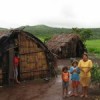
BRAZIL: Rising Indigenous Death Toll Sparks Calls to “Stop the Genocide”
Valdelice Verón still regrets not being at her father’s side, but he had sent her to the city. And she still remembers that early morning on Jan. 12, 2003, when her daughter called out, "Mommy, grandpa’s on TV." It was the news that her father was in the hospital, critically wounded.
BRAZIL: Guarani Education Empowers Women Leaders
Leia Aquino gave up her plans to work in a hospital in order to be near her husband, a nurse, the day she saw a motorcyclist badly injured in an accident. Her aversion to the sight of so much blood led her to become a teacher instead, and now she runs a school for indigenous children on the Brazil-Paraguay border.
Brazilian Ethanol Goes It Alone
Despite the urgency to reduce emissions that contribute to climate change, Brazil has been unable to stave off the doubts that are slowing the growth of an international market for plant-based biofuels.CLIMATE CHANGE: Lula Calls for Flexibility from Rich Countries
Industrialised nations must live up to their Kyoto Protocol commitments and be flexible in trade negotiations in order for the world to make progress towards solutions to climate change and to prevent the poor from being steeped in poverty for a long time to come, Brazilian President Luiz Inácio Lula da Silva said Thursday.
RIGHTS-BRAZIL: Recovering Guarani Traditions
Until the visitor runs across a large "house of prayer" that confirms the area's indigenous character, this place in the central-western Brazilian state of Mato Grosso do Sul looks like any other rural district, with the ramshackle housing highlighting the widespread poverty.
Guaraníes Out of Their Environment
With no forests or rivers, or sufficient land, the indigenous peoples of Mato Grosso do Sul try to survive on wage labor from working on sugarcane plantations and on alternative farming.
RIGHTS-BRAZIL: Pantanal Indians Threatened by Deforestation
The indigenous peoples of the central-western Brazilian state of Mato Grosso do Sul do not look like the tribes portrayed in film, decked out in colourful clothing and adornments and depending on their natural surroundings to survive in the Amazon jungle. But some of their problems are similar to their Amazonian counterparts, and in some cases even more serious.
Pantanal Indians Assailed by Deforestation
Aggressive farming and industry are advancing over the lands of the indigenous people of Mato Grosso do Sul in actions that are as insidious as they are devastating.ECONOMY-BRAZIL: US Crisis Expected to Have Moderate Impact
Brazil will not be heavily affected by the U.S. mortgage crisis which may lead to a recession in that country, according to economists and the government of President Luiz Inácio Lula da Silva.WORLD SOCIAL FORUM: Diversity, a Birthright Waiting to Be Recognised
For many people, the World Social Forum (WSF)’s influence and effect is waning, perhaps because it has outpaced public opinion and the dominant political processes, but not the real needs of the times, which require complex and urgent solutions.BRAZIL: Land Shortage Provokes Murders of Indigenous People
At least 76 indigenous people were murdered in Brazil in 2007, 58 percent more than in 2006. The killings increased the most in the west-central state of Mato Grosso do Sul, where the Guaraní people are confined to territories too small for them to maintain their traditional way of life.DEVELOPMENT-BRAZIL: Solidarity Economy Combats Exclusion
The Harmony Agricultural Company has become Brazil’s largest worker-managed business in the solidarity economy. It provides employment for 4,300 families who work 26,000 hectares of land, and its main activity is producing sugar at 48 mills.CHALLENGES 2007-2008: Mercosur Limps Slowly Along
Caught up in a tangle of problems that grow old before they are solved and decisions that seem to take forever to be implemented, the Southern Common Market (Mercosur) will be 17 years old in three months’ time, and no one seems to be willing or able to speed up the South American bloc’s integration process, analysts in the member countries told IPS.CHALLENGES 2007-2008: Brazil Seeks Formula for Continued Growth
The Brazilian economy is finally coming close to the dream of creating the "broad mass consumer market" announced in 2002 as a campaign promise by President Luiz Inácio Lula da Silva. But several hurdles still lie ahead.CHALLENGES 2007-2008: Climate Change Gives Rise to New World Order
Once again, humanity is facing the risk of catastrophe. The terror of destruction by nuclear missiles ready to be launched at the touch of a button has given way to the disturbing possibility of global warming going past the point of no return, and this is turning traditional international coalitions and geopolitical concepts upside down.ENERGY: Nascent Biofuel Market Has Birth Defects
The development of an international market for crop-based fuels could reduce climate changing gas emissions and mitigate the inflationary impacts of the current euphoria surrounding this energy alternative, but it is a process that will take years.« Previous Page — Next Page »





The Week with IPS

NEXT STOP - SDGs
Tracking global progress towards a sustainable world
Tracking global progress towards a sustainable world
