Languages
Tuesday, October 20, 2026



News and Views from the Global South
RIGHTS-BRAZIL: Homeless Join Month of Protests
The Homeless Workers Movement (MTST) blocked three access roads into Sao Paulo on Wednesday, continuing a month-long struggle during which they have invaded a large number of buildings and unoccupied urban sites in several state capitals.BRAZIL: Indigenous Demonstrators Get Results
The indigenous protesters who camped out this week in the very heart of the Brazilian capital have victories to celebrate, like the installation by President Luiz Inácio Lula da Silva of a national commission on indigenous policy.ENVIRONMENT-BRAZIL: Hybrid Electric Vehicles – Better Than Ethanol
Hybrid electric vehicles (HEVs) are the best way to achieve a drastic reduction in greenhouse gases produced by vehicle exhaust fumes, until hydrogen-powered models become viable. They are even more environmentally-friendly than the use of biofuels.BRAZIL: Dispossessed Demand Land, Health, Justice
The Brazilian capital woke up to another "red April" Monday. Eight hundred landless peasants occupied the headquarters of the government office in charge of land distribution, while 1,000 indigenous people camped out on the Ministries Esplanade, demanding better healthcare and the formal demarcation of their territories.BRAZIL: Women Turning Backs on Information Technology Studies
Women are increasingly abandoning information technology courses in Brazil, in line with a global tendency, warns the Brazilian Computer Society (SBC) and women professors in the field.
ENVIRONMENT-BRAZIL: The Amazon Jungle as Vast Savannah
An Amazon region that is less lush, where forest is replaced by grasslands, is the image drawn by the latest scientific reports in which meteorologists are taking the lead, going beyond even the direst warning of ecologists.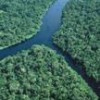
The Amazon Jungle as Vast Savanna
Global warming will broaden the effects of deforestation, which could turn 60 percent of the Amazon forest into grassland in this century, say scientists from the Intergovernmental Panel on Climate Change.BRAZIL: Continued Turbulence Ahead in Air Traffic Crisis
Brazil's air transport crisis, caused by an air traffic controllers' strike, is not yet over. The crisis has also opened up two additional battle fronts for President Luiz Inácio Lula da Silva: discontent among the military, and the looming threat of a parliamentary inquiry.BRAZIL-US: A Giant Shadow Over Ethanol Politics
The friendship between Presidents Luiz Inácio Lula da Silva of Brazil and George W. Bush of the United States was of little consequence while it was purely personal. But everything has changed, now that ethanol binds them together in an alliance with global effects on economics, geopolitics and the environment.ARTS-BRAZIL: Graffiti Comes In Off the Street
Chico realised that his drawings on the walls of Rio de Janeiro were an art form when, at the age of 18, he read an article about the pioneers of graffiti in this Brazilian city.ENERGY: Brazil Aims to Dominate World Ethanol Market
Brazil is working towards producing enough ethanol to substitute 10 percent of the gasoline consumed worldwide within 18 years. That would mean increasing its current production of 17.3 billion litres a year by a factor of 12, without sacrificing forests, protected areas or food cultivation.BRAZIL: Youth Still in Trouble, Despite Plethora of Social Programmes
The Brazilian government has a total of 45 different programmes targeting young people, according to the National Secretariat of Youth. Nevertheless, young people face high unemployment and are sucked into a spiral of violence in which they are both victims and actors.
Brazil Aims to Dominate Ethanol Market
Brazilian ethanol is more efficient and environmentally friendly than U.S. ethanol, and turning it into a global substitute for gasoline is within reach. But it's not all roses.BRAZIL: No Consensus on Success of Land Reform
Brazil's land reform programme has settled nearly one million families on small farms of their own in the last 20 years. But there is no consensus on the effort, which the government touts as a success, the landless movement sees as insufficient, and the opposition criticises as wrongheaded.BRAZIL: Consumers Don’t Question Irrational Interest Rates
After more than three decades of high inflation, Brazilians have not yet recovered from a distorted notion of prices despite the success of the anti-inflation plan launched in 1994, because interest rates are still absurdly high.BRAZIL-US: Social Activist Declined Invitation to Meet Bush
Rodrigo Baggio, founder of one of the best social inclusion projects in Brazil, which has spread to eight other countries, turned down an invitation to meet President George W. Bush during his recent visit to Sao Paulo.BRAZIL-US: Ethanol Deal Represents Convergence of Multiple Interests
The new partnership to promote the use of ethanol agreed during U.S. President George W. Bush's visit to Brazil is the result of the convergence of varied interests between the two countries.BRAZIL: Soap Opera Actors Stand Up for Amazon Jungle
An open letter demanding "an immediate halt to the deforestation of the Amazon jungle" has been released by Brazilian television stars taking part in the Globo Network series " Amaz- nia, de Galvez a Chico Mendes" (Amazonia, from Galvez to Chico Mendes).BRAZIL: Epidemic of Fake Kidnappings
When the voice on the telephone threatened to kill her daughter, the 83-year-old Brazilian did not hesitate. "Ok, kill her, but kill her good and dead, because then you'll go to hell, which is where those who do this to a mother belong," she shouted.BRAZIL: Social Responsibility a Sure Bet for Business
At 62, engineer Oded Grajew, born in Israel but a naturalised Brazilian, is an icon of the progressive business sector who has revolutionised the behaviour of his fellow entrepreneurs.ENERGY-SOUTH AMERICA: Dependency, Not Integration
Energy production and distribution does not necessarily encourage integration between poor countries in South America, but rather a relationship of dependency marked by disputes, resentments and greater distance between its peoples.« Previous Page — Next Page »





The Week with IPS

NEXT STOP - SDGs
Tracking global progress towards a sustainable world
Tracking global progress towards a sustainable world
