Languages
Thursday, October 22, 2026



News and Views from the Global South
ENERGY-LATIN AMERICA: Biofuel Boom Sparks Environmental Fears
The use of biofuels is on the rise in Latin America and is feeding dreams of abundance in countries like Argentina and Colombia. But the experience of Brazil, a pioneer in this alternative energy, raises questions about their potential negative environmental consequences.ENERGY-BRAZIL: Growth Without Guzzling
The rise in energy consumption in Brazil has always outstripped gross domestic product growth, but this can and should be reversed in favour of sustainable development, according to experts, who say the benefits, including financial gains, would be enormous.BRAZIL: New Scandal Rocks Election Campaign
Brazil's election campaign, which appeared to be sailing smoothly towards a first-round victory for President Luiz Inácio Lula da Silva, has been shaken by the latest in a long string of scandals tainting the ruling Workers Party (PT).ELECTIONS-BRAZIL: The Threat from the Left
A small woman whose apparent fragility is deceptive and is belied by her sharp tongue is running for president in Brazil on a platform based on cherished causes of the left that she feels have been betrayed by President Luiz Inácio Lula da Silva and his Workers Party (PT).
Biofuel Boom Sparks Environmental Fears
Many countries in Latin America seek to emulate Brazil's use of ethanol and biodiesel. But environmentalists warn that intense deforestation is often the result of the expansion of these otherwise more eco-friendly fuels.TRADE: International Order Is at Stake, G20 Warns
Immediate resumption of the Doha Round of multilateral trade talks, on the basis of the original pro-development aim, with agriculture at the top of the agenda, were the demands of developing countries meeting Saturday on an initiative by the Group of 20 (G20).BRAZIL: Capital of the Developing South?
Over the next few days, Brazil will be hosting two international meetings that reflect its diplomatic priorities: strengthening concrete shared interests, especially trade-related, in smaller blocs of developing nations, instead of something as broad as the Non-Aligned Movement (NAM).SCIENCE-LATIN AMERICA: Intergenerational Power Struggles
"He lacks grey hairs," argued the head of a Latin American scientific association when he blocked the promotion to the board of his institution of a young colleague who had won awards for his contributions to medical science.SCIENCE: Developing Nations Urged to Join Forces in R&D
Developing countries, which lack the industrialised world's capacity for technological investment, are going to have to look to innovative solutions and collective initiatives if they expect to overcome their problems and address the basic needs of their people.SCIENCE: Excellence and Cooperation in the Developing South
High-quality scientific research is also carried out in the developing South, especially in response to problems specific to the Third World, and in a spirit of cooperation - all of which will be on display as of Saturday at a paradisiacal Brazilian beach resort.ENVIRONMENT-BRAZIL: Experimenting with Hydrogen Transportation
Brazil has joined the industrialised countries in the race for hydrogen power, announcing the development of public buses running on this source of "clean" energy. But experts say the new vehicles will only be commercially viable at the end of the next decade, or even later.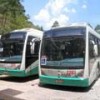
Brazil Experiments with Hydrogen Transportation
The first public buses running on this alternative energy source will begin circulating in Brazil in 2007. But they won't be competitive cost-wise for at least 15 years, say experts.CUBA: Will History Absolve Fidel Castro?
While socialist flags have been steadily disappearing from the world stage and Cuban President Fidel Castro has stepped aside, at least temporarily, anti-imperialist sentiment is likely to remain the Cuban regime's main source of internal cohesion and international influence.BRAZIL: When the Tables Are Turned on Prison Guards
During the 25 hours that he spent as a hostage during a prison riot in Brazil, "I thought I was dead for sure" three times, in one of which "I fainted or something, and wasn't aware of anything for a while," says a prison guard.LATIN AMERICA: Poverty Reduction Still Major – but Not Impossible – Challenge
Latin America and the Caribbean have made significant headway towards most Millennium Development Goals (MDGs). Poverty reduction, however, still looms as a major - yet surmountable - challenge for some countries.BRAZIL: Mother Courage of the Fashion World
The film "Zuzu Angel", which hits theatres in Brazil Friday, providing a fresh look at the crimes committed by the country's 1964-1985 military dictatorship, ends with a moving new version of renowned singer-songwriter Chico Buarque's 1977 song "Angélica", which was written in homage to Zuleika Angel Jones.BRAZIL: Book Takes Dark Journey into World of Police Corruption
Amancio, a military police officer in Rio de Janeiro, was severely wounded in the back by an automatic rifle fired by a drug trafficker, according to official reports. But he was actually hit by "friendly fire" in the stomach, he told a friend just before he died in the hospital.BRAZIL: Race Quotas – Accused of Racism
The imminent approval of a law that establishes obligatory quotas for Afro-Brazilians and indigenous peoples at public universities, and of a Racial Equality Statute that defines public policies for promoting ethnic groups who suffer discrimination, has sparked a resurgence of the controversy about how to combat racism and inequality in Brazil.BRAZIL: Soy Industry Joins Effort Against Amazon Deforestation
The environmentalist movement, and especially international watchdog Greenpeace, are celebrating a new victory in Brazil: the big companies that process and export soy have decided not to buy soybeans from newly deforested areas in the Amazon jungle.SOUTH AMERICA: Venezuela Brings Economic Clout, and Tension, to Mercosur
The incorporation of Venezuela as the fifth full member has amplified internal and external political tensions in South America's Mercosur trade alliance. But on the positive side, it bolsters the bloc's power on the energy and financial fronts, which should help neutralise factors tending towards fragmentation.HEALTH/SCIENCE: Transgenic Mosquitoes Enlisted in Fight Against Malaria
Brazil's René Rachou Research Centre has genetically modified a mosquito to eliminate its ability to transmit the parasite that causes malaria.« Previous Page — Next Page »





The Week with IPS

NEXT STOP - SDGs
Tracking global progress towards a sustainable world
Tracking global progress towards a sustainable world
