Languages
Thursday, October 1, 2026



News and Views from the Global South
RELIGION-BRAZIL: Pluralism Takes a Toll on Catholicism
Religious diversity has taken root in Brazil over the past few decades, chipping away at the number of Roman Catholics as more and more people identify themselves as evangelical Christians or say they do not profess a specific faith.AGRICULTURE-BRAZIL: The Ever More Tangled GM Crop Debate
Genetically modified soya is running into new difficulties in Brazil, with hundreds of trucks blocked from transporting their soya shipments to port, and farmers without authorisation to use the herbicide indispensable for protecting this crop.ECONOMY-BRAZIL: Limited Recovery Feeds Scepticism
The Brazilian economy is sending signals of recovery that are stirring up optimism among government officials and some areas of the private sector, but have so far failed to diminish the scepticism of critics of President Luiz Inácio Lula da Silva's economic policies.BRAZIL: A Witness to a Century of Incredible Growth and Change
Angelina Dutra de Oliveira, at the age of 80, cannot get over the changes she has seen in her lifetime in Brazil.TRADE: G20+ Could Play Key Role in Future of WTO Talks
The new bloc of developing countries that came to the world's attention in the fifth WTO ministerial conference last month in Mexico may have an uncertain future, but it could also play a key role in the fate of the multilateral trade talks, say analysts in Brazil.BRAZIL: Building New Power Blocs in the Developing World
Bringing about unity between the developing world's powerhouses to create a multi-polar world is an idea that Brazil has long been cultivating, but which only now is taking shape, since Brazil, India and South Africa joined forces in the Group of 22 (G22).AGRICULTURE-BRAZIL: GM Soya Threatens Local Seed Industry
The Brazilian government's decision to temporarily allow farmers to plant genetically modified soya seed that was smuggled into the country "is our death sentence," says Narciso Barisón Neto, head of a seed-producers' association in the southern state of Rio Grande do Sul./ARTS WEEKLY/ MUSIC-BRAZIL: The Weight of a Legacy
Maria Rita released her first album at age 26, unlike other singers and musicians with famous parents who had records on the market when they were still practically adolescents.ENVIRONMENT: Dilemma of the Ozone Hole and Climate Change
Scientists hope by 2005 to launch alternatives to two chemicals used as replacements for ozone-depleting chlorofluorocarbon (CFC) gases but which themselves contribute to climate change.AGRICULTURE-BRAZIL: GM Soya Illegal, but Government Approved
Genetically modified soya is gaining ground in Brazil through an illegal channel that has now been given the green light by the government itself.EDUCATION-BRAZIL: Final Offensive Against Illiteracy
Brazil is taking another stab at illiteracy, after setting the ambitious goal of teaching 20 million people over 15 to read and write during President Luiz Inácio Lula da Silva's four-year term, which ends in 2006.BRAZIL: Evidence of Pre-Columbian Civilisation Found in Amazon
Relatively large pre-Columbian societies dramatically modified one of the least-known areas of the Amazon Basin, the Upper Xingú River, along the Brazilian Amazon's southeast edge, says a study published last week by Science magazine.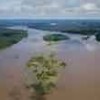
Pre-Columbian Society Found in the Amazon
Brazilian Carlos Fausto, member of the team that made the discovery, tells Tierramérica how the new archeological evidence debunks the myth that the Amazon was an uncivilized area prior to the arrival of the Europeans in the 15th century.HEALTH-BRAZIL: On the Offensive for Cheap Medicines
Damaris Lucena, 78, is undergoing chemotherapy for stomach cancer. She receives a widow's pension of 80 dollars a month and needs medications that cost 23.5 to 40 dollars a month.HEALTH-LATAM: Unemployment, Hopelessness Drive the Young to Suicide
Osirene Melo, who has manned a suicide hot-line once a week for 10 years in northern Brazil, says many of the calls are from troubled youngsters who have found it impossible to land their first job.POPULATION-BRAZIL: Living Alone – or in Three-Generation Households
The number of single-occupant households in Brazil rose 67 percent between 1991 and 2000, although among the lower socioeconomic strata there are many homes in which three generations live under the same roof, to share expenses.BRAZIL: Recession No Match for Lula’s Charisma
The weight of Brazil's economic recession and high unemployment during the first eight months of the Luiz Inácio Lula da Silva administration has not hurt the president's popularity.ENERGY-SOUTH AMERICA: Brazil’s New Gas Finds Could Modify Integration
The news that Brazil is also rich in natural gas may change the scenario in which this country is attempting to renegotiate a 10-year-old contract for gas imports from Bolivia, and could modify the thrust towards integration of South America's energy sector.WTO-CANCUN: Brazil Imports Generic AIDS Drugs from India, China
Brazil's decision to import generic HIV/AIDS drugs, manufactured in China and India, has gained greater legitimacy with the related agreement approved by the World Trade Organisation last week, but the import policy was never contingent on international consent.POPULATION-BRAZIL: Four Out of 10 Women Sterilised
As many as four out of 10 Brazilian women of child-bearing age have had their tubes tied, according to estimates that are widely accepted by experts./ARTS WEEKLY/FILM-BRAZIL: The Camera Focuses on a Nation’s Sores
"Amarelo Manga" (Yellow Mango), the first feature-length film by Claudio Assis, feeds a current of Brazilian film that is more concerned with showing the open wounds of the national reality than with telling a story.« Previous Page — Next Page »


The Week with IPS

NEXT STOP - SDGs
Tracking global progress towards a sustainable world
Tracking global progress towards a sustainable world
