Languages
Monday, September 28, 2026



News and Views from the Global South
BAHRAIN: Tribunal-Issued Death Sentences Cause Outcry
Democracy advocates in the United States are troubled by the pending execution of two men who took part in anti-government protests in Bahrain.Prison Lobbyists Help Spread Anti-Immigrant Laws to U.S. South
Earlier this month, Georgia became the third state to enact some of the most anti-immigrant legislation in recent U.S. history, when Governor Nathan Deal, a Republican, signed the bill, HB 87.U.S.: Lethal Injection Treads Murky Ethical Waters
The death penalty is in limbo in several states since the U.S. Drug Enforcement Agency confiscated several states' supplies of sodium thiopental (ST), a key drug used in lethal injections, and as the supply of the drug to the U.S. grows even tighter.U.S. High Court Rejects High-Profile Death Penalty Appeal
The U.S. Supreme Court ruled Monday that it would not hear an appeal by death row inmate Troy Davis, in what could be the end of the legal road for the Georgia prisoner whose case has garnered international support.U.S.: Environment Agency Moves to Regulate Carbon Dioxide
The U.S. Environmental Protection Agency (EPA) has begun the initial stages of a process that may lead to the federal agency's first regulations to limit emissions of carbon dioxide from power plants and oil refineries.US: Lethal Drug Shortage Creates Ethical Quagmire
As the domestic and overseas sources that U.S. states relied upon for sodium thiopental (ST), a key drug used in lethal injections, have stopped producing or exporting the drug, state governments are scrambling to find another way to carry out planned executions.Bird, Fish Kills Quite Common – and That’s the Problem
The New Year brought a spate of incidents across the United States and around the world in which large numbers of birds appeared to have fallen out of the sky, and thousands of fish were found floating dead in rivers.U.S.: Prisoners Coordinate Statewide Strike via Cellphones
In what some are calling the largest prison strike in U.S. history, inmates in the state of Georgia coordinated a strike across multiple prison facilities using pre-paid cell phones.U.S.: Federal Reserve Conjures – and Redefines – Money
The private central bank of the United States, the Federal Reserve, has begun purchasing $600 billion of long-term U.S. Treasury Bonds, essentially subsidising the federal deficit for the year.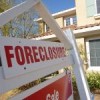
Foreclosure Mess Reveals Longstanding Problems
The discovery of apparent massive fraud in mortgage and foreclosure documents has called into question millions of pending foreclosures in the U.S. Several banks have enacted partial or complete moratoriums until the issues can be resolved.Fatal Blast Puts Focus on Web of Gas Pipelines
A natural gas explosion in San Bruno, California that almost decimated an entire city earlier this month has fuelled concerns about the outdated, aging, and dangerous gas pipelines that underlie many U.S. cities.US: New Banking Overhaul More Like An Under-Haul
On July 21, 2010, U.S. President Barack Obama signed into law the most sweeping financial industry regulatory reform since the Great Depression of the 1930s. But, experts point out that the bill does not address some of the real problems behind the structural instabilities of the U.S. economic system.U.S.: Controversy Highlights Plight of Black, and White, Farmers
The controversial firing of an African-American federal government employee over comments misconstrued to be racist has refocused attention on the plight of black farmers in the U.S. South.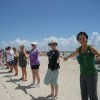
Gulf Spill Galvanises Activist Community
With the U.S .government and oil giant British Petroleum under fire for their handling of the more than two-month-old Gulf Coast oil spill disaster, environmental and community activists across the country are taking matters into their own hands.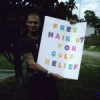
Fears Grow over Oil Spill’s Long-Term Effects on Food Chain
As oil continues gushing from the ocean floor into the Gulf of Mexico, with no sign of stopping until a new well is finished this August, scientists, environmentalists and local residents are beginning to reckon with the reality of a massive annihilation of sea creatures and wildlife.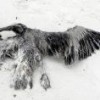
Ecosystem in Peril after Gulf Oil Spill
With engineers giving a best-case scenario of "weeks" before the catastrophic oil leak in the Gulf of Mexico is sealed, some scientists are warning that the region's ecosystem could face major long-term damage.U.S. States Consider Starting Their Own Banks
At least eight U.S. states are considering proposals to start state-run banks in the wake of an economic crisis where many private banks ceased or greatly decreased their lending, literally shrinking the money pool available in state economies.U.S.: Big Energy Firms Blocking Solar Power in South
As citizens, businesses and non-profit organisations seek to transition to cleaner power sources like solar and wind, some big energy firms whose business models rely on polluting sources are standing in the way.
US-HAITI: Katrina Victims Feel Kinship, Offer Help
Many survivors of Hurricane Katrina, which struck New Orleans and the U.S. Gulf Coast in August 2005, have been seeing their own reflection in media images of Haiti earthquake victims. And despite - or even because of - their own struggle, many feel personally driven to help organise assistance for the people of Haiti.US-HAITI: Civil Rights Delegation Calls for Reparations
A U.S. delegation to Haiti led by civil rights veteran Joe Beasley is calling for a 30-billion-dollar restitution payment by France to help Haiti rebuild after the devastating Jan. 12 earthquake, and the end of what Beasley refers to as an unofficial blockade of Haiti.U.S.: Landmark Case Could Restore Felon Voting Rights
A historic ruling earlier this month on behalf of felons who lost the right to vote could call into question the disenfranchisement of felons and ex-felons in the State of Washington and indeed across the United States.« Previous Page — Next Page »


The Week with IPS

NEXT STOP - SDGs
Tracking global progress towards a sustainable world
Tracking global progress towards a sustainable world
