Languages
Saturday, October 17, 2026



News and Views from the Global South
CUBA: Exhibitionists Common but Ignored
Many Cuban women say they have been victims of male exhibitionism, a form of sexual aggression that is common in public spaces on the island, according to a documentary produced by the state Institute of Cinematographic Arts and Industry (INCAIC) which has attracted the attention of social scientists.TECHNOLOGY-CUBA: University Opens Doors to Free Software
After years of deliberation, the University of Havana has finally decided to switch over to free software on its network of computers, virtually all of which are running the Windows operating system, produced by United States software giant Microsoft.CUBA: ‘Green’ Farming Techniques to Boost Production
The application of agroecological techniques and the salvaging of traditional farming methods have revolutionised food production in rural areas along the southern edge of the Cuban capital.
CLIMATE CHANGE-CUBA: Prized Wetland in Danger
If the worst outcomes predicted for climate change in Cuba become reality, a large portion of the Ciénaga de Zapata, the largest and best preserved wetland in the islands of the Caribbean Sea, could disappear by the second half of this century.
Climate Danger Lurks for Cuban Wetland
Residents of the Cuban wetland Ciénaga de Zapata face the challenge of changing an apparent inevitability: the disappearance of the marsh as a result of global warming.LABOUR-CUBA: The Challenge of Boosting Productivity
Workers are facing thorny questions related to productivity, wages, participation in decision-making or unemployment at a time when the government is discreetly adopting measures aimed at finally pulling the country out of an economic crisis that has dragged on for more than 15 years.DEATH PENALTY-CUBA: Dissidents, Preachers Welcome Decision
Cuban President Raúl Castro’s announcement that virtually all death sentences would be commuted to terms of 30 years to life was welcomed Tuesday by social sectors calling for the abolition of capital punishment.CUBA: Government Toughens Stance Against Dissidents
The break-up of a demonstration by a small group of Cuban women demanding the release of their imprisoned dissident husbands came just a few days after a government warning that in Cuba there is no space for "subversion" or the dreams of "internal mercenaries."CUBA: US Visa Programme to Speed Family Reunification
The United States has begun a new programme to reunite Cuban families, which has renewed the hopes of potential migrants from the island who have family members in the United States. The U.S. government hopes to fulfil the goal of issuing 20,000 immigration visas a year, as agreed in a longstanding bilateral treaty.
CUBA: Women Put On the Masonic Apron
More than 30 women have become pioneers of female Freemasonry in socialist Cuba, founding two lodges under the auspices of the Women’s Grand Lodge of Chile, which will provide them with support and advice until they can function independently.CUBA: New Freedoms Unaffordable to Many
The wall of prohibitions that has marked Cuban life for years has begun to crumble, with the lifting of the bans on Cubans staying in upscale tourist hotels and buying mobile phones and computers. The obstacle now is the same one faced by a majority of people in any developing country: money, or lack thereof.CUBA: Inklings of Economic Reform
Farmers in Cuba can now buy their own supplies - a departure from a decades-old system clogged with red tape in which the state assigned them inputs, and an important first step towards bolstering food production, say experts.CUBA-EU: Hopes for Change?
The visit to Cuba by EU Aid Commissioner Louis Michel, invited by Foreign Minister Felipe Pérez Roque for "exploratory" talks, gave rise to mild hopes of an eventual normalisation of relations between Cuba and the EU.CHALLENGES 2007-2008: Cuban Economy in Need of Nourishment
Increasing food production is the main challenge to be faced by the Cuban economy this year, to improve people’s quality of life. It was one of the recurrent themes raised at the popular debates convened on the government’s initiative in the second half of 2007.CARIBBEAN: Energy Cooperation Sets ‘Example’ for Regional Integration
Cuba and Venezuela are hoping to reinforce their integration strategies at a summit this week through the example of Petrocaribe, a regional energy cooperation agreement that protects less developed countries in the Caribbean from the full impact of today’s soaring oil prices.CUBA: Women Apply for Masonic Rites
A group of women are looking forward to founding the first women’s Masonic Lodge in Cuba next year, and so put an end to their traditional exclusion from Freemasonry, an esoteric society which is based on the ideals of liberty, equality and fraternity.RIGHTS-CUBA: Incident Could Hurt Relations With Catholic Church
A police raid on a church in the eastern city of Santiago de Cuba to arrest a group of dissidents was called "a deplorable incident" by a member of the ecclesiastical hierarchy, who said it could harm the good relationship between the Catholic Church and the Cuban government.AGRICULTURE-CUBA: Waiting for Announced Reforms
While saving up for the extra expenses of the year-end holidays, Cubans are hoping that 2008 will bring reforms, at least in agriculture, that will result in a more varied supply of food, at affordable prices.
HEALTH-CUBA: Venomous Hope
With equal doses of caution and hope, Cuban researchers are moving forward with studies to test the cancer-fighting properties of the toxin produced by the blue scorpion (Rhopalurus junceus), a species endemic to this Caribbean island.WORLD AIDS DAY-CUBA: Volunteers on the Front Line of Prevention
While scientists devote their best efforts to developing an AIDS vaccine, prevention continues to be the most effective way of containing the pandemic which has already caused the deaths of 2.1 million people this year, and new infections in another 2.5 million people.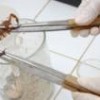
Hope-Filled Venom
Cuban scientists will conduct clinical trials of the anti-cancer properties of the venom from a scorpion native to the Caribbean island. They have administered it to more than 8,000 patients since 2000.« Previous Page — Next Page »





The Week with IPS

NEXT STOP - SDGs
Tracking global progress towards a sustainable world
Tracking global progress towards a sustainable world
