Languages
Saturday, September 19, 2026



News and Views from the Global South
BRITAIN: Iraqi Shadow Seen Over Train Attacks
An Iraqi connection was conspicuously missing from the first statements British Prime Minister Tony Blair made on the bomb blasts in London Thursday last week. But new developments suggest a powerful link between the British invasion and occupation of Iraq and the bomb attacks.RIGHTS: Muslims More Shaken Than London
The bomb blasts in London last week that killed more than 50 and left more than 700 injured, have shaken the Muslim community of Britain more than they have shaken London.
G8 SUMMIT: Pop Campaign on Africa Fizzles Out
Outside of British officialdom, celebrations over increased G8 aid for Africa were confined mostly to a population of two - rock stars Bob Geldof and Bono.G8 SUMMIT: Middle East Gets Money and Advice
A three-billion-dollar offer to rebuild the Palestinian economy marked the strongest part of a G8 push at its summit to bring the Middle East around to its way.G8 SUMMIT: Africa Is Offered a Little – At a Price
The G8 leaders offered Africa a little with one hand, but that offer cloaked intent to take back more - and with many more hands.G8 SUMMIT: U.S. Trips Up Climate Agreement
After surveying the damage left by Thursday's bomb blasts in London, which claimed more than 50 lives and injured upwards of 700 - more than 20 critically - British Prime Minister Tony Blair returned to the Gleneagles golf resort where the G8 industrialised world leaders remained divided over how to tackle global climate change at the end of their three-day summit.G8 SUMMIT: U.S. Trips Up Climate Agreement
The G8 countries remained divided over how to tackle global climate change at the end of their three-day summit here.G8 SUMMIT: Don’t Forget Asia
Leading campaigners have warned against forgetting Asia's poor in the campaign to eradicate poverty in Africa.G8 SUMMIT: Developing Countries Stand Firm by Kyoto Protocol
Leading developing countries delivered an open challenge to the G8 nations Thursday over proposals to abandon the Kyoto Protocol as the means to contain global climate change.G8 SUMMIT: Blasts Derail Trains, and Talks
Four bomb blasts in London Thursday morning killed dozens and injured hundreds of people, and brought the city's public transport system to a halt. These terrorist attacks also derailed a long and sustained campaign to get Group of Eight leaders to deliver on the environment and on poverty.G8 SUMMIT: Pop Diplomacy Takes Over
Intense negotiations began straightaway on the first day of the Group of Eight summit - not amongst the G8 leaders, but between pop stars and the heads of state.G8 SUMMIT: Poverty Campaign Throws a Final Challenge
The Make Poverty History campaign threw down a final challenge to the industrialised world's leaders to end poverty and save lives as the Group of Eight summit got under way here Wednesday.G8 SUMMIT: What if They Disagree to Disagree?
Through the three days of talks little agreement is looking likely; and just as unlikely is any sweet agreement to agree to disagree. The stakes raised by all sides have been too high after the huge build-up to an expectation that the G8 summit will deliver on development of Africa and on action to contain climate change.G8 SUMMIT: What if They Disagree to Disagree?
Through the three days of talks little agreement is looking likely; and just as unlikely is any sweet agreement to agree to disagree. The stakes raised by all sides have been too high after the huge build-up to an expectation that the G8 summit will deliver on development of Africa and on action to contain climate change.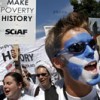
G8 SUMMIT: What if They Disagree to Disagree?
Every now and then helicopters have been flying towards the Gleneagles Hotel, carrying one or another of the G8 leaders whose three-day summit begins Wednesday.G8 SUMMIT: Did Someone Say C8?
Someone please pay attention to the three-day C8 summit that concluded in Dunblane, Scotland on Tuesday.G8 SUMMIT: NGOs See Clouds Over Gleneagles
This week's summit of the Group of Eight leading industrial powers is set to fall short of the response needed to tackle global poverty, says the non-governmental organisation War on Want.G8 SUMMIT: See Through the British ‘Brownwash’, Say Activists
Britain is painting a misleadingly flattering picture of its commitments to do more in the fight against poverty in Africa, a leading development group says.G8 SUMMIT: Gleneagles Was Never This Far
"Not every train stops in Gleneagles," the kindly Scotswoman said. "But there's the odd one that does." She produced a timetable that showed a train calling at the central Scotland destination about once an hour.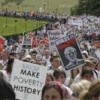
G8 SUMMIT: Behind This New Interest in Africa
Powerful western nations are committed to developing Africa but more as a market for their goods, a leading agricultural economist says.G8 SUMMIT: More Aid Sought for African People, Not Gov’ts
A leading campaign group has called for a substantial part of increased aid to Africa to be channelled directly to people, rather than governments.« Previous Page — Next Page »


The Week with IPS

NEXT STOP - SDGs
Tracking global progress towards a sustainable world
Tracking global progress towards a sustainable world
