Languages
Monday, November 2, 2026



News and Views from the Global South
DEVELOPMENT: Boost Biotech in South, Report Urges
The science of biotechnology could save tens of millions of lives each year in developing countries if the technology is shared equitably, says a new report to the United Nations.IRAQ: Prospects Bleak if Early Vote, Book Suggests
Elections in Afghanistan and Iraq may prove disastrous by increasing violence and extremism, according to studies of other post-conflict societies included in a book released Monday by United Nations University Press.CANADA: Monsanto Victory Plants Seed of Privatisation
Canadian farmers' traditional right to save seeds is being threatened by proposals to collect royalties on virtually all such seeds following agribusiness giant Monsanto's victory over grower Percy Schmeiser.CANADA: Monsanto Victory Plants Seed of Privatisation
Canadian farmers' traditional right to save seeds is being threatened by proposals to collect royalties on virtually all such seeds following agribusiness giant Monsanto's victory over grower Percy Schmeiser.SCIENCE: Global Warming May Spawn More Super-Storms
Hurricane Ivan, the incredibly powerful storm that killed at least 120 people in the Caribbean and southern United States, may be a harbinger of the Earth's hotter future, say experts.SCIENCE: Global Warming May Spawn More Super-Storms
Hurricane Ivan, the incredibly powerful storm that killed at least 120 people in the Caribbean and southern United States, may be a harbinger of the Earth's hotter future, say experts.SCIENCE: Warming Trend Will Decimate Arctic Peoples, Report Warns
Climate change will soon make the Arctic regions of the world nearly unrecognisable, dramatically disrupting traditional Inuit and other northern native peoples' way of life, according to a new report that has yet to be publicly released.CANADA: Bird Flu Defeated – At High Cost
While the World Health Organisation (WHO) said Wednesday that more money and attention is needed to contain bird flu in Asia, Canada's recent outbreak was successfully contained in less than five months but at an enormous, and many say unnecessary, cost.Scouring the Seas for Matter to Create Life
Can we create ''super bacteria'' capable of generating energy? There are those who believe it can be done, including the controversial scientist J. Craig Venter, expert in synthetic biology.SCIENCE: US-Backed Researcher Scours Seas for Matter to Create Life
Somewhere in the South Pacific Ocean, a private research vessel owned by controversial genetic scientist J Craig Venter is collecting millions of bacteria from the sea, hoping to find the biological building blocks he can use to create a synthetic life-form that will one day become a new source of energy.TRADE: Company Challenges U.S. for Safeguarding Environment
A Canadian company will be nearly one billion dollars richer if it becomes the first firm to win a trade challenge against Washington under the investment section of North America's free trade deal, but experts say a victory would deal a serious blow to any government's ability to pass laws to protect health and the environment.ENVIRONMENT DAY: Climate Change Film Has Potential to Change Minds
It is easy to dismiss Hollywood's big movie on climate change, 'The Day After Tomorrow', as fantasy, but small low-lying island states like Tuvalu take it seriously. It is already the day after tomorrow there, with rising seas forcing residents of the South Pacific nation to emigrate to New Zealand.AGRICULTURE: Canada’s Top Court Backs Monsanto Against Farmer
Canada's top court ruled against farmer Percy Schmeiser on Friday, upholding agri-business giant Monsanto's patent on genetically modified (GM) canola, a decision observers say will have implications for agriculture worldwide.AGRICULTURE: Canada’s Top Court Backs Monsanto Against Farmer
Canada's top court ruled against farmer Percy Schmeiser on Friday, upholding agri-business giant Monsanto's patent on genetically modified (GM) canola, a decision observers say will have implications for agriculture worldwide.AGRICULTURE: Activists Wary as Monsanto Withdraws GE Wheat
Activists who fight genetically engineered products are declaring victory after agricultural giant Monsanto's decision to shelve plans to launch GE wheat in Canada and United States. But some warn that the battle over the wheat, and GE crops in general, is far from over.AGRICULTURE: Activists Wary as Monsanto Withdraws GE Wheat
Activists who fight genetically engineered products are declaring victory after agricultural giant Monsanto's decision to shelve plans to launch GE wheat in Canada and United States. But some warn that the battle over the wheat, and GE crops in general, is far from over.ENVIRONMENT-U.S.: Plan Points Way to Greenhouse Gas Cuts
As a five-year drought threatens water supplies in America's west, a new report sets out how the United States could do its part to curb global warming.ENVIRONMENT: No Earth Day Fete for Iraq
Three wars combined with decades of neglect and mismanagement have devastated the natural environment of Iraq, and international efforts to restore it are being constrained by the ongoing conflict.AGRICULTURE: Seed Treaty Boosts Farmers, Fails to Weed Out GM Crops
Poised to come into force in June, the international seed treaty represents the best hope for the protection of farmers' rights and to stem the tide of patents on seeds, according to activists.ENVIRONMENT: A Step Backwards for the Ozone Layer
The United States convinced the parties to the Montreal Protocol to authorise "critical use" of the toxic pesticide methyl bromide, one of the ozone layer-depleting substances that the international community agreed 17 years ago to ban completely by 2015.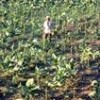
A Step Backwards for the Ozone Layer
Washington won an exemption allowing its farmers to use more methyl bromide, a pesticide banned by an international treaty because it depletes the atmospheric ozone layer. But the exemption lasts only one year.« Previous Page — Next Page »





The Week with IPS

NEXT STOP - SDGs
Tracking global progress towards a sustainable world
Tracking global progress towards a sustainable world
