Languages
Monday, October 26, 2026



News and Views from the Global South
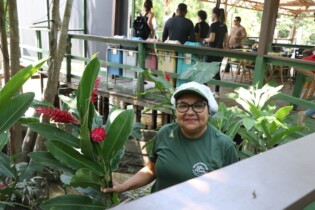
The Bitter Sweet Future of Cocoa Showcased During COP30, Belém
Izete dos Santos Costa, also known as Dona Nena among locals in Combu Island, welcomed hundreds of people from around the world during the recent climate conference in Belém. Her team showcased local crafts and chocolate-making processes in the land of the Amazon rainforest—far from the deafening air conditioner sounds at the Parque da Cidade, where the COP30 negotiations were ongoing.
‘No Land Rights, No Climate Justice,’ Say Activists at Peoples’ Summit
Brazilian Indigenous leader and environmentalist Cacique Raoni Metuktire appealed for support for Indigenous peoples and their land. From the podium of the Peoples’ Summit, Cacique Raoni warned negotiators at the UN climate conference in Belém that without recognizing Indigenous peoples’ land rights, there will be no climate justice.
‘This People’s March for Climate is For My Son’s Future’
In the scorching heat and humidity, Canru Pataxo marched with his one-year-old son firmly held in his arms.
Shepherded by Anxious Security in Humidity-fueled Heat, Activists Plead for Climate Justice
Farmer and climate activist from Nigeria, Melody Areola, is beating the heat in Belém and voicing farmers’ rights in climate discussions. As the UN Climate Conference, COP30, in Brazil approaches the end of its first week, activists like Melody are making their voices louder.
We’re All in the Same Storm, Different Boats, Says Young Activist With Disability
At the UN Climate Conference venue in Belém, young activist João Victor da Costa da Silva is trying to make his case heard by negotiators. The 16-year-old Da Silva has a specific request for the parties: the needs of young people with disabilities should be addressed through the lens of climate justice.
Without Truth, There Can Be No Climate Justice—Experts
Concerned scientists at the UN climate conference in Belém are appealing for collective action to combat climate change-related misinformation and disinformation.
Indigenous Knowledge Holders Want to Be Acknowledged
Generational lived experiences are key to confronting and living with a changing climate, say Indigenous knowledge holders and activists at the UN Climate Conference (COP30). As the first COP to be held in the Amazon region, in Belém, representatives of Indigenous communities reiterated the importance of generationally transferred knowledge and skills to adapt to and mitigate the threats posed by climate change.
‘We Want a Place at the Negotiation Table’ — Indigenous Leader
Indigenous leaders from across the Amazon region are calling on climate negotiators to base climate initiatives on the recognition of the land rights of affected Indigenous communities. From the COP30 venue in Belém, these leaders are demanding full participation in the design and implementation of proposed projects.
Strengthening Indigenous Lands Rights Key in Solving Deforestation in Amazon
Strengthening Indigenous land rights will protect more forest in Brazil’s Amazon and avoid large amounts of carbon emission, according to new research released ahead of COP30.
Nepal Faces Political Crisis after Deadly Gen-Z Protests
Nepal entered into a new era of constitutional and political crisis after deadly protests by the deeply frustrated young generation (Gen-Z). Prime Minister KP Sharma Oli resigned on Tuesday after protests grew out of control.
ICJ Ruling Is a Pivotal Moment for Climate and Health Justice, Experts Say
Legal minds in international law are trying to interpret the scope and impact of the landmark advisory opinion on climate change by the International Court of Justice (ICJ), where it said that states have a duty to prevent significant harm to the environment.
Extreme Weather Will Place Toll on Asia’s Economies and Ecosystems, Says World Meteorological Organization
Asia is heading towards more extreme weather events with a possibility of heavy toll on the region’s economies, ecosystems, and societies, says the World Meteorological Organization (WMO).
Glaciers More Sensitive to Global Warming, Now in Extreme Danger—Study
Almost 40 percent of glaciers that exist now are already in danger of melting even if global temperature stabilized at present-day conditions, a study says. An international study published in the journal Science finds that glaciers are even more sensitive to global warming than previously estimated.
World Day for Glaciers
Glaciers Are in Threat, May Not Survive the 21st Century
Many glaciers in the world will not survive the 21st century, according to reports published by the United Nations. Five of the past six years have experienced the most rapid glacier retreat on record; 2022-24 was the largest three-year loss of glacier mass. 
COP16 Agrees to Raise Funds to Protect Biodiversity
The second round of the UN Biodiversity Conference, COP16, concluded in the early hours of Friday, February 28 in Rome, with an agreement to raise the funds needed to protect biodiversity.
Explainer: Why Glaciers Are Alive, Life-Giving and Worth Preserving
The United Nations declared 2025 as the International Year of Glaciers’ Preservation to promote awareness about the role of glaciers, snow and ice. The climate system and global hydrological cycle are dependent on accumulated water in solid form as glaciers, snow and ice. Because of the global temperature rise and its impact on the Earth’s cryosphere, socio-economic and environmental effects are being observed.
‘We Will Not Go Quietly Into the Rising Sea,’ Tuvalu Tells International Court of Justice
Rising sea level caused by greenhouse gas emission-fueled climate change is threatening existence in coastal communities and island nations. At the International Court of Justice (ICJ), on Thursday, December 12, 2024, small island states, including Tuvalu and a Pacific-based fisheries agency detailed their ongoing existential threats caused by the climate change-induced sea level rise and impacts on fishery-based livelihood.
‘For the Human Race, Ignoring the Climate Emergency Is No Longer an Option’
At the International Court of Justice (ICJ), no matter if the country had high Himalayas, was a small island nation or was experiencing armed conflict, they all agreed that the due diligence principle and the obligation of states to prevent harm caused by climate change, especially for high greenhouse gas emitters, were non-negotiable.
States Individually Accountable For Contributions to Climate Change—Fiji
At The Hague, the United Nation’s highest court heard Fiji, a small island nation, lay out its arguments on the threat posed by climate change and the legal obligations, especially those of developed nations.
Where Is Mental Health in Global Climate Negotiations?
The mental health impacts of climate change are not widely discussed, but increasing evidence shows how climate change is affecting mental health and raising the risk of new mental health challenges. Experts say that existing systems are not equipped to cope with the current and additional challenges related to health and mental health caused by climate change.
Children’s Needs Due to Climate Change, Conflict Often Ignored in Negotiations
As the world grapples with ongoing armed conflicts, from Ukraine to Gaza, advocacy for a more proactive approach to understanding and effectively responding to the needs of children affected by both armed conflict and climate-induced crises is growing.Next Page »




The Week with IPS

NEXT STOP - SDGs
Tracking global progress towards a sustainable world
Tracking global progress towards a sustainable world
