Languages
Monday, September 7, 2026



News and Views from the Global South
Civil Wars Threaten to Break up a Volatile Middle East
As civil wars and cross-border military conflicts continue to escalate in the Middle East, Syria, Iraq and Libya are in danger of breaking up —even as the Islamic State in Iraq and Syria (ISIS) continues to make territorial gains in the volatile region.UN Says it Shattered Glass Ceilings Creating a Carpet of Shards
In the 1960s, when gender discrimination was widespread at the United Nations, there was a story doing the rounds of a woman candidate who had applied for a mid-level professional job in the UN Secretariat.NYC Moves 30,000 Homeless to Permanent Housing
Grappling with an ever-growing problem of a housing shortage facing low income residents, New York City Mayor Bill de Blasio announced plans to provide 30,000 New Yorkers with rental assistance for permanent housing -- largely to avoid or exit shelters.
CTBTO to Install Two Nuclear Monitoring Stations in Ecuador
The Comprehensive Test Ban Treaty Organisation (CTBTO), based in Vienna, will soon install two new monitoring stations in Ecuador. CTBTOs Executive Secretary Dr Lassina Zerbo told IPS the two stations in Ecuador, RN 24 and IS 20, “will brings us an important step closer to the completion of the International Monitoring System – the network that monitors the globe 24/7 for signs of nuclear explosive testing.”
Border Restrictions Violate 1951 Refugee Convention
When the United Nations commemorated “Zero Discrimination Day” on March 1, there was an implicit commitment by the 193 member states to abhor all forms of discrimination – including against women, minorities, indigenous people, gays and lesbians and those suffering from AIDS.
World’s Rural Poor Need Social Protection, Says UN
The success of the UN’s post-2015 development agenda is predicated on one underlying theme: no one should be left behind – and certainly not the world’s rural poor --in the fight to eradicate hunger and poverty by 2030.UNDP Pledges to Help Eradicate Poverty, Hunger By 2030
The UN Development Programme (UNDP) celebrated its 50th anniversary this week with a pledge to help implement the UN’s post-2015 development agenda aimed at eliminating extreme poverty and hunger by 2030. When the agency was founded in 1966, one in every three people was living in poverty. But that number has changed to one in eight, according to UNDP figures.Mideast Arms Supplies Continue Despite Falling Oil Prices
The continued decline in oil prices is threatening to have a direct and indirect impact on several fronts, including development aid, migrant workers and remittances, voluntary contributions to UN agencies, humanitarian assistance to refugees and infrastructure-building in the Gulf countries.125 Million Crying for Help Symbolize World’s 11th Largest Nation
Ban Ki-moon maybe fighting a losing battle to resolve one of the biggest humanitarian problems facing the world body – even as he completes his last 10 months as UN Secretary-General.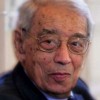
UN Chief Denied Second Term by a Livid US Veto
Boutros Boutros-Ghali, who passed away Tuesday at the age of 93, was the only UN Secretary-General (1992-1996) to be denied a second term in office because of a US veto in the 15-member Security Council.Attacks on Medical Workers in War Zones under Fire
The growing number of indiscriminate bombings in three of the most devastating military conflicts currently underway -– in Syria, Afghanistan and Yemen – are taking a heavy toll on medical personnel serving with humanitarian organizations — along with thousands of civilians caught in the crossfire between government forces and rebel groups.Rise of Middle Class Undermined in East Europe & Central Asia
The UN’s post-2015 development agenda, which was adopted by world leaders at a summit meeting last September, includes a highly ambitious goal: the eradication of extreme poverty by the year 2030. The decline in poverty, as reflected in the UN’s Millennium Development Goals (MDGs) which ended last December, had one positive fallout: the rise of a new middle class graduating largely from the ranks of the poor.
CTBTO’s Verification System Thwarts Nuclear Tests
The Vienna-based Comprehensive Nuclear-Test-Ban Treaty Organization (CTBTO) – a 24-hour international watchdog body – is known never to miss a beat. The Organization’s international monitoring and verification system has been tracking all nuclear explosions -– in the atmosphere, underwater and underground –- including all four nuclear tests by the Democratic Republic of Korea (DPRK) – the only country in the world to test nuclear weapons in the 21st century.UN Seeks Zero Tolerance for Female Genital Mutilation
The United Nations says it is determined to end female genital mutilation (FGM) – a ritual practiced mostly in Africa, the Middle East, parts of Asia and even among some migrant communities in Europe. And the world body’s determination is being backed with facts, figures -- and a global campaign by a Joint Programme against FGM initiated by the UN Population Fund (UNFPA) and the UN children’s agency UNICEF.After 20 Years, Nuclear Test Ban Treaty Still in Political Limbo
After nine years in office, UN Secretary-General Ban Ki-moon will step down in December perhaps without achieving one of his more ambitious and elusive political goals: ensuring the entry into force of the Comprehensive Nuclear-Test-Ban Treaty (CTBT).
UN Hails Myanmar’s Historic New Parliament
When U.Thant of Burma (now Myanmar) was elected UN Secretary-General back in November 1962, he was the first Asian to hold that post after Trygve Lie of Norway and Dag Hammarskjold of Sweden. The appointment was also a historic moment for Asia, which waited for 45 long years for the second Asian to hold that position: Ban Ki-moon of South Korea, the current UN Secretary-General, who was elected in January 2007.Ebola Recovery Funds Impossible to Track, Says New Study
When the Ebola epidemic devastated three West African countries – Liberia, Sierra Leone and Guinea two years ago – the international community responded with pledges of over $5.8 billion in funds to fight the disease which has killed over 11,300 people.
UN Fighting Losing Battle Over Global Humanitarian Crises
As the global refugee crises continues to worsen by the hour, UN Secretary-General Ban Ki-moon is quick to point out that when he took office in January 2007, the international appeal for funds for humanitarian emergencies was only about 4.0 billion dollars annually.Zero Hunger? UN Leads With Landfill Salad and Recycled Food
When the United Nations hosted a high-level lunch for visiting world leaders at the UN dining room during the General Assembly sessions last September, they were in for an unexpected surprise.North Korea Momentarily Escapes Sanctions After Fourth Nuclear Test
When the UN Security Council (UNSC) adopted a resolution imposing sanctions on North Korea -- immediately following its first nuclear test back in 2006 -- Pyongyang described the punitive measure as “an act of war.”Declining Oil Prices May Undermine Development and Humanitarian Aid
The sharp decline in oil prices in the world market -– the lowest in nearly 13 years –- is expected to have a devastating impact on both developed and developing nations.« Previous Page — Next Page »


The Week with IPS

NEXT STOP - SDGs
Tracking global progress towards a sustainable world
Tracking global progress towards a sustainable world
