Languages
Wednesday, September 9, 2026



News and Views from the Global South
Maternal Deaths Decline by 44 Percent, Says New Study
When world leaders adopted a set of eight Millennium Development Goals (MDGs) at a summit meeting in September 2000, one of the heavily-publicised goals was the commitment to reduce extreme poverty and hunger by the end of 2015.Refugee Crisis May Threaten Development Aid to World’s Poor
As the spreading refugee crisis threatens to destabilize national budgets of donor nations in Western Europe, Secretary-General Ban Ki-moon Wednesday appealed to the international community not to forsake its longstanding commitment for development assistance to the world’s poorer nations.Climate Change May Increase World’s Poor by 100 Million, Warns World Bank
The UN’s heavily-hyped Sustainable Development Goals (SDGs), which were approved by more than 160 world leaders at a summit meeting in September, are an integral part of the world body’s post-2015 development agenda, including the eradication of hunger and poverty by 2030.UN Staff Union Warns Pay Cuts Will Largely Undermine Women
The UN’s 60,000-strong international staff union is challenging some of the proposed cuts both on salaries and allowances which will “damage living standards, working conditions and family lives” of some 32,000 staffers “working in the world’s most dangerous locations.”UN Targets “Hidden Source” for Development Funding
The United Nations has estimated a hefty funding requirement of over 3.5 trillion to 5.0 trillion dollars per year for the implementation of its ambitious post-2015 development agenda, including 17 Sustainable Development Goals (SDGs), approved by world leaders in September.New 40-Nation Survey Reinforces Risks of Climate Change
A survey conducted in 40 countries in Asia, Africa, Latin America and the Western world has reinforced the lingering fear that climate change poses a serious challenge to humankind.
Journalists Under Siege As Occupational Hazards Rise
As news coverage from conflict zones -- and reporting from authoritarian regimes-- continue to be occupational hazards, journalists may fast become an “endangered species.”NYC Marathon Runs Predictable Course– African Runners Up Front
The annual New York city marathon, described as the world’s biggest with over 50,000 runners , ran its predictable course -- dominated by athletes, both men and women, primarily from Africa who took most of the first five places after a grueling 26.2 miles of long-distance running.
Nepal Appeals to U.N. to Help Lift Economic Blockade
A coalition of independent Nepali citizens – including diplomats, journalists, women’s rights leaders, medical doctors and former U.N. officials – is calling on the international community and the United Nations to take “effective steps” to help remove an “economic blockade” imposed on Nepal.
U.N. Plans New Working Groups Aimed at Nuclear Disarmament
Against the backdrop of a potential military confrontation between the world’s two major nuclear powers – the United States and Russia – the United Nations is taking a significant step towards a hitherto impossible goal: nuclear disarmament.Air Strikes on Hospital in Yemen Under Fire
The bombing of a Yemeni hospital, run by Medicins Sans Frontieres (MSF), has been described as a “war crime” – and triggered a wave of protests and outright condemnation.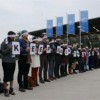
Civil Society Activists Cold-Shouldered at Climate Talks
A former UN Secretary-General once paid a supreme compliment to the work of civil society groups when he described non-governmental organisations (NGOs) as the world’s “third super power” –- presumably ranking behind the United States and Russia.NGOs Disappointed With Final Round of Climate Negotiations
Civil society groups have expressed disappointment over the outcome of the final round of U.N. climate change negotiations in Bonn -- 38 days ahead of the upcoming summit in Paris.
U.N. Rights Commissioner Blasts Harsh Treatment of Refugees
As the flow of migrants continues to rise – from war-ravaged countries in the Middle East, Asia and Africa to Europe – so do the horror stories of the harsh treatment meted out to these refugees.
Water Remains Largely Marginalized in Climate Talks
U.S. Secretary of State John Kerry last week turned the spotlight on the “record number” of extreme weather-related events the world is witnessing these days.
A Younger Generation Cannot March on an Empty Stomach
U.N. Secretary-General Ban Ki-moon insists there is a special role for the world’s younger generation in the U.N.’s post-2015 development agenda.
Women Seek Permanent Seat at Peace Negotiations
When the U.N. Security Council (UNSC) adopted a landmark resolution on women, peace and security 15 years ago, that resolution was best known by its numerals: 1325.
Nobel Prize for Economics Reflects Issues on U.N. Development Agenda
When the Royal Swedish Academy of Sciences awarded the 2015 Nobel Prize in Economics to Professor Angus Deaton of Princeton University, the accolade had a significant relevance to the United Nations.
U.N. Staffers Protest Proposed Pay Cuts For Some, Increases for Others
The United Nations, which is battling a negative fallout from a corruption scandal tainting the office of a former President of the General Assembly, is facing criticisms on another front: a proposed compensation package that calls for a reduction in the salaries of staffers, mostly at bottom and mid-levels and not senior hierarchy.
U.N. Upholds Human Rights, World Bank Dismisses Them
The United Nations has always remained one of the most vociferous and passionate advocates of human rights – exemplified in the creation in 2006 of a 47-member Human Rights Council in Geneva to uphold its mandate.
U.N. Launches Probe Amidst Charges of Bribery and Corruption
After initial hesitation, the United Nations has decided to probe allegations of bribery and corruption extending to the office of a past President of the UN General Assembly (UNGA), the highest policy-making body in the 70-year old Organisation.« Previous Page — Next Page »


The Week with IPS

NEXT STOP - SDGs
Tracking global progress towards a sustainable world
Tracking global progress towards a sustainable world
