Languages
Tuesday, October 27, 2026



News and Views from the Global South
POLITICS: U.N. Session Marked by Highs and Lows
The two-week long high-level segment of the U.N. General Assembly, which concluded last week, was characterised by historic moments, political controversies, and at times, routine boredom.RIGHTS: Women’s Groups Take on Laws Based on Sex
When a landmark U.N. conference on women adopted a "platform for action" in Beijing in 1995, member states were urged to commit themselves to revoke all existing laws in their statute books that discriminate on the basis of sex.POLITICS: U.N. Chief Weighs in on Iran, Libya and Afghanistan
Addressing his monthly press conference Tuesday, Secretary-General Ban Ki-moon refused to back a Western endorsement of a premature election victory for Afghan President Hamid Karzai, implicitly criticised Libyan Leader Muammar el-Qaddafi for denigrating the U.N. charter, and faulted Iran for lack of transparency in its nuclear programme.
POLITICS: Obama Seeks U.N. Backing for Nuke-Free World
When Barack Obama chaired a summit meeting of the Security Council Thursday - a historic first for a U.S. president - his primary motive was to push for his ambitious, long-term agenda for "a world without nuclear weapons".POLITICS: Libyan Leader Thrashes All and Sundry in U.N. Debut
Libyan leader Muammar el-Qaddafi, in his maiden visit to the United Nations Wednesday, made a highly predictable speech - long on rhetoric and short on substance.
ENVIRONMENT: Japan, China Pledge to Act on Climate Change
When the one-day summit meeting on climate change ended late Tuesday, only Japan and China were singled out for their concrete commitments to battle one of the world's biggest environmental challenges.
ENVIRONMENT: Act Now or Lose Forever, Climate Summit Told
The world's small island developing nations, most of which are threatened with environmental devastation, put the international community on dire notice: either accept ambitious and binding emission reduction targets, or humanity is doomed.POLITICS: Obama to Prioritise Africa During U.N. Visit
When Barack Obama visits the United Nations on three consecutive days this week - a rare gesture by a U.S. president - he will be addressing delegates on subjects ranging from climate change and peacekeeping to nuclear non-proliferation and the global financial crisis.POLITICS: Libya’s Mercurial Leader Keeps U.N. Guessing
Libyan leader Muammar el-Qaddafi, who will be making his maiden appearance before the United Nations next week, has been described as a gadfly with a penchant for stirring up controversies.POLITICS: Libya Brings Focused Agenda to U.N. Presidency
Dr. Ali Abdussalam Treki of Libya, the newly-anointed president of the 192-member U.N. General Assembly, hails from a country with a mostly radical and far-reaching political agenda.ENVIRONMENT: U.N. Seeks Political Boost for Climate Summit
U.N. Secretary-General Ban Ki-moon, one of the strongest proponents of next week's summit on climate change, is confident that world leaders will provide a high political profile for an impending environmental crisis threatening to cause devastation worldwide in the next few decades.
POLITICS: U.N. Team on War Crimes Condemns Israel, Hamas
A four-member United Nations fact-finding mission, which has just concluded an investigation into last year's brutal conflict in Gaza, makes a strong case for war crimes charges against Israel for its unrelenting 22-day military attacks on Palestinians, largely civilians, including women and children.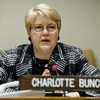
RIGHTS: U.N. Approves Long-Awaited New Women’s Agency
After more than three years of political foot-dragging, the 192-member General Assembly adopted a historic resolution Monday aimed at creating a new U.N. agency for women.DISARMAMENT: No Slowdown for Weapons Industry
The United Nations is surprised at the continued rise in global military spending - particularly at a time when the international community is grappling with a spreading financial crisis which threatens to undermine the poverty reduction goals of the world body.
Q&A: The World Needs a Marshall Plan for Climate Change
When world leaders meet for a mega talk-fest on climate change at the United Nations in late September, the focus will be more on politics and less on finance.RIGHTS: U.N. May Shelve Creation of New Women’s Body
A coalition of over 300 international non-governmental organisations (NGOs) is "outraged" that an impending decision to create a new women's entity at the United Nations is being postponed once again.POLITICS: Developing Nations Sceptical of Climate Summit
The 130-member Group of 77, the largest single coalition of developing nations, is at loggerheads with Secretary-General Ban Ki-moon over an upcoming one-day global summit on climate change in New York on Sep. 22.ENVIRONMENT: Climate Change a Decisive Threat to Development
When the world's policy-makers of a bygone era were painfully slow in reacting to the economic crisis in the early 1920s, the British economist John Maynard Keynes famously warned: "In the long run, we're all dead."
DEVELOPMENT: New Threats Aggravate Africa's Water Crisis
The widespread water scarcity in the African continent, impacting on the lives of nearly 300 million people, may be aggravated further by several new threats, including climate change, transboundary disputes and the negative fallout from military conflicts.DEVELOPMENT: Political Power Dictates Transboundary Waters
A longstanding quote attributed, rightly or wrongly, to the legendary author and humourist Mark Twain has been reverberating in the conference rooms of the Swedish capital: "Whisky is for drinking, water is for fighting over."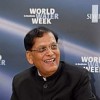
INDIA: When Toilets Were as Scarce as Hen’s Teeth
Dr. Bindeshwar Patak, the 2009 Stockholm Water Prize Laureate and founder of a grassroots sanitation movement in India, recounts the days before his country's independence in 1947 when toilets were a rare sight in remote villages and towns under British rule.« Previous Page — Next Page »





The Week with IPS

NEXT STOP - SDGs
Tracking global progress towards a sustainable world
Tracking global progress towards a sustainable world
