Languages
Monday, November 2, 2026



News and Views from the Global South

DEVELOPMENT: U.N. Seeks a Green Revolution in Food
The food crisis that spilled over from last year could take a turn for the worse in the next decade if there are no explicit answers to a rash of growing new problems, including declining agricultural production, a faltering distribution network and a deteriorating environment worldwide.
Q&A: Development Cooperation Needs Greater Equity
As the economic meltdown spreads to the far corners of the world, developing nations are increasingly strengthening their social and economic ties, bolstering the growing new concept of South-South cooperation - in trade, investment, transport, health care, education, climate change, communications and disaster reduction.MEDIA: U.N. Press Corps Protest Rented Offices
Every U.N. secretary-general since Norway's Trygve Lie back in 1946 believed in the concept of a free press - including rent-free offices to journalists covering the United Nations.POLITICS: U.N. Chief Sets Bar High in Aftermath of Gaza
When Ban Ki-moon visited Gaza after the destructive bombing of a U.N. compound last month, the usually reticent secretary-general lashed out at the Israelis, accusing them of using "excessive force" and describing the assault as "an outrageous and totally unacceptable attack against the United Nations".
Q&A: Israel May Escape War Crimes Charges
Despite widespread accusations of war crimes by Israel, there is growing scepticism of any Israeli leader being brought before an international tribunal for the killings of civilians and the targeting of schools and medical facilities during the 22-day conflict in Gaza last month.POLITICS: Six Compete for Agriculture Agency Head
Against the backdrop of rising hunger, declining agricultural production and food shortages, the Rome-based International Fund for Agricultural Development (IFAD) is set to elect a new president next month.POLITICS: Hamas Fights on Uneven Battlefield
In the 1967 movie classic the "Battle of Algiers", which recreated Algeria's war of independence against France, a handcuffed and shackled insurgent leader, Ben M'Hidi, is brought before a group of highly-partisan French journalists for intense interrogation.POLITICS: U.N. Chief Appalled at Israeli Destruction in Gaza
When Israel went on a military rampage during its 22-day air strikes and artillery attacks on Gaza, it largely singled out residential neighbourhoods, hospitals, schools and U.N. buildings on the pretext of targeting Hamas fighters.POLITICS: Israeli Attacks on Gaza Escape Global Media Scrutiny
Israel's relentless air attacks on a besieged Gaza, which have killed over 1,000 Palestinians and destroyed hundreds of homes, continue to take place away from the gaze of the international news media.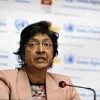
POLITICS: Gaza Killings Trigger Call for War Crimes Probe
With hundreds of civilians, mostly women and children, killed during nearly three weeks of fighting in Gaza, there is a growing demand either for an international tribunal or an international commission to investigate charges of war crimes committed by Israel.POLITICS: U.N. Chief on Grim Peace Mission to Middle East
Secretary-General Ban Ki-moon, who admits he is "very frustrated and deeply anguished" about the grave military and humanitarian crisis in Gaza, is leaving on a grim peace mission to the Middle East, including visits to Egypt, Jordan, Israel, Palestine, Turkey, Lebanon, Syria and Kuwait.RIGHTS: Aid Groups Dispute Israeli Claims in Gaza Attacks
As the Israelis try to justify the massive loss of civilian life in Gaza, their arguments and counter-charges continue to be shot down either by the United Nations or by international human rights organisations.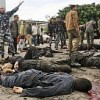
POLITICS: U.S. Weaponry Facilitates Killings in Gaza
The devastating Israeli firepower, unleashed largely on Palestinian civilians in Gaza during two weeks of fighting, is the product of advanced U.S. military technology.POLITICS: Security Council Mildly Rebukes Israel’s Gaza Attacks
After an emergency closed-door session Sunday night, the 15-member Security Council issued a politically bland statement expressing "serious concern" over the devastating Israeli air strikes on Gaza and calling for an "immediate halt to all violence."Q&A: Israel Bars Credible Observers from Gaza
The U.N. High Commissioner for Human Rights Navi Pillay last week lambasted the Israeli government for detaining and expelling a human rights expert, Richard Falk, who was on a U.N.-mandated assignment to probe the human rights situation in the occupied territories.
MEDIA: IPS Wins South-South Leadership Award
At a formal ceremony attended by diplomats, senior U.N. officials and journalists, the United Nations Friday presented its 2008 'South-South Leadership Award' to Inter Press Service (IPS) news agency for its role in promoting stronger ties among developing nations and media outlets.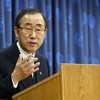
POLITICS: Global Community Shies Away from Volatile Somalia
The international community is shying away from one of the most politically-troubled and dangerous war zones in the Horn of Africa: the perpetually strife-torn Somalia.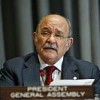
POLITICS: Staunch Critic of Israel at U.N. Reports Death Threats
The outspoken president of the General Assembly, Father Miguel d'Escoto Brockmann, who recently described Israeli policies in the occupied territories as tantamount to "apartheid", says his life is under threat.POLITICS: U.N. Seeks Collective Action Against Somali Piracy
The rise in modern-day piracy, mostly off the coasts of Somalia and in the Gulf of Aden, is triggering a strong collective response from the United Nations.RIGHTS: Politics Still Reign Over Principles at U.N.
The United Nations Wednesday commemorated the 60th anniversary of the landmark Universal Declaration of Human Rights (UDHR) against the backdrop of widespread political repression - most notably in Zimbabwe, Sudan, Burma (Myanmar), Iraq, Afghanistan and in the Israeli-occupied territories of West Bank and Gaza.
DISARMAMENT: New Treaty Bans Weapons Victimising Civilians
When the United Nations talks of "Israeli-occupied territories", the conventional definition is that these disputed lands include the West Bank, Gaza Strip, East Jerusalem and the Golan Heights - all of them annexed after the 1967 Arab-Israeli war.« Previous Page — Next Page »





The Week with IPS

NEXT STOP - SDGs
Tracking global progress towards a sustainable world
Tracking global progress towards a sustainable world
