Languages
Monday, November 2, 2026



News and Views from the Global South
DEVELOPMENT: Huge Gender Gap Between Rhetoric and Reality
When over 150 world leaders attend a summit meeting next week to discuss the status of the U.N.'s eight Millennium Development Goals (MDGs), one of the primary issues on the agenda will be goal number 3: promoting gender equality and gender empowerment.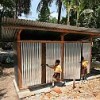
DEVELOPMENT: Global Fund Puts Spotlight on Sanitation
The Global Sanitation Fund (GSF), created last March with a 100-million-dollar target per year, is being billed as a key financing mechanism aimed at meeting one of the eight U.N. Millennium Development Goals (MDGs).
ANNOUNCEMENT: Brazilian President Wins IPS Award
President Luiz Inacio Lula da Silva of Brazil, who has successfully championed the cause of fair trade, social justice and economic equity for the developing world, has been named the winner of the Inter Press Service (IPS) International Achievement Award 2008.POLITICS: U.N. Warns of Impending Development Emergency
The much-ballyhooed Millennium Development Goals (MDGs ) - which include the reduction of extreme poverty and hunger by 50 percent by 2015 - are being seriously undermined by food, financial and climate change crises.POLITICS: Is Cold War Rhetoric Back at the U.N.?
When the United States and the former Soviet Union were on the verge of a military confrontation over Cuba during the height of the Cold War, the legendary U.S. Ambassador Adlai Stevenson went eyeball-to-eyeball with Soviet envoy Valerian Zorin in the Security Council chamber.DEVELOPMENT: U.N. Warns of Faltering Goals on Aid, Trade
When the United Nations approved a set of development goals on poverty, health, gender empowerment, and sustainable environment back in September 2000, it laid down a deadline of 2015 to reach these targets.
POLITICS: Kenya Falters in Healing Deep Ethnic Tensions
A power-sharing agreement between the opposition Orange Democratic Movement and the Party of National Unity in Kenya has failed at healing ethnic divisions in the one-time politically-troubled East African nation, according to a new report by Minority Rights Group International (MRG).DEVELOPMENT: Food, Fuel and Water Crises Converging
A spectre is haunting the cities and villages of most developing nations, warns a senior official of a World Bank-affiliated organisation.
DEVELOPMENT: Wasted Food Is Also Wasted Water
The world's growing food crisis - which triggered riots and demonstrations in over 30 developing nations early this year - is being aggravated primarily by wastage and overconsumption.DEVELOPMENT: South Africa Beats Deadline on Water, Sanitation
South Africa and Madagascar, two African nations participating in the Stockholm International Water Conference currently underway in the Swedish capital, provide a contrasting picture of where they stand - or fall - in achieving the U.N.'s heavily-trumpeted Millennium Development Goals (MDGs).DEVELOPMENT: Wastewater Crops Feeding Millions
Vegetables, rice and other cereals in at least 53 cities in Asia, Africa and Latin America may someday come with warning labels that read "this is a byproduct of raw sewage".
DEVELOPMENT: Water Progresses, Sanitation Regresses
The world's poorest nations are making halting progress in water, but little or no tangible improvement in sanitation - two of the basic necessities of life.POLITICS: U.N. Renovation Threatens Disruption in World Body
When the United Nations begins a major 1.8 billion dollar renovation of its 39- storey headquarters early next year, there are fears that the relocation of nearly 4,000 staffers from the 60-year-old building will disrupt the organisational work of the world body.DISARMAMENT: Binding Treaty Eludes Small Arms Trade
The international community, which successfully negotiated treaties outlawing anti-personnel landmines and cluster bombs, has made little headway in drafting a U.N. convention to control the proliferation of illicit small arms.DISARMAMENT: China Key Arms Supplier to Human Rights Abusers
As China tries to boost its international image, playing host to a summer Olympic games, the government in Beijing is being singled out as a key arms supplier to some of the world's worst human rights abusers, according to a new study released here.POLITICS: Conflict Prevention Cheaper than Peacekeeping
When former U.N. Secretary-General Kofi Annan led mediation efforts to end the post-election ethnic rioting in Kenya, which cost the lives of over 300 people, he proved that conflict prevention was more cost-effective than peacekeeping.POLITICS: New Human Rights Chief Faces Daunting Task
Mary Robinson, a former U.N. High Commissioner for Human Rights (HCHR), who faulted countries such as the United States, China and Israel for transgressions of humanitarian law and civil liberties, was forced to retire after a 12-month renewal of her four-year contract because of intense lobbying against an extended tenure for her.
HEALTH: Tobacco Ban Remains Elusive at U.N. HQ
When a state-wide ban on smoking came into effect in New York in July 2003, perhaps the only institution outside that stringent law was the United Nations, primarily because its headquarters premises is deemed international territory.POLITICS: Western Interests Dictate Security Council Agenda
The continued political deadlock over a rash of ongoing crises - including Iran, Myanmar (Burma), Palestine, Kosovo, Zimbabwe and Sudan - is threatening to paralyse one of the world's most powerful political bodies, harking back to the days of the Cold War when it was turned into a battleground for U.S.-Soviet confrontation.POLITICS: South Asia Maps Its Own Development Destiny
When Pierre Trudeau, a former prime minister of Canada, was once asked what it was like to share space with a "giant" neighbour like the United States, he said the Canadians always felt they were living next to a monstrous elephant.FINANCE: Developing Nations Rack up Hefty Foreign Reserves
As the global economy continues to be jolted by volatile financial markets, bank failures, a spreading credit crunch, and rising food and energy prices, some of the developing nations have accumulated three-quarters of the world's reserves, amounting to a staggering 4.3 trillion dollars.« Previous Page — Next Page »





The Week with IPS

NEXT STOP - SDGs
Tracking global progress towards a sustainable world
Tracking global progress towards a sustainable world
