Languages
Tuesday, November 3, 2026



News and Views from the Global South
POLITICS: Human Rights Council Back in the Spotlight
When the United States was ousted from the Geneva-based Human Rights Commission (HRC) back in May 2001, a right-wing Republican politician was livid that "one of the world's greatest human rights defenders" couldn't find a seat in a body dominated by countries such as Libya, Cuba, Sudan and China.RIGHTS: Women’s Groups Push for Gender-Sensitive Budgets
As women's groups and political activists intensify their global campaign for gender empowerment, there is a growing trend towards "gender budgeting" both among developed and developing nations.
BURMA: Junta Does U-Turn on Relief Aid
The military government of Burma (Myanmar), in a dramatic turnaround, has offered to cooperate with the United Nations in its massive relief efforts in the cyclone-devastated country where the death toll could exceed 100,000.DEVELOPMENT: Food Crisis Escapes Security Council Scrutiny
The food crisis that has triggered street demonstrations and riots in nearly 30 countries - including Haiti, Indonesia, Cote d'Ivoire, Mauritania, Mozambique, Senegal, and most recently in Somalia - continues to escape the scrutiny of the most powerful body at the United Nations: the Security Council.DEVELOPMENT: U.N. Bodies Under Fire for Food Crisis
As the Food and Agriculture Organisation (FAO) readies for a summit of world leaders next month, Secretary-General Ban Ki-moon Monday defended the Rome-based U.N. agency, which has come under fire for its failure to help meet the growing challenges of hunger worldwide.DEVELOPMENT: Food Crisis May Get Worse Before it Gets Better
The spreading food crisis - triggered primarily by rising prices, declining outputs and growing scarcities worldwide - is threatening to impact heavily on the most vulnerable in society: women and children.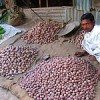
DEVELOPMENT: If There's No Rice, Let Them Eat Potatoes
When a gaggle of unruly and starving peasants complained about a shortage of bread in 17th century France, the queen consort Marie Antoinette is said to have infamously remarked: "Let them eat cake."AFRICA: Millions of Children Falling Through the Cracks
A significant proportion of the world's 2.2 billion children, many of whom are victims of violence, sexual abuse, labour exploitation and preventable diseases, are from the crisis-plagued African continent.RIGHTS: Development Financing Still Gender-Blind
When the U.N.'s Economic and Social Council (ECOSOC) held a special high-level meeting to discuss the new challenges facing the international community, the focus was largely on the credit crisis, rising commodity prices, declining development aid and the devastating impact of climate change on developing nations.
POLITICS: U.N. Sees Peacekeeping Success in Liberia
The United Nations, which is battling a rash of political and logistical problems in its troubled peace missions in Sudan, the Democratic Republic of Congo, Somalia, Ethiopia and Eritrea, is rejoicing over the relative success of its peacekeeping operations in the once war-ravaged Liberia.DEVELOPMENT: Global Hot Spots of Hunger Set to Explode
As food prices continue to escalate worldwide, some of the poorest nations in the developing world are in danger of social and political upheavals.DEVELOPMENT: Family Planning Gets Mere Sliver of Aid Pie
The United Nations warns that a sharp decline in international funding for reproductive health is threatening global efforts to reduce poverty, improve health and empower women worldwide.POLITICS: U.N. Jolted by Attacks on Peacekeepers in Haiti
The United Nations may be heading for trouble in Haiti, where a demonstration against rising food prices turned into an attack against U.N. peacekeepers and the local offices of the world body.CLIMATE CHANGE: Will Societies Bend, or Snap in the Storm?
A new risk-analysis of the negative consequences of climate change warns of potential "devastation and violence (worldwide) jeopardising national and international security to a new degree."POLITICS: U.N. Peace Missions Falter in Africa
The United Nations remains virtually crippled as two proposed peacekeeping missions - one in Darfur and the other in Somalia - are making little or no progress.HEALTH: U.N. Aims For an AIDS-Free Generation
The United Nations is intensifying its worldwide efforts to help create a new generation of children who will be born free of HIV/AIDS, a disease that has particularly devastated parts of sub-Saharan Africa.DEVELOPMENT: U.N. Poverty Goals Face New Threats
The U.N.'s Millennium Development Goals (MDGs), aimed primarily at reducing poverty, hunger, disease and illiteracy, are being undermined by a rash of new problems threatening to cripple the ongoing efforts by developing nations to reach their targets by 2015.
POLITICS: U.N. Remains Wary of Debate on Suicide Bombings
When the Security Council adopted a resolution last week extending the U.N.'s mandate in Afghanistan through March 2009, it expressed its "strong concern" over a growing new phenomenon in the politically-troubled South Asian nation: the increased use of children as suicide bombers.POLITICS: UN Chief Under Fire Over Secretariat Restructuring
The 130-member Group of 77 (G77), the largest single coalition of developing nations, is challenging Secretary-General Ban Ki-moon's decision to realign two key posts, one dealing with Africa and the other with the world's poorest nations, into a single mega entity.
Climate Change Deepening World Water Crisis
Water crises are multiplying, from Darfur to Eastern Europe, warn experts.DEVELOPMENT: Climate Change Deepening World Water Crisis
When U.N. Secretary-General Ban Ki-moon addressed the World Economic Forum in Davos, Switzerland last January, his primary focus was not on the impending global economic recession but on the world's growing water crisis.« Previous Page — Next Page »





The Week with IPS

NEXT STOP - SDGs
Tracking global progress towards a sustainable world
Tracking global progress towards a sustainable world
