Languages
Friday, November 6, 2026



News and Views from the Global South
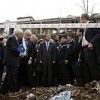
POLITICS: Terror Threats Weigh on U.N. Staff Abroad
The United Nations is living under the shadow of terrorist threats, forcing some of its field staff to work from the safety of their homes.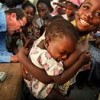
HEALTH: Loss of 9.7 Million Children Unacceptable, Says UNICEF
The sharp decline in deaths among infants and children worldwide during the past century is "one of the great success stories in international public health", the U.N. children's agency UNICEF said Tuesday.POLITICS: U.N. Force in Darfur Grounded Even Before Takeoff
A proposed 26,000-strong joint U.N.-African Union Mission in Darfur (UNAMID), described as potentially the world's largest single peacekeeping force, has been virtually grounded even before it could take off due largely to lack of troops and military equipment.POLITICS: East Timor Threatened by Weak Security Forces
The Brussels-based International Crisis Group (ICG), which monitors some 60 crisis-affected countries worldwide, has appealed for U.N. and international assistance to revitalise East Timor's fledgling police and armed services in order to avoid a potentially violent civil conflict in that relatively new nation state.DEVELOPMENT: Quantum Leap in South-South Investments and Trade
The world's emerging economies - including China, India, Brazil, South Africa, Malaysia and Thailand - have made a quantum leap in their investments in the global South and in trade with developing nations.CHALLENGES 2007-2008: U.N. Remains Impotent as Captive of U.S.
As Secretary-General Ban Ki-moon begins his second year in office, he has refused to claim any tangible successes during 2007, nor has he laid out any clear-cut strategy to meet the political and economic challenges facing the United Nations in 2008.SRI LANKA: Full-Scale War Threatens Civilian Lives
The Sri Lanka government, which has announced the abrogation of a 2002 Norwegian-brokered ceasefire agreement with the Liberation Tigers of Tamil Eelam (LTTE), is planning a do-or-die military battle against the separatists in the politically-troubled northern and eastern provinces.POLITICS-KENYA: Disputed Poll Sparks Call for Int’l Probe
Amidst growing calls for an international investigation into last week's disputed presidential elections in Kenya, the continued rioting and killings in that East African nation are threatening to destabilise a staunch U.S. ally in the global war on terrorism.POLITICS: Bhutto’s Killing May Threaten Pakistan’s Stability
The assassination of Pakistan's opposition leader and former Prime Minister Benazir Bhutto threatens to de-stabilise a country which the United States describes as a trusted ally and a frontline fighter in the global war on terrorism.POLITICS: U.N. To Seek Accountability in Algiers Bombing
The United Nations is expected to launch a full scale investigation into the circumstances that led to the December terrorist attack on U.N. offices in Algiers. The attack, one of the most tragic episodes in the history of the world body, claimed the lives of 17 staffers.DEVELOPMENT: UN Hails Economic Integration of Global South
The ongoing regional political squabbles in Asia, Africa, the Middle East and Latin America - over issues such as territorial borders, human rights and natural resources - are being increasingly overshadowed by intra-regional economic integration and the creation of new common markets.
POLITICS: War Crimes Tribunal for East Timor Lacks U.N. Support
When U.N. Secretary-General Ban Ki-moon paid his first official visit to East Timor (Timor-Leste) last week, he was conscious of the growing demands for accountability for crimes committed during Indonesia's invasion and subsequent occupation of that relatively new nation state.POLITICS: Does the Media Incite Religious Tensions?
When Malaysian Prime Minister Abdullah Ahmad Badawi addressed the United Nations General Assembly last September, he rejected the argument that religion was responsible for disputes between nations.POLITICS: Soldiers of (Mis)Fortune
The United Nations is increasingly critical of the use of deadly force, including indiscriminate shooting of civilians, by private security guards in some of the world's battle zones.HEALTH: U.N. Highlights Global Sanitation Disaster
The world's sanitation crisis, caused primarily by the lack of toilet facilities for over 2.6 billion people, is "an insult to humanity", says the Geneva-based Water Supply and Sanitation Collaborative Council.POLITICS: Palestine Protests Biased U.N. Reporting
The Permanent Observer Mission of Palestine to the United Nations has lodged a formal protest against the continued "misrepresentation" of facts in recent U.N. reports on the Israeli-occupied territories.
POLITICS: Iraqi MPs Challenge Coalition Mandate
The United Nations Security Council has been warned by Iraqi parliamentarians of a potentially "serious" constitutional and political crisis if it decides to renew the mandate of the U.S.-led multinational force (MNF) beyond December 2007, without approval from lawmakers.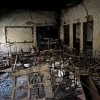
EDUCATION: Schools, Academics in the Gun Sights
A "dramatic increase" in targeted violence against schools and educational institutions, mostly in conflict zones, is having a devastating effect on students, teachers, trade unionists, administrators and education officials, according to a new U.N. study released here.DEATH PENALTY: Last-Minute Wrangling on U.N. Moratorium Vote
When the United Nations votes next week on a draft resolution calling for a moratorium on the death penalty, there will be more than a dozen non-committal member states who will neither vote for such a resolution nor against it.DEVELOPMENT: Food to Biofuels a "Recipe for Disaster"
A long-held basic human right, the right to adequate food for the world's 854 million hungry people, is being threatened once again - this time by the conversion of wheat, sugar, palm oil and maize into agricultural fuel.
ENVIRONMENT: Israel Urged to Aid Oil-Stained Lebanon
When the Israeli Air Force destroyed a slew of oil storage tanks and a key power station in Lebanon in July 2006, the environmental damage was described as devastating.« Previous Page — Next Page »





The Week with IPS

NEXT STOP - SDGs
Tracking global progress towards a sustainable world
Tracking global progress towards a sustainable world
