Languages
Saturday, November 7, 2026



News and Views from the Global South
DEVELOPMENT: Singapore and Iraq – Contrasts in Water Management
As the world faces new threats of water scarcity, triggered by phenomena like global warming and bioenergy demands, Singapore and Iraq have been singled out as two political extremes in water management.DEVELOPMENT: 2.6 Billion Wait in Line for Toilets
There are more than 2.6 billion people, roughly 42 percent of the world's population, waiting in line for toilets that just do not exist.DEVELOPMENT: Water as a Right and Key to Social Stability
A top United Nations official has learned through personal experience what it is like to live without safe drinking water during her visits home to the Tanzanian capital.HEALTH: World Faces New Threats of Water Scarcity
The world is on the verge of "a new and more serious era of water scarcity" than ever before, is the ominous warning coming out of an international water conference here.POLITICS: U.S. Arms Sales Preserve Israel's Edge
When the United States sells state-of-the-art weapons systems to Arab nations, it invariably provides even more lethal and sophisticated arms to its steadfast ally, Israel, in order to help counter the firepower of its neighbours.ENVIRONMENT: UN Skips Gender Perspective in Climate Change
When the United Nations concluded a two-day debate Thursday on the potential devastation from climate change, it covered a lot of territory: deforestation, desertification, greenhouse gases, renewable energy sources, biofuels and sustainable development.DISARMAMENT: US-India Nuke Deal May Spark Asian Arms Race
The U.S. decision last week to proceed with a controversial civilian nuclear deal with India has triggered strong negative responses from peace activists, disarmament experts and anti-nuclear groups.POLITICS: South Sceptical of North Korean Assurances
When the six-party talks on the denuclearisation of North Korea ended last week, there was plenty of scepticism in neighbouring South Korea: to what extent can the reneging North be trusted to keep its pledges and promises in the future?
/UPDATE*/POLITICS: U.N. Chief Faulted for Undermining General Assembly
The largest single coalition of developing nations is accusing Secretary-General Ban Ki-moon of undermining the General Assembly - the U.N.'s highest policy-making body - by his proposed unilateral action to make structural changes in programmes relating to Asia, Africa and Latin America.
POLITICS: UN Chief Faulted for “Undermining” General Assembly
The largest single coalition of developing nations is accusing Secretary-General Ban Ki-moon of "undermining" the General Assembly - the U.N.'s highest policy-making body - by his proposed unilateral action to make structural changes in programmes relating to Asia, Africa and Latin America.
POLITICS: How Veto Powers Stymied U.N. Memberships
The exercise of veto powers to bar countries from U.N. membership - a relic of the Cold War - is threatening to make a comeback in the politics of the world body.
WORLD POPULATION DAY: U.S. Funding Continues to Stumble
As the United Nations commemorated World Population Day Wednesday, the United States remains the only major donor that continues to cut off funds to the only international agency focusing primarily on population: the U.N. Population Fund (UNFPA).
POLITICS: Is New British Portfolio a Tribute to U.N.?
Mark Malloch Brown, a former U.N. deputy secretary-general, recently anointed with the newly-created portfolio of British "minister of state for Africa, Asia and the United Nations", was a devoted loyalist who stood by the beleaguered former Secretary-General Kofi Annan right to the end.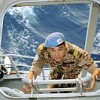
LEBANON: Crisis Persists Despite Beefed Up Peacekeeping
Despite a massive boost in its peacekeeping force in Lebanon - from about 2,200 in July last year to some 13,700 last week - the United Nations has little good news to report regarding the politically-troubled country.DEVELOPMENT: Uneven Results Forecast for Millennium Goals
The world's 22 rich nations, comprising the Paris-based Organisation for Economic Cooperation and Development (OECD), grudgingly doled out about 104 billion dollars in official development assistance (ODA) to the world's poorer nations in 2006.POLITICS: Big Powers Skirt Anti-Nuke Terrorism Treaty
A long-awaited international convention against nuclear terrorism will come into force next week, nine years after it was originally proposed by Russia and 10 months after it was adopted by the 192-member General Assembly.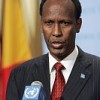
POLITICS: U.N. Unveils Plan for Peacekeepers in Somalia
The United Nations is preparing a contingency plan for a possible 20,000-strong new peacekeeping force in one of the political hotspots in the Horn of Africa: Somalia.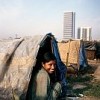
POPULATION: World's Poor Abandon Rural Past for Big Cities
A dramatic population explosion in the world's urban centres will be the single largest influence on development in the 21st century, the U.N. Population Fund (UNFPA) says in a new report released Wednesday.POLITICS: Sri Lanka in Tug-of-War with UN, Relief Agencies
Sri Lanka, which has consistently received high marks from the United Nations for its superlative social indicators on literacy, child mortality and health care, has received failing grades for its growing human rights abuses and failure to protect civilians in the country's battle zones.POLITICS: U.N. Distressed Over Killings of Aid Workers
The United Nations is distressed over the rising number of humanitarian personnel and aid workers attacked or killed recently while on relief missions in the world's war zones.
DEATH PENALTY-IRAN: U.N. Slams Scheduled Public Stoning
The United Nations Wednesday lashed out at the scheduled public stoning of a man and woman charged with adultery in Iran.« Previous Page — Next Page »





The Week with IPS

NEXT STOP - SDGs
Tracking global progress towards a sustainable world
Tracking global progress towards a sustainable world
