Languages
Saturday, November 7, 2026



News and Views from the Global South
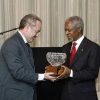
MEDIA: IPS Honours Annan’s Four Decades of Service
When Kofi Annan leaves the United Nations next week after an eventful 10-year tenure as secretary-general, there will be one prized possession he says he will virtually hand-carry: the Inter Press Service (IPS) International Achievement Award 2006.POLITICS: New U.N. Chief Vows High Ethical Standards
The incoming U.N. Secretary-General Ban Ki-moon, who took his oath of office before the 192-member General Assembly on Thursday, vowed to set "the highest ethical standards" in a world body which has come under fire for mismanagement, waste and malfeasance.CHALLENGES 2006-2007: Will New UN Chief Stand Up to Big Powers?
When South Korea's former foreign minister Ban Ki-moon assumes duties as the new U.N. secretary-general on Jan. 1, he will succeed Kofi Annan of Ghana who spent over 44 years in the U.N. system, serving the last 10 years (1997-2006) as the chief administrative officer of the 192-member world body.HEALTH: Corruption in Pharmaceutical Industry Kills
The World Health Organisation (WHO) is undertaking one of its toughest new assignments: taking on a powerful adversary in the world's multi-billion-dollar pharmaceutical industry.POLITICS: Fiji Coup Jeopardises Status of U.N. Troops
The United Nations has warned that Tuesday's military coup in Fiji - the fourth in the last two decades - could jeopardise the status of that country's troops in U.N. peacekeeping missions overseas.POLITICS: U.S. Envoy’s Abrasiveness Failed Him at U.N.
As one critic mockingly remarked, the outgoing U.S. Ambassador to the United Nations John Bolton would have done better as an architect or an urban planner than an international diplomat.DEVELOPMENT: UN Chief’s Scorecard of Success and Failure
Less than six weeks before he steps down as secretary-general of the United Nations, Kofi Annan has come up with a political scorecard on the successes and failures of the UN's much-touted development agenda.DEVELOPMENT: UN Chief’s Scorecard of Success and Failure
Less than six weeks before he steps down as secretary-general of the United Nations, Kofi Annan has come up with a political scorecard on the successes and failures of the UN's much-touted development agenda.POLITICS: Dialogue or Sanctions – U.S. Dilemma Over Iran
The United States, which is making little headway in its attempts to impose mandatory U.N. sanctions on Iran, is facing a political dilemma as it comes under increasing pressure to initiate a dialogue with the very country it is trying to punish for its defiant nuclear programme.POLITICS: UN Aims to Shed Culture of Corruption
As the United Nations continues to battle waste, mismanagement and corruption, an outgoing senior U.N. official has proposed that all high-level staffers in the world body should not only disclose their private financial assets but also make them public.DISARMAMENT: The Silent Killers in the World’s War Zones
When mortars and rockets fall silent in the world's battle zones, the killings do not necessarily end with ceasefires and peace talks.POLITICS: International Aid Work a Deadly Profession
The United Nations says that international aid work is one of the world's most hazardous professions, in which humanitarian workers are constantly threatened with - or victims of - kidnappings, harassment, detention and deadly violence.POLITICS: International Aid Work a Deadly Profession
The United Nations says that international aid work is one of the world's most hazardous professions, in which humanitarian workers are constantly threatened with - or victims of - kidnappings, harassment, detention and deadly violence.DEVELOPMENT: Turning the Tide on Human Suffering
If the world's growing water crisis remains unresolved - depriving clean water to more than one billion of the world's six billion people - it will jeopardise the U.N.'s longstanding battle to reduce global poverty, hunger and disease by its targeted date of 2015, the U.N. Development Programme (UNDP) warned Thursday.DEVELOPMENT: Turning the Tide on Human Suffering
If the world's growing water crisis remains unresolved - depriving clean water to more than one billion of the world's six billion people - it will jeopardise the U.N.'s longstanding battle to reduce global poverty, hunger and disease by its targeted date of 2015, the U.N. Development Programme (UNDP) warned Thursday.ECONOMY: China Triples Output as New Industrial Powerhouse
The world's fastest growing developing nations, including China, India and South Africa, contributed significantly to the rise in world industrial output last year, according to the Vienna-based U.N. Industrial Development Organisation (UNIDO).POLITICS: UN Gears for Upsurge in Peacekeeping Troops
The United Nations is gearing itself for a dramatic upsurge in the size of its peacekeeping force worldwide, from the current 93,000 troops to an unprecedented 140,000 next year.DEVELOPMENT: UN Chief Says Youth Key to Poverty Fight
With less than two months before he steps down as secretary-general after a long 10-year tenure, Kofi Annan is disappointed that the international community is lagging behind in its much-touted Millennium Development Goals (MDGs), including a 50 percent reduction in extreme poverty and hunger by 2015.POLITICS: U.N. Security Council Edicts Challenged
The United Nations Security Council, the only body empowered to declare war and peace and also impose punitive economic and military sanctions, is being increasingly challenged by defiant member states.RIGHTS: U.N. Probes Abuse of Migrant Workers Worldwide
Responding to a flood of complaints from migrant workers worldwide, the United Nations is investigating a rash of human rights violations, including abusive working conditions, non-payment of wages, arbitrary detentions and collective illegal deportations.RIGHTS: Millions of Starving Shame the World, U.N. Says
Since hunger and famine are still widespread in parts of Africa and Asia, the international community is in violation of the right to food as a basic universal human right, according to a new study released by the United Nations.« Previous Page — Next Page »





The Week with IPS

NEXT STOP - SDGs
Tracking global progress towards a sustainable world
Tracking global progress towards a sustainable world
