Languages
Friday, November 6, 2026



News and Views from the Global South
Other Voices
News and Views from our Content Partners

World Focus on Disappearances
THE government might have been surprised at some foreign governments’ expressions of concern at the enforced disappearance of five social activists/ bloggers. Instead of taking umbrage, it should look for the causes of friendly countries’ uneasiness.
Christian leaders praise UAE’s Tolerance strategy, promise to contribute
The UAE's Minister of State for Tolerance, Sheikha Lubna Al Qasimi, has invited leaders of the country's Christian communities to play their part in contributing to the promotion of the country's recently-announced National Programme for Tolerance.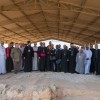
Lubna, Christian leaders visit Sir Bani Yas monastery
The UAE’s Minister of State for Tolerance, Sheikha Lubna Al Qasimi, and around 30 Christian leaders from the Gulf, yesterday visited the site of the early Christian monastery on Abu Dhabi’s western island of Sir Bani Yas. The visit was the first part of a day of discussions on ways in which Christian communities in the Emirates can contribute to the promotion of the UAE government’s Tolerance Agenda.
For a Cleaner World
The Asia-Pacific region is at a turning point in its energy trajectory. The energy solutions that have fuelled growth in the region over the past few decades are no longer compatible with the sustainable development aspirations of our nations and people. In transitioning to a new era of sustainable energy, policymakers across the region face complex decisions. Supplies must be secure and affordable, and they must fill the energy access gap which leaves half a billion people across the region without access to electricity. At the same time, mitigating the local impacts of energy generation and use will be vital in resolving problems such as the air pollution choking our cities and the global consequences of greenhouse gas emissions causing climate change. Solutions exist, but only through regional cooperation and integration can Asia and the Pacific transition to sustainable energy in time to meet the ambitious 2030 Agenda for Sustainable Development and its Goals.
Cpec: Lessons from History
How does one get a grip on the proposed China-Pakistan Economic Corridor (CPEC) and its associated investments without any hard information except for the hype? In the absence of any mechanism for credible evaluation I suggest we hold it up against a historical parallel and see what emerges by way of tentative conclusions. Some discussion grounded in real experience may be better than taking sides in the dark.
Why Institutions Are so Important for Growth
In 1900, Argentina looked like a promising country with respectable growth. It was queueing to be an industrialised country like many other western European nations. However, financial markets, the legal system, stock exchange, and the central bank were not ready with up-to-date regulations and, more importantly, their enforcement. Argentina turned out to be unfortunate for not being able to keep the pace of other European nations which had better institutions in place. Argentina's per capita income is now USD 14,000, far below the mark of USD 40,000 which it should have enjoyed right now like its other comparable European peers.
Born Disadvantaged
At the age of around three, the daughter of a domestic worker in Karachi started to inexplicably lose weight. After months of ignoring the issue, the mother finally approached her employer, whose first question was whether the child got enough to eat and if her diet was a balanced one.
PKSF: Coordinated and Sustainable Development

This video was originally published by PKSF, Bangladesh
Centre for Policy Dialogue Research and Publications in 2016
This video was originally published by Centre for Policy Dialogue (CPD), Bangladesh

To Ban or Not to Ban?
Many in the West view Pakistan as a safe haven for transnational terrorist organisations, and India is attempting very hard to exploit this global opinion. In reality, however, terrorist violence kills more innocent civilians and security personnel in Pakistan compared to all of Europe in any given year. Regrettably, Western societies ignore the causalities of terrorism inside Pakistan and apply different standards for valuing Pakistani life.
The Problem with the Child Marriage Act
Child marriage law in Bangladesh has recently come under wide scrutiny from national and international human rights activists and organisations. This is because on November 24, the Cabinet of Bangladesh accepted a draft legislation which “poses grave risks to girls by creating vague exceptions to the country's ban on child marriage, and even punishing the victims” (Huge Step Backwards on Child Marriage in Bangladesh, Human Rights Watch, 2016). While this is certainly true, the existing child marriage law is in itself problematic in a way that has been underemphasised and hence underreported.A $40 Million Project to Upgrade UN Commissions in Asia & Africa
The UN’s Administrative and Budgetary Committee (Fifth Committee) has approved a $40 million project to retrofit the premises of the Economic and Social Commission for Asia and the Pacific (ESCAP) in Bangkok, as part of the upgrades of UN Commission buildings, including the Economic Commission for Africa (ECA) in Addis Ababa.
Can Extreme Hunger be Eliminated by 2030?
The UN’s post-2015 development agenda, which includes 17 Sustainable Development Goals (SDGs), includes the elimination of extreme hunger by 2030.
Guterres Seeks G77 Leadership in UN Reforms
Addressing members of the Group of 77, UN Secretary-General Antonio Guterres said development must be at the center of UN’s activities because it is a basic condition for peace and security while human rights can only be exercised in the context in which development takes place.
No More Development Aid?
A few weeks before 2016 took its leave, David Hale, the US ambassador to Pakistan, announced that the United States government, via the United States Agency for International Development, would be investing $7.3 billion toward increasing the number of female teachers in Pakistan. The announcement came as part of the 16 days of activism initiative by USAID’s Gender Equity Programme, which the Aurat Foundation is implementing. Around the same time, USAID also signed an agreement with Wapda to provide $81 million for the construction of the Kurram-Tangi Dam that will help generate 18 MW of activity for the Waziristan region.« Previous Page — Next Page »





The Week with IPS

NEXT STOP - SDGs
Tracking global progress towards a sustainable world
Tracking global progress towards a sustainable world
