Languages
Friday, November 6, 2026



News and Views from the Global South
Other Voices
News and Views from our Content Partners
Indulging in Sunshine Stories and Taking Foolhardy Risks
If the thinking was that the risks of taking an intelligence chief as part of the Government delegation to brief the United Nations Committee against Torture (UNCAT) recently would be offset as a result of sunshine stories spun by the Government’s policy propagandists living in cloud cuckoo land, then a rude shock was administered this week.
Enough Is Enough
The turnout at the walk organised last Sunday by Citizens against Weapons (CAW) was heartening. Started in 2014 by some concerned citizens, the campaign is catching on. I had joined them at a rally on an intersection of a busy area in Karachi two years ago. There were then barely 50 protesters. On Sunday, there were 400 or so.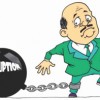
Corruption Control–Is It Feasible or a Fantasy?
December 9 is observed throughout the world as International Anti-corruption Day (IACD). On this day in 2003, the United Nations (UN) called upon governments and peoples of the world to mark the adoption of the UN Convention against Corruption (UNCAC).G77 Encourages Paris Club to Consider Addis Ababa Action Agenda for Debt Management
The Group of 77 (G77) participated in a panel discussion encouraging members of the Paris Club to incorporate the Addis Ababa Action Agenda into their debt management practices.
The Chief’s Choice
Incoming army chief Gen Bajwa takes over at a time when Pakistan is already on the road to recovery. Since 2010, the country has experienced a significant reduction in terrorist violence. The economy has also begun to rebound. Gen Bajwa and the civilian government could keep doing more of the same to achieve further incremental progress. But this would reflect a ‘good enough’ approach. It’ll definitely keep Pakistan out of the ICU but we’ll still be weak and frail.
What Does Democracy Mean to Bangladeshis?
December 6 is observed as 'Democracy Day' in Bangladesh, a day that marks the overthrow of military rule of General H M Ershad through a popular urban uprising in 1990. It was the culmination of years of protests demanding democracy, at least the right to express opinions without fear, to vote in freely held elections, to elect civilian governments and to hold the leaders accountable.
Transgender Health
Two cases this year — that of a transgender person dying in a Peshawar hospital as healthcare providers deliberated over which ward to put her in; and of another who, after being diagnosed as HIV positive, was forced to live near a garbage dump until she died — highlight the insensitivity that prevails towards this marginalised community.
A Deterrent to Regional Development
Following the end of almost fifty years of military rule in Myanmar and the release of the Nobel Laureate leader Aung San Suu Kyi in 2011, the world had looked at the country with much enthusiasm. The quasi-civilian new government brought some hope for the country to return to democracy as well as economic progress. Even with rich natural resources including land, forests, minerals, oil and gas, the country remained poor and could achieve a per capita income of only USD 1,197 in 2011. So once freed from the military regime, with a view to modernise its economy, Myanmar embraced economic openness and initiated reforms in areas such as currency exchange rates, taxation, foreign investment laws and anti-corruption. Several countries, including those which isolated the nation through economic sanctions such as the US and the European Union, saw opportunities to rebuild economic ties with Myanmar. Political leaders from the US, Europe, Japan, Australia, China, India, Thailand, Bangladesh and many other countries flew in, investors rushed and businessmen flocked into the country to explore its untapped resources. International endorsements revived the country's confidence and growth prospects. Its GDP grew by more than 7 percent in the last couple of years.G77 Reiterates Call for IMF Reforms & Equitable Voting Power
The Group of 77 joined by China have reiterated their call for the full implementation of the 2010 International Monetary Fund (IMF) Quota and Governance Reforms.G77 Introduces 13 Draft Resolutions on the UN’s Development Agenda
The Group of 77 introduced 13 draft resolutions at the current sessions of the UN’s Economic and Financial Committee. The resolutions, introduced by the Thai delegate, covered a wide range of socio-economic issues on the UN agenda, including the protection of global climate for present and future generations of mankind and ensuring access to affordable, reliable, sustainable and modern energy for all.
Managing Diversity
One hundred and seventy-odd children, four teachers, and two old and dingy rooms. We visited a government boy’s primary school in a village just outside Sargodha. The two rooms had been built quite some time back and were not really fit for classes. Most of the classes were held in the open with children sitting on the ground. The weather was pleasant at the time, but what must children go through in the summer or the height of winter?
Fidel Castro: The Revolutionary Outlived His Revolution
A tyrant to some and a liberator to others, Fidel Castro of Cuba died on November 25, a decade shy of a century. While his own countrymen stay divided on his legacy on two sides of the Straits of Florida, the revolutionary icon was a towering figure for the rest of the world. The cigar chomping, fatigues-clad, bearded man, who famously survived more than 600 assassination attempts, was the last stalwart defending communism to his last breath.
No Fair Deal for Women
This year, Pakistan’s women activists are observing 16 days of activism against gender violence (Nov 25 to Dec 10) with greater fervour than previously. At the same time, no sooner is a law to curb forced conversions adopted in Sindh than the orthodoxy is out in battledress to kill it. The fight for women’s rights in this country is going to get even more bitter.
Don’t Rob Our Girls of Their Childhood
We were indeed better off when the first draft was charted out back in September 2014. At that point in time, the government had expressed intent to keep a two-year leeway for girls getting married off early. In subsequent months, the government kept saying that it would finalise a law prohibiting the marriage of girls under 18. And it would just keep a provision in the law that would allow a 16-year-old girl to get married with her parents' consent' or a court's consent obtained on “justified grounds”.COP-22: Developing Nations Seek Acceleration of Climate Action
Speaking on behalf of the Group of 77 and China, Manasvi Srisodapol, Special Representative of the chair of the Group of 77, told the joint closing plenary of the 22nd session of the Conference of Parties (COP-22) in Marrakech that the needs of the developing countries should be given the highest priority for two reasons: they bear the brunt of the increasing adverse effects of climate change, and they are also the least equipped to cope with this problem on their own.« Previous Page — Next Page »





The Week with IPS

NEXT STOP - SDGs
Tracking global progress towards a sustainable world
Tracking global progress towards a sustainable world
