Languages
Sunday, November 8, 2026



News and Views from the Global South
Other Voices
News and Views from our Content Partners

Female education in Bangladesh – State of foreign aid
In today's fast growing world, most nations are fighting to leave a mark of their existence. While some countries like the United States and the United Kingdom have been the front runners for as long as the history books allow us to remember, other countries like Germany and Japan have surprised the world by becoming some of the largest economies in spite of being nearly demolished during the Second World War.
Institutional change
THE ‘catch-up’ hypothesis in economics holds that per capita income in poor countries will eventually catch up with the per capita income of rich countries. Although China, some East Asian and Latin American countries have experienced a modicum of ‘catch up’ over the past half a century, a large number of states have been less fortunate. Research into reasons for the failure of ‘catch up’ suggests that poor countries remain poor primarily because their institutions, or systems, are poor. A narrative on how some of Pakistan’s institutions constrain the country’s economic growth follows.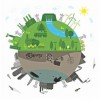
THE CHALLENGES AHEAD – Grassroots activism for climate change needed
The ink has hardly dried on the Paris climate agreement (PA) document, and it appears that global attention has moved on to other urgent matters: terrorism, election politics, Brexit, and what have you. But, the Agreement marks only the beginning of a long process to address multiple issues relating to climate change. What are the tasks before us now?
Breaking the cycle
STUNTING in Pakistan is a tragedy of epic proportions; a tragedy that we can, and must, overcome. Nearly half of Pakistan’s children — 44pc — suffer from stunted growth (National Nutrition Survey 2011). This is the third highest number of stunted children in the world.
PERIPHERALLY YOURS: Reviving the Age of Wisdom
The obsession with a section of youths of the country about “dying” for Islam gives rise to the paradoxical question: How can one serve Islam better? By being dead or by being alive and leading a productive life? We fail to comprehend what good can a dead Muslim do to Islam?NGOs’ regulatory framework
IN a country like Pakistan, where the government finds it challenging to deal with the many socio-economic problems faced by its populace, the role of NGOs in contributing to solve and support government policies to address these problems is vital.
Adaptation to Climate Change: Need for a Human Rights Approach
The memories of Cyclone Sidr and Aila are fresh in the mind of Razia Begum, a victim of climate change, of Dacope Upazila, Khulna. The standing field crops and houses of her community were destroyed, and they suffered the loss of cattle as well as people who perished in these natural disasters. She says mournfully that Saturkhali, Kamarkhola, Koilashganj and Baniashanta are the most vulnerable unions where access to necessary human rights is disrupted. Furthermore, salinity, flood, river erosion, heavy rain, cyclone, water logging and seasonal variations etc. are the most devastating impacts of climate change in those areas.
Let’s Improve Our Global Ranking on Impunity
After my remarks on impunity last week, a friend brought to my attention a disturbing study on Impunity (via InterAksyon), showing that among 59 countries, the Philippines led in the Global Impunity Index.
Rickshaw Painting in Digital Age
 With the advent of the digital printing press, Riskshaw painting a previously well known art form is on the verge of extinction. Many painters had to switch their profession to survive the "digital revolution".

The Wild Cards
The Rio Olympics began with the signature fanfare that accompanies the Games every four years. However, unlike every year, the nature and size of the spectacle, the synchronised dancers, over-the-top fireworks and the millions spent brought a new set of disappointments with them.
History and Society in the Shaping of Terrorism Today
Among the anxieties, fears and confusions generated by the grisly tragedy that occurred on July 1 at the Holey Artisan Bakery in Dhaka, one refrain was fairly consistent – how could some young men, presumably from relatively affluent and educated families, not only become radicalised but also engage in the horrific, detached, surreal brutality through which they killed their victims. The sheer wickedness of some young men repeatedly, deliberately, cold-heartedly hacking, stabbing and decapitating people to death, left us traumatized. How COULD they? Their brutality became the story, and our response reflected the worldwide horror and disgust at the tactics used by terrorists of their particular ilk.
Don’t Bash the Games
There have been few moments in my life as memorable as competing in the 1984 Olympic Games in Los Angeles. The chance to represent my country was a distinct honor, as was being part of the community of the Olympics — an event with the rare power to unite the world in the common spirit of competition and athletic excellence.
Turkey’s Syria Headache
Five years into the 'oust Assad' campaign, Turkey finds itself isolated in the region and beyond. After a narrow escape from a failed coup attempt, President Erdogan may finally be rethinking his Syria policy. Because the arming of rebels that included hard-line Islamists has not only contributed to the killing of some 280,000 innocents, it also brought upon Turkey the problem of millions of cross-border refugees and failed to put a dent against the Kurdish Workers' Party, i.e. PKK. The overly ambitious foreign policy of the Turkish government where Erdogan found himself at odds with Egypt, Libya and of course Syria, has done little to raise his profile in the region. That the Syrian engagement is a foolhardy experiment where the rebels cannot bring down Assad is now all the more evident with Russia's entry into the conflict.An Unequal Country
One of the world’s great achievements of the past decades has been the significant fall in global poverty. Between 1990 and 2012, the proportion of humanity living under $1.90 a day fell from 37 per cent to only 13pc, driven in large part by the efforts of China. South Asia also witnessed a major decline in poverty, from 51pc to 19pc, with unequal progress across countries.
The Day a Soviet Leader Banged His Shoe at the UN
During the height of the Cold War between the United States and the Soviet Union, and particularly in the 1960s, the United Nations was the ideological battle ground where the Americans and the Soviets pummeled each other– metaphorically speaking — either on the floor of the cavernous General Assembly hall or at the horse-shoe table of the Security Council.« Previous Page — Next Page »





The Week with IPS

NEXT STOP - SDGs
Tracking global progress towards a sustainable world
Tracking global progress towards a sustainable world
