Languages
Thursday, October 8, 2026



News and Views from the Global South
Other Voices
News and Views from our Content Partners
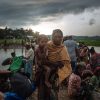
UN Migration Agency Appeals for USD 1.4 Billion to Help over 80 Million People in 50 Countries
IOM, the UN Migration Agency, is appealing for nearly USD 1.4 billion to address the needs of over 80 million people in 50 countries in 2018. These vital funds will support people displaced within the borders of their own countries, migrants, refugees and the communities that host them, people returning to their areas of origin and people experiencing or recovering from conflict and natural disasters.
“The Situation in Jerusalem Is a Textbook Case of Multi-Faceted and Cross-Cutting Violations of Human Rights” Idriss Jazairy
During a speech at the Al-Azhar conference in Cairo on the situation in Jerusalem, the Executive Director of the Geneva Centre for Human Rights Advancement and Global Dialogue Ambassador Idriss Jazairy appealed to the international community, and in particular the Arabic and Muslim community, “to join forces and act in concert in order to halt the violations of Palestinians’ human rights.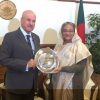
OFID Director-General commits to Bangladesh, meets with Prime Minister
The Director-General of the OPEC Fund for International Development (OFID), Suleiman J Al-Herbish, has concluded a mission to Bangladesh, the first high-level visit to South Asian country, and in addition to meeting with Prime Minister Sheikh Hasina, Al-Herbish signed two loan agreements to help bolster the country’s transportation sector.
Solar energy powered desalination commercially viable: Masdar
Masdar has announced the outcome from its Renewable Energy Desalination Pilot Programme in Ghantoot, showing that solar energy powered desalination is commercially viable in Abu Dhabi.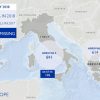
Mediterranean Migrant Arrivals Reach 1,916 in 2018; Deaths Reach 194
IOM, the UN Migration Agency, reports that 1,916 migrants and refugees entered Europe by sea through 14 January. This compares with 3,046 coming ashore during a similar period in 2017.
Breaking the Silence: Why We Should All Take a Zero-tolerance Approach to Sexual Harassment and Abuse
Around the world, brave women have broken their silence on the sexual harassment and abuse suffered at the hands of those with power. Their courage is paving the way for others to speak out about their own experiences.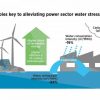
Renewable energy and cooling technologies key to reduce water use in India’s Power Sector
A new policy brief co-authored by the International Renewable Energy Agency (IRENA) and the World Resources Institute (WRI) finds that increasing the share of renewables, in particular solar photovoltaic (PV) and wind, in India’s power mix, and implementing changes in cooling technologies mandated for thermal power plants would not only lower carbon emissions intensity, but also substantially reduce water withdrawal and consumption intensity of power generation.
From Seedling to Shade: Planting Trees in South Sudan’s Displacement Sites
With sweltering heat — temperatures often over 40 degrees Celsius — and either extreme humidity or dust, life in the UN protection of civilians (PoC) site in Bentiu, South Sudan, is harsh by any measure. Bentiu hosts the largest PoC site in the country, with a population of more than 112,000 people, many of whom have been seeking protection in the site since the conflict erupted in December 2013.Lawmakers discuss policies to accelerate global energy transformation
Lawmakers from around the world gathered in Abu Dhabi to discuss the policies needed to accelerate transformation of the global energy system, in a Legislators Forum organised by the International Renewable Energy Agency (IRENA) and a Parliamentary Forum jointly organised by the United Arab Emirates’ Federal National Council (FNC).UAE ‘most visionary’ in future energy sector: Atlantic Council President
The reality is that the energy mix for the foreseeable future is going to consist of both fossil fuels and renewable energy forces, according to Frederick Kempe, President of the Atlantic Council. "Work in the energy market with a mix of both these energy forces is key to why we brought the Global Energy Forum to the UAE."
Women Displaced by Brutal Violence in the DR Congo Tell Their Harrowing Stories
Women have borne and continue to bear a disproportionate amount of the suffering caused by two decades of conflict in North Kivu in the Democratic Republic of the Congo (DRC).
Digital Infrastructure
Millennials are the natives of the digital infrastructure. They have the privilege of having been born in a time when everything is within reach through the click of a button. Having worked in Dubai in the 1970s, I learned that there are three kinds of infrastructure: progressive, hard, and soft. Progressive infrastructure refers to the international airports and the seaports. The hard infrastructure are the roads, highways and the like. Lastly, the soft infrastructure refers to the ease of doing business. Back in the day, the Sheikh of Dubai would mention, what is good for business is good for Dubai. Later, I added two more; these are sustainable and institutional infrastructure. Even if you have the best plans in the world, without the right institutions to implement these, these plans would not come to fruition. Lastly, infrastructure should be sustainable in order to last for generations. With the advancement of technology, this is the Age of Digital Infrastructure.
Posing as Liberators
A lot was done in the name of Muslim women in the waning weeks of 2017. Saudi Arabia gave permission for women to enter the previously forbidden sports stadiums and allowed female contestants participating in an international chess tournament in Saudi Arabia to forego the abaya and hijab. In future months, the kingdom benevolently promised, women would be permitted to drive trucks and motorcycles in addition to driving cars.
Paying a High Price
Living costs in Dhaka have soared so high that it's not just low-income groups struggling to make ends meet—the middle class is feeling the squeeze too. According to an analysis by the Consumers Association of Bangladesh (CAB), the cost of living in the capital hit a four-year high in 2017 due to rising prices of essentials and utilities. Onions had the highest price hike last year, followed by other vegetables, household gas, rice, liquid milk and beef. The change in the living costs in 2017 went up by an alarming 8.44 percentage points from 2016. Besides, house rent soared by 8.14 percent and electricity by 6.44 percent in 2017 from that a year ago.
Silent Engines Behind Agriculture
Year 2017 ended up with a huge loss of yield in rice cultivation when compared with the last few years. On one hand the reason was the heavy floods which occurred in agricultural areas. Another reason is the restrictions on the herbicides, pesticides and agricultural fertilizers that enhance the yield, as the farmers claim. So farmers are questioning on the big issue in using herbicides and other chemicals but majority of people don't know about the microorganisms who live in soil and within the plant playing a silent,yet a critical role in the development of plants and ultimately on the whole agricultural world.« Previous Page — Next Page »





The Week with IPS

NEXT STOP - SDGs
Tracking global progress towards a sustainable world
Tracking global progress towards a sustainable world
