
Friday, September 25, 2026



News and Views from the Global South

Prison Is a Blow, but Doesn't Knock Down Peasant-Activist
- “If they keep on killing trees, there won't be any more water. I'll continue fighting this. I'm not afraid,” says Mexican peasant farmer Felipe Arreaga, released Sep. 15 after spending 10 months behind bars.
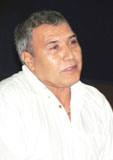
Felipe Arreaga. - Tlachinollan.
A member of the Organization of Ecologist Peasants of the Sierra de Petatlán and Coyuca de Catalán, OCESP, in the Mexican state of Guerrero, Arreaga walked free on Sep. 15, after 10 months in prison and a legal process that finally concluded he had nothing to do with the murder of the son of a logging boss.
For environmental and human rights groups, Arreaga was a prisoner of conscience, like his fellow members of OCESP, Rodolfo Montiel and Teodoro Cabrera, also peasant farmers, who were tortured and arrested in 1999, but released in 2001 on the order of President Vicente Fox.
Like his colleagues, Arreaga maintains that he was imprisoned for his opposition to the logging of the forests and the destruction of the environment in the impoverished mountains of Guerrero, where lumber mafias and bands of narco-traffickers are active, and there is a continuous and growing military presence.
For his “outstanding environmental heroism,” the Sierra Club, a U.S.-based environmental organization, awarded him in August the Chico Mendes Prize, named for the Brazilian labor activist and environmentalist who was assassinated in 1988.
Tierramérica: You just got out of prison. Have your troubles ended? Or do you fear some sort of reprisal from the ones who are cutting down the forests?
Arreaga: Fear always exists when you are affecting interests. I knew that defending the forests was not going to look good to the people who have always exploited the lumber. As a human, I have fear of being killed, but I always say that God is the one who holds my life in his hands, and not (those who threaten me). That is why I say I'm not afraid of what comes.
-What was your experience behind bars like?
-It was a very small cell with 18 other people, so there were many arguments and fights. Now I have left a world where I lived a very bitter experience. I'm free, but I still can't control it, I feel bad. It was 10 months and 12 days in prison, which felt like 10 years. I had never been arrested before. The army and the logging bosses used to come after me, but that was different. When that happened I could still walk free in the forests.
-What's next in your life?
-It hurts me to see that the water is contaminated. Our rivers are running out. This is worrisome to me. I try to be the cry in the desert and say 'enough!' because the land is being deforested. This keeps me in a fighting stance, and I'll keep working at it. I have already lost loved ones, like my mother, and so many other things, like the rape of my younger sister — all for being a friend of the forests. This is why I'll carry on.
-Where does your motivation to defend the environment come from?
-I'm an illiterate peasant. Nobody educated me. I can read a little now, because I learned a bit in prison. But I got to know the (Guerrero) mountains when I was a boy, when they were intact. I saw all the beauty of my land, fertile land of Mother Earth. And now it refuses to produce because of so many chemicals, so many poisons they dump in it, and the forests that have been destroyed. From those forests the logging bosses have made a living, they have exploited the forests for themselves, not the peasants. That is why we fought, even though that hurt their interests and that is why they send the military and the repression.
-It's difficult to defend nature when in the sierra the peasants are so poor. Many of your neighbors say that the only way to earn money is to cut down trees. What would you tell them?
-In my land we say that those who have money and businesses, like soft drink bottlers or gas stations, which we are going to allow them to take the water, but in exchange for some money, some help. Also, if we continue killing trees there won't be any more water. We have to take care of rural people. We have to guide them and provide them with resources, a source of work in which they can survive. The sad thing is that now many don't have enough even to eat, so it's better if they go to the United States.
 Print
|
Print
|




