
Thursday, October 8, 2026



News and Views from the Global South

Foreigners Lead Global Agricultural Land Rush
- Corporations and governments with financial resources to spend are buying up agricultural land in poor countries as a means to ensure food and energy supplies.
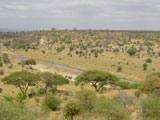
Acacia savannahs in Zanzibar, Tanzania. - Public domain
Rich countries that are short on land or water at home are looking to secure food-producing lands elsewhere as a way to ensure food security for their populations, said Joachim von Braun, director of the International Food Policy Research Institute (IFPRI).
“There is a major lack of transparency in these land deals,” von Braun said in a telephone press conference from a Washington.
The IFPRI study, “'Land Grabbing' by Foreign Investors in Developing Countries,” by von Braun and Ruth Meinzen-Dick and presented last week, estimates that 15 million to 20 million hectares have been acquired or are in the process of being sold.
Von Braun pointed out that it represents the equivalent of about 25 percent of all the farmland in Europe. The report was based primarily on data from press reports.
Because hard data is hard to come by, IFPRI conservatively estimates that the deals represent 20 billion to 30 billion dollars being invested by China, South Korea, India and Gulf States, mainly in Africa.
“About one-quarter of these investments are for biofuel plantations,” von Braun said.
China started leasing land for food production in Cuba and Mexico 10 years ago and has extensive holdings in Africa, including pending or attempted deals for millions of hectares in the Democratic Republic of Congo, Zambia, Zimbabwe, Uganda, and Tanzania, with many thousands of Chinese workers brought in to work on these lands, according to the report.
Sudan has the largest foreign ownership or control of African farmland, in this case a group of Gulf States, including Saudi Arabia. Last year, United Arab Emirates negotiated several farmland deals with Pakistan. Qatar has agricultural land in Indonesia, Philippines, Bahrain, Kuwait and Burma.
The huge Korean company Daewoo Logistics Corporation signed a deal to lease 1.3 million hectares in Madagascar to grow maize and oil palm, which reportedly played a role in the political conflicts that led to the overthrow of the government in 2009, the report noted.
“The number of land deals is much higher than the IFPRI numbers. No one is monitoring all the private land deals,” says Devlin Kuyek, a researcher at GRAIN, a Barcelona-based non-governmental organization dedicated to global agricultural issues. GRAIN published its own “Land Grab” report six months ago, concluding that rich countries are buying poor countries' soil fertility, water and sun to ship food and fuel back home, in a kind of neo-colonial dynamic.
Kuyek told Tierramérica that this 21st-century land rush is driven in part by countries that no longer want to be held hostage by the big, multinational food trading companies.
But increasingly the private capital is coming from pension funds, which are staking their bets on farmland as the next profitable commodity to invest in after the collapse of the global stocks and financial sector and continuing weak prices for oil and metals.
“A huge chunk of the Australian cattle industry is now owned by a private equity firm. The two biggest pork producers in China are owned by Goldman Sachs (a private investment firm),” Kuyek said.
As a result, he noted, ranchers and farmers have turned into employees.
But it could be far worse than that for hundreds of millions of small landholders, pastoralists and indigenous peoples who do not hold formal land titles, because they are at risk of being driven off their land, he said.
Most of African farmland is under local customary land holding, without formal land title, acknowledges IFPRI researcher Meinzen-Dick.
“When outsiders come they don't recognize those customary land rights. Such rights must be respected,” Meinzen-Dick told Tierramérica.
IFPRI is calling on the international community to develop a code of conduct that would uphold local peoples' rights to their land, guarantee transparency, share benefits, foment environmentally sustainable and ensure local food security.
Von Braun sees great potential in such land deals because they bring badly needed capital to the agricultural sectors of poor countries, contributing to infrastructure and research. “China is creating several research stations in Africa to boost yields in rice and grain,” he said.
Kuyek disagrees: “These investments are not about agricultural development. This is all about making money and shipping food back to home markets.”
Food processing companies and even food retailers are involved in this because they are anxious to ensure “security of supply” as efficiently as possible, says Janice Jiggins, of the International Institute for the Environment and Development, in London.
One of the world's biggest banks, the Netherlands' Rabobank, is one of the main financiers for these kinds of deals, Jiggins told Tierramérica via e-mail.
The 2009 report from the United Nations Special Rapporteur on Food Sovereignty, Olivier de Scutter, detailed the legal implications of the farmland deals, warning that they completely override existing rights, enshrined in laws, constitutions, and customs, Jiggins wrote.
 Print
|
Print
|




