Wednesday, August 5, 2026



News and Views from the Global South
ENVIRONMENT-SOUTHERN AFRICA: The Politics of Weather
James Hall
- Ted Reilly, founder of Swaziland’s wild animal park systems, surveys the green early spring hills of October, noting that “the meteorologists tell us not to think a few showers can break this drought,” which in Southern Africa has profound political as well as humanitarian consequences.
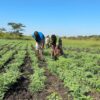
Ted Reilly, founder of Swaziland’s wild animal park systems, surveys the green early spring hills of October, and knows their beauty is deceptive.
“The Southern African region enjoyed some good rains this past week, although the weather was cold,” he says. “Meteorologists tell us not to think a few showers can break this drought. We are in for more of the same next year.”
Droughts in Southern Africa have profound political as well as humanitarian consequences. Zimbabwean strongman Robert Mugabe was able to deflect criticism against his “land reform” policies that have devastated his country’s once-thriving agriculture sector, which in the past produced crops in times of good rain and no rain, by blaming a drought that occurred early in 2002.
“A drought striking the region next year as well can also be used as a cover for destructive land use policies,” says the editor of a Harare newspaper.
In Swaziland, King Mswati’s royal government garners support from 80 percent of the population that lives under palace-appointed chiefs on communal Swazi Nation Land.
Political commentators in the country argue that the nation’s leadership denies farmers title deeds to their properties in an effort to keep them dependent. Title deed ownership of land would allow farmers to use their land as collateral to obtain bank loans to improve production.
Advocates of agricultural reform note that in times of drought, food security can be enhanced by a more efficient use of small landholding farms. But this would fundamentally shift the political equation in the kingdom, and there are no plans currently to grant farmers ownership of property they have lived on for generations.
However, Prime Minister Sibusiso Dlamini’s cabinet has produced an Economic and Social Reform Agenda that suggests a long-term leasing arrangement of property, perhaps up to 99 years.
South Africa is currently the region’s top agricultural producer. News that a second year of drought may be imminent is putting pressure on the agriculture sector to gear up for even greater output, in anticipation of purchase orders from neighbouring countries.
“Weather is not restricted to national boundaries,” says Hans Bekker, a Nelspruit, South Africa meteorologist. “South Africa will also feel the effects of the same drought experienced from Zambia southward, like this year.”
The 2002 drought was unanticipated. Meteorologists have plotted the development of a 2003 drought since last month.
“By September we can make long-term projections of probable rainfall patterns through mid-summer,” says Themba Dlamini of the Swaziland Meteorological Department. “We see a recurrence of the El Niño weather pattern that brought a significant drought in 1992.”
El Niño – the name in Spanish means “the baby” and is a reference to Jesus Christ’s birth in December, when the weather effect is usually most noticeable – has become a household word in Southern Africa.
The phenomenon, which is unexplained, causes the waters of the Indian and Pacific Oceans to heat up and move eastward, toward North and South America. Cooler waters left in their wake to the west, along the African coast, create less moist air and consequently less rainfall.
Meanwhile, rains increase dramatically on the west coasts of the American continents, causing flooding and property loss.
Rainfall was normal in Swaziland in 2002 on average, but a cessation of rain mid-summer for three weeks causes food crops to shrivel in the fields. When rains return, little was left to save.
The national weather service predicts almost normal rainfall through December, but then El Niño conditions will kick in, leaving skies cloudless during the key growing season, as happened this year.
The National Disaster Task Relief Force has already anticipated food shortages through the arrival of next year’s harvest. International donor agencies led by the World Food Programme (WFP) will keep famine from Swaziland. But a second crop failure in a row will tax humanitarian efforts.
Other sectors are bound to suffer. Tourism has a tendency to languish when holiday seekers learn a country is experiencing drought. Visitors anticipate dried-up waterholes and skeletal remains of dead wildlife at game parks, as well as water rationing at hotels.
The game parks themselves go into crisis management mode. “Already our animals are stressed. There is a great competition for water. The ponds and streams are crowded,” says Reilly.
Joe Nxumalo, a park ranger at Kruger National Park in South Africa, confirms this, saying, “What we will have to do is drill for ground water. Beyond that, there might have to be a culling of the herds.”
Beyond subsistence farming, most nations of the region depend on agricultural exports to boost their economies. These can suffer from too little rain, but also too much rain, when trucks bogged down in muddy fields are unable to transport harvested crops.
Hot weather increases energy use, sometimes putting an intolerable strain on nations’ electricity infrastructure, leading to blackouts that wreak havoc on industry.
In Swaziland, each year ends with the sacred annual Incwala ceremony. The national holiday in December finds Swazis from the king to commoners engaged in a series of rituals to petition ancestral spirits for good weather.
The ceremony will be performed more vigorously this year as a weather dependant region seeks relief from the El Niño conditions that baffle even meteorologists.
 Print
|
Print
|