
Thursday, September 24, 2026



News and Views from the Global South

“We Must Seek Alternatives to the Aysén Dams”
- The government should hire consultants to audit the dams and environmental projects, says Chilean Fernando Avila, expert in corporate environmental responsibility.
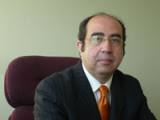
Fernando Avila, director of AEPA. - Daniela Estrada.
The attorney is convinced that companies can make economic profits compatible with environmental protection.
He is enthusiastic in talking about the innovations in “clean production” presented in Santiago during the first Latin American Conference on the Environment, organized Oct. 17-20 by AEPA and two other groups.
Founded in 1999 and including 70 companies that provide environmental services and eight embassies, AEPA is “a bridge between authority and productive companies,” according to Avila.
His interest in sustainable development arose when he was project director of the North-South Center of the Council of Europe, based in Lisbon, Portugal. After 22 years there, he returned to Chile in 1997, when the Law on the Environment had already been approved, which in his opinion marked “a before and after” in Chile because it required companies to present environmental impact studies.
Today what is needed is a “center for environmental technologies, public-private, which has the technical authority to resolve conflicts,” he says.
Excerpts from Tierramérica's recent dialogue with Avila in Santiago:
Tierramérica: What degree of conflict do you see today between business and communities about environmental issues?
Avila: It's high, but not because it's worse than before, but rather because now there is citizen responsibility and there is the environmental impact system. Before 1994 we didn't know what the impact of corporate activity was. It isn't that there is more (conflict) now, but that we know about it. On the one hand, it is cause for concern. But, on the other, it's better that it is known, because then we can resolve it.
Tierramérica: Do you see some companies doing bad things deliberately?
Avila: No, no. One or two in 100. (Before), some did bad things out of ignorance, but now there is training, they go to fairs in other countries, they know how to resolve the problems. Today there is still much to do, but we have made progress. We can't say that in Chile they don't respect the environment, that in Chile they are destroying everything.
Tierramérica: Why should citizens trust the environmental impact studies if, once they are approved, they still produce ecological disasters? For example, in 2004 hundreds of swans died in the southern Cruces River, the result of waste dumped by a Celulosa Arauco y Constitución factory.
Avila: That is a deficit in government regulation. We must find an oversight system. It doesn't mean hiring 3,000 or 5,000 inspectors who turn into functionaries. We can seek modern or alternative solutions, like those in Europe. For example, certify consultants who serve as auditors for the government, whose work lasts for a certain period.
Tierramérica: Environment Minister Ana Lya Uriarte recognizes that monitoring can always be improved, but she proposes that the first responsibility lies with the company.
Avila: I'm not saying that (the problem) is just on one side, but if the school inspector didn't exist, at recess time the children would do whatever they wanted. Anyone who knows that the monitor exists, is real and will carry out the duties, will help. But it is true, doing an environmental impact study is to agree a contract, and there I'd talk about the good guys and the bad guys. In other words, those who comply — which are the majority — and those that don't, which are the ones we talk about most.
Tierramérica: What do you think about the controversial project of the HidroAysén company for building five dams in Patagonia?
Avila: I'm not going to speak for AEPA. I believe there are other possible solutions to avoid building the dams. If it were to serve southern Chile, perhaps it would be a good thing, but to have to set up 2,000 kilometers of cables to bring more energy to this monster that is the Metropolitan Region (Santiago) is lack of respect for the country.
Tierramérica: What is your opinion on the National Watershed Strategy being prepared by the government and which would delimit corporate projects to determined areas?
Avila: We have known there would be a Watershed Council, where the public and private sectors would be represented. Like you say, it would set limits for the projects, because watershed management is not only the natural resource of water, but also territorial regulation, productive development, land use. As such, there will be some activities that can be carried out in accordance with those parameters and others that can't. This will allow the development of the regions. It is an opportunity to organize the rooms of this house we know as Chile.
 Print
|
Print
|




