
Wednesday, October 14, 2026



News and Views from the Global South

Zeolite, Mineral of a Thousand Uses
- The versatility, abundance and low cost of zeolite make it a valuable tool for agriculture and other economic sectors in Cuba.
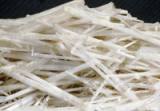
Natrolite, one of many types of zeolite. - Photo Stock
Cuban expert Martha Velásquez explains that this non-metallic mineral of volcanic origins will play an essential role in sustainable development. Its various uses range from filtering out toxic gases to recovery and improvement of soils, livestock nutrition and an additive to cement to create lightweight concrete for construction.
Zeolite's diverse uses are due to its potential as a natural exchanger of ions, its power for reversible adsorption (the process through which a solid used to eliminate a water soluble substance), and natural molecular sieve, which allows it to be used in the decontamination of aggressive toxic substances.
It is also capable of exchanging heavy metals, like lead, nickel, iron and cobalt, and purifying potable and wastewater for appropriate discharge, Velásquez, an expert with the government's Research Center for Mining-Metallurgic Industry, told Tierramérica.
Because of its low cost and great versatility, zeolite also plays an important role in agriculture. It can be used to improve soils, boost the effects of chemical and organic fertilizers alike, and as a component of substratum for the development of different crops.
For livestock, it is used as a food additive for several types of animals and in livestock bedding, which results in a fertilizer rich in ammonia and other high-quality substances for farming, said Velásquez.
According to official sources, 70 percent of Cuba's cultivated area suffers from erosion, salinity or acidity. However, the use of zeolite remains limited in farming, which has yet to recover from the economic crisis of the 1990s following the collapse of the Soviet Union and the socialist nations of Eastern Europe, Cuba's main economic and ideological allies.
The wave of economic recession also interrupted the programs for mining and development of zeolite, which had been gathering force in the 1980s.
The lack of transport and capital, in addition to other obstacles created by the crisis, put the brakes on zeolite, which had been on its way to widespread use, especially in agriculture.
Velásquez said there is currently a policy for reactivating the farming industry and that as the sector advances, the use of zeolite will grow with it. “We are studying the issue of transport and looking for the most economical options,” she said.
Other experts also insisted that boosting domestic consumption is the priority at the moment.
“We want to employ our resources in the country, but it's necessary that they ask us for it, that they trust in Cuban zeolite and the technology we've created. Unfortunately, many entrepreneurs are distrustful of national products,” said an official interviewed by the Cuban news media.
As part of the recovery plans, investments are being made in three zeolite plants currently in operation. The goal is to prepare them for a future increase in demand. Improvements are also planned for about a dozen zeolite deposits around the country.
In 2008, Cuba exported 600 tons of zeolite. The total in 2009 reached 4,490 tons. Among the buyers is Brazil, where among other uses, the mineral goes toward replacing highly polluting sodium tripolyphosphates in manufacturing detergents.
There is a high demand for zeolite in the European Union, United States, Canada and some Latin American countries. Prestigious institutions in Brazil and Japan have great faith in the high quality of Cuba's natural deposits, said Velásquez.
“It would be ideal to process the mineral in Cuba and then sell it with greater added value, but we lack financing,” said another expert.
According to various studies, there are more than 50 types of zeolitic soils. Clinoptilotite possesses properties best for filtration, adsorption and sequestering cations (positively charged ions). Zeolites – “boiling stones” in Greek – have a structure similar to a cage, formed by tetrahedrons united by oxygen atoms.
The mineral is most typically found in areas where there were prehistoric volcanoes. The United States, Australia, Turkey, Japan and China, as well as several countries of Africa, are among the leading producers of zeolites, although it is believed the mineral can be found on all continents.
According to data from Cuba's National Office of Mining Resources, there are deposits of zeolite distributed among almost all of the island's provinces.
 Print
|
Print
|




