
Friday, November 27, 2026



News and Views from the Global South
Nuclear Progress Amidst Gloomy Political Outlook
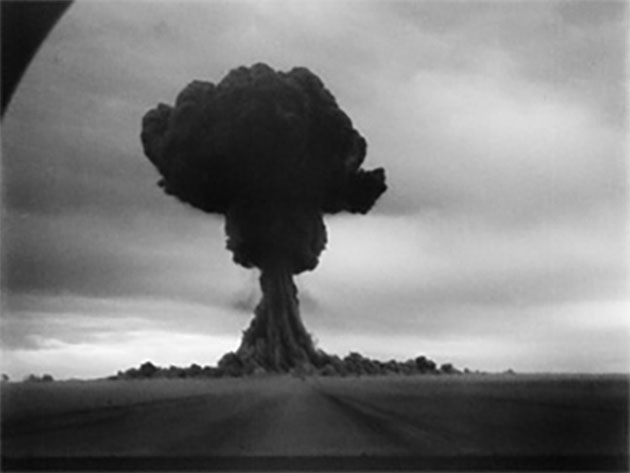
Credit: United Nations
- The world’s nuclear landscape has always remained politically gloomy: Russia’s occasional threat of a nuclear attack on Ukraine, Iran’s determination to go nuclear despite US warnings, North Korea’s plans to increase its nuclear arsenal and the continued upgrading of nuclear weapons by most of the world’s nine nuclear powers– the US, Russia, France, China, UK (all permanent members (P5) of the UN Secuity Council), plus India, Pakistan, Israel and North Korea.
Amidst the glorious political uncertainities, the major UN treaties governing nuclear weapons include the Treaty on the Non-Proliferation of Nuclear Weapons (NPT), the Treaty on the Prohibition of Nuclear Weapons (TPNW) and the Comprehensive Nuclear-Test-Ban Treaty (CTBT).
A report released last week, ahead of the First Review Conference of the Treaty on the Prohibition of Nuclear Weapons (TPNW), shows its members have made “significant progress” in implementing the treaty during its first five years.
The report from ICAN, the International Campaign to Abolish Nuclear Weapons, and funded by a grant from New Zealand and the city of Geneva, will be presented to the conference (30 November to 4 December) with recommendations on next steps for the treaty. ICAN is the civil society coordinator for the TPNW.
Among the main findings is that the treaty and its members have strengthened the norm against the nuclear weapons activities banned by the TPNW, including possession, nuclear threats and nuclear sharing (when nuclear-armed countries, currently the US and Russia, base weapons in another country).
“This has been achieved through regular, joint condemnation of these activities. This has had an impact on other organisations, including the G20, that have echoed TPNW members’ condemnations, particularly of nuclear threats”.
The efforts by TPNW members and civil society, according to the report, have increased the strength of the treaty by increasing the number of states parties to 75 (from 50 at the time the treaty entered into force In 2021) while a further 26 states have signed the treaty.
A total of 101 countries, a global majority, have either signed, ratified or acceded to the treaty. This progress was achieved against the background of the Covid 19 pandemic that disrupted international diplomacy significantly during the period in question.
The TPNW is unique among nuclear disarmament treaties because it mandates states to support people who have been harmed by the use of nuclear weapons and the more than 2000 test explosions carried out since 1945.
The report shows “countries have taken this responsibility seriously by assessing the extent and nature of the intergenerational harm done to people and radioactive contamination to the environment, as well as drawing attention to this issue at multilateral forums. They have also started to develop an international mechanism to support affected communities and the clean-up of the environment.”
Dr M.V.Ramana, Professor and Simons Chair in Disarmament, Global and Human Security, School of Public Policy and Global Affairs, University of British Columbia, Vancouver, told Inter Press Service (IPS: There are two ways of thinking about the significance of the TPNW.
One way to view its significance is in terms of whether there has been any reduction in the nuclear danger. Arguably, the nuclear danger has not been reduced since 2020—and has become worse, especially with the integration of Artificial Intelligence and Machine Learning based tools into nuclear command and control systems., he pointed out.
“The other way to view its significance is whether the treaty has been effective in spreading the message about the importance of nuclear disarmament—and here the effectiveness of the treaty and the activities that supporters of the treaty have been undertaking is much more apparent”.
There is arguably much greater recognition of the dangers stemming from nuclear weapons. The question we should be confronting is how to translate this widespread concern into policy changes aimed at reversing the ongoing arms race, declared Dr Ramana.
Alice Slater, who serves on the Boards of World BEYOND War and the Global Network Against Nuclear Weapons and War in Space, and a UN NGO Representative for the Nuclear Age Peace Foundation, told IPS despite the significant progress reported by ICAN during the first five years of the adoption of the Treaty for the Prohibition of Nuclear Weapons, the nuclear weapons states and their allies sheltering under the monstrous so-called “deterrent” of the nuclear umbrella, have yet to participate in meetings or negotiations or review conferences addressing the TPNW.
Interestingly, the Netherlands, a NATO state under the US nuclear umbrella was the only nuclear umbrella country that attended the original UN meeting that voted for negotiations to go forward on the TPNW because grassroots activists demanded that their government send a representative, she pointed out.
“They were also the only negative vote, when the UN voted to proceed with negotiations on the new ban treaty. There is now some promising news from Spain, another NATO nation under the US nuclear “umbrella”, that organized public pressure may find their country in attendance at this upcoming review conference.”
“We learned only one week before this upcoming NPT Review conference that the leaders of the US, China, and Russia, in an unprecedented three-way meeting issued a 4 point statement released by the US saying: The three heads of state reaffirmed that a nuclear war cannot be won and must never be fought. The three countries will conduct a dialogue on reducing nuclear risks and preventing the proliferation of nuclear weapons.”
Yet there is no hope of seeing them at the Review of the treaty that shall not be named by the nuclear outlaw states and their partners in nuclear terror, the NATO states as well as Australia, Japan and South Korea in the Pacific.
“Perhaps we need an additional approach, adding to the most admirable ICAN list of 50 actions that can be taken to work for the fulfillment of the end goal, the total abolition of nuclear weapons.”
She said it is rarely acknowledged or recognized that China and Russia have been urging the US to take up their draft treaty to ban weapons and war in space, which they proposed in the consensus-bound Committee for Disarmament in Geneva, in 2014 and 2018, vetoed by the US that refused to even discuss the proposal.
On the 80th Anniversary of WWII they once again proposed that the world take up their draft proposal to prevent weapons and war in space, and were totally ignored. Perhaps public pressure on the US and its “umbrella” partners to take up the issue, would create an opening for further negotiations for nuclear disarmament.
“Gorbachev was unable to convince Reagan to give up Star Wars in return for total nuclear abolition when the wall came down. It’s time to change course and see if a weapons free space agreement could be the opening for the nuclear weapons states to finally move to nuclear abolition.”
https://www.icanw.org/will_spain_vote_to_join_the_tpnw
https://www.whitehouse.gov/briefings-statements/2026/11/u-s-russia-china-heads-of-state-declaration-toward-peace/
IPS UN Bureau Report



 Print
|




