Languages
Sunday, October 11, 2026



News and Views from the Global South
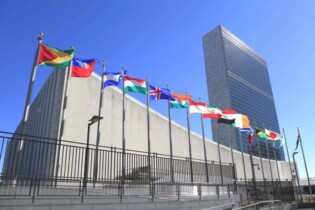
The United Nations in a Time of Opportunity & Uncertainty: a Time to Choose
On 15 September 1953, Vijaya Lakshmi Pandit of India was elected the eighth president of the UN General Assembly — the first woman to hold the UN's second-highest position. Since then, only four women have followed her. Since its founding, the UN has had nine Secretaries-General. All men. Now, 81 years after the UN's founding, we have a historic opportunity to correct that record. It is time to entrust the UN leadership to a woman of the Global South who shapes a more inclusive, effective and forward-looking UN.
G20 Leaders Must Listen To Their People and Agree To Tax the Ultra-Rich
We are living in a world of multiple crises of inequality, climate breakdown and conflict. Billions of people globally are facing huge hardship. Whole governments, too, are virtually bankrupt, with extremely high debt levels forcing them to implement brutal and deeply unpopular cuts and tax rises for ordinary people. 3.3 billion people live in countries that spend more on debt interest payments than on either education or health.
Hunger in East Africa Is a True Testament to Climate Injustice
From 2017, Shamso Isac has helplessly witnessed the demise of all her sources of income. Failed rain seasons and dried-up water sources meant a lack of pasture, which led to the death of her livestock. Widespread hunger exacerbated by rising food costs forced her to relocate to Burlhedi internally displaced persons camp in Baidoa in the Southwest state of Somalia. She recalls walking for weeks seeking a place she could get food for her family. When her child asks for something to eat or drink, she has nothing to offer; all she can do is cry, overwhelmed by the utter hopelessness she feels.
‘A Growing Number of Billionaires Is a Sign of Failure’
It is no secret that economic inequality has risen exponentially in the last few decades, both in India and globally. According to the World Inequality Report 2022, India is one of the most unequal countries in the world in terms of both income and wealth inequality. It is estimated that in 2021, the top 10 percent of Indians held 57 percent of the total national income while the bottom 50 percent’s share was just 13 percent.





The Week with IPS

NEXT STOP - SDGs
Tracking global progress towards a sustainable world
Tracking global progress towards a sustainable world
