Languages
Wednesday, October 14, 2026



News and Views from the Global South
MALI: Children Feel The Weight of Violence in Mali
Watchlist, a network of international non-governmental organisations, released a new report Wednesday detailing violations against children by armed groups in Mali, where a conflict that erupted in January 2012 is taking a heavy toll on young people.
Examining the Depths of Ethiopia’s Corruption
Ethiopia may be one of the fastest-growing, non-oil producing economies in Africa in recent years, but corruption in this Horn of Africa nation is a deterrent to foreign investors looking for stable long-term partnerships in developing countries.
Fatwas Heighten Sectarian Tensions in Syria Conflict
Saudi Arabian religious scholars are leading an increasingly vocal chorus of Islamic preachers who are urging Muslims and Arabs to support Syrian rebels against what they say are atrocities at the hands of Iran-backed Shiite forces of Syrian President Bashar al-Assad.
Award Spotlights Indian Women Helping Women
Jassiben, a self-employed potter from Nana Shahpur village in western India, loves summer despite the heat waves and frequent power cuts, because summer days always mean great business.
EUROPE: Floods Are Here to Stay
Record floods in Central and Eastern Europe have highlighted some of the challenges of climate change for the continent, as well as the floods’ potential to spur populist politics.
Cairo’s Poor Convert Kitchen Waste Into Fuel Savings
The bio-gas digester on the roof of Hussein Farag’s apartment in one of Cairo’s poorest districts provides a daily supply of cooking gas produced from the kitchen waste his family would otherwise discard in plastic bags or empty into the clogged sewer below his building.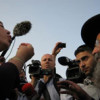
Scales Tip Towards Women in Jewish Religious Rights Struggle
The struggle for gender equality and Jewish pluralism took a highly symbolic turn on Sunday at the Western Wall, Judaism’s most revered site and emblem of unity, as a group of women known as “Women of the Wall” prayed legally and in a way they saw fit.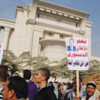
Egypt’s Presidency, Judiciary Brace for Showdown Over Draft Law
The post-revolution struggle between Egypt’s judiciary and President Mohammed Morsi, the country’s first Islamist head of state, finally seems to be coming to a head over controversial draft legislation regulating judicial authority.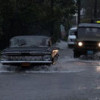
Cuba Kicks Off Cyclone Season with ‘Good’ and ‘Bad’ Rains
The new cyclone season in Cuba is forecast to be highly active, and it announced its arrival with intense rains that caused rivers to burst their banks and flooded extensive areas in the western province of Pinar del Río. However, Andrea, the first named tropical storm of the year, did not reach hurricane force.
Communication Blackout, Rights Abuses in Nigeria’s Emergency States
Residents in the three Nigerian states where a state of emergency has been declared are living in fear as food prices soar and government soldiers conduct door to door campaigns to root out terrorists.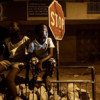
Sierra Leone’s Child Trafficking to Blame for Street Kids
On a street corner in downtown Freetown, Sierra Leone’s capital city, 12-year-old Kaita sits with a friend on a peeling steel railing watching the headlights of motorbikes cruising through the otherwise silent streets. It is after midnight, and motionless human forms lie curled up in doorways or stretched out on pavements nearby. For Kaita, these streets are home, and have been for almost six years.
Gay Parents in Cuba Demand Legal Right to Adopt
Many lesbians and gays in Cuba find different ways of achieving their dream of becoming mothers and fathers and forming families. But this is complicated in a country where neither civil unions nor adoption by non-heterosexual persons are legally recognised.Poverty No Longer Explains School Dropout in Argentina
Poverty no longer explains the high secondary school dropout rate in Argentina, one of the richest countries in Latin America.Living Together Peacefully in a Diverse World
Although the Charter of the United Nations, the Universal Declaration of Human Rights and many other international law instruments clearly prohibit discrimination on grounds of religion, race, gender and many other differences, “sadly we live predominantly in a world of intolerance, xenophobia, marginalization, tensions and conflict,” Nassir Abdulaziz Al-Nasser, the UN High Representative for the Alliance of Civilizations (UNAOC) said, at the opening ceremony of the the 2nd World Forum on Intercultural Dialogue, in Baku, Azerbaijan, last week.
Nicaraguan Women May Have to Negotiate with their Abusers
Conservative sectors in Nicaragua have launched an offensive against the Comprehensive Law Against Violence Toward Women, seeking amendments including an obligation for women victims to negotiate with their abusers, human rights groups reported. The Supreme Court (CSJ) decided on May 23 to ask the single chamber legislature reform Law 779, which has been in force since June 2012.
Failed Drug Policies Building Global Hepatitis C ‘Time-Bomb’
As a hepatitis C pandemic rages among drug users and threatens the lives of millions around the world, a group of high-level leaders called today on governments to reform their drug policies and raise awareness about the public health threat of hepatitis C.
Ramping Up Renewable Energy in the Philippines
As the Philippines grapples with frequent power outages and a growing demand for energy, government agencies and private groups say the answer to the country’s power needs may lie in alternative sources.
Post-Coup Polarisation Marks Honduran Election Campaign
The unhealed wounds left by the 2009 coup in Honduras will continue to mark the campaign for the Nov. 24 elections, in which nine parties are participating, four of them new political groups, spanning a wide ideological range.
Poverty Down in Argentina – But By How Much?
In the 10 years since late president Néstor Kirchner, who was succeeded by his wife Cristina Fernández de Kirchner in 2007, first took office in Argentina, poverty has fallen, employment has climbed and educational coverage has expanded, although there is no agreement on the exact statistics.
Rapping Mozambique’s Praises and Faults
Mozambique is proud home to not one, but two female rappers who are both qualified lawyers. Yveth “Vauvita” Matunza is striking. She is tall, wearing shoes with enormous stilettos. She has on full make up and a smart, tailored dress suit. She is doing her masters part time while working full time at the Mozambican Human Rights League offices – and rapping on her off time.
Wind Power Finds a Toehold in Green-Minded Nevis
When it comes to generating clean energy and reducing costs, the tiny Caribbean island of Nevis considers itself the leader within the nine-member Organisation of Eastern Caribbean States (OECS). But the island of 12,000 residents is finding it difficult to convince other islands to buy into its model.« Previous Page — Next Page »





The Week with IPS

NEXT STOP - SDGs
Tracking global progress towards a sustainable world
Tracking global progress towards a sustainable world
