Languages
Friday, October 23, 2026



News and Views from the Global South

Power Flows
Water and power keep close company, closer than we may think. “Today roughly 7 percent of the world’s energy consumption is used for water,” Masdar CEO Sultan Ahmed Al-Jaber told delegates at the launch of Abu Dhabi Sustainability Week. “Nearly 50 percent of the water withdrawn is used for energy. This interdependency will only grow over time.”
Peru Moves to Protect its Natural Bounty
Peru’s economic growth is largely dependent on its wealth of natural resources, which provide over 50 percent of the country’s gross domestic product (GDP) and 80 percent of exports. In view of this fact, the government is developing a project for the valuation and protection of this natural bounty.Vote, Violence and Weather Top 2012 U.S. TV News
The presidential election topped news coverage in 2012 from the three major U.S. television networks, closely followed by violence in the United States and Middle East, and extreme weather events in the United States, according to the latest annual review by the authoritative Tyndall Report.Latest U.S. Poll Shows U.N. in Favourable Light
The majority of registered U.S. voters have favourable opinions of the U.N., according to polling data released by the Better World Campaign (BWC).
Challenges Dog Community Radio, Finally on Air in El Salvador
For the first time in El Salvador, a community radio is broadcasting under its own licence. The struggle continues, however, for legislative change that will give these kinds of broadcasters more airspace. After years of challenges, Radio Mangle finally began broadcasting this week to over 200 communities in the area known as Bajo Lempa, in the municipality of Jiquilisco, in the south of the province of Usulután.Mexico Tearing Its Hair Out Over Mercury
The Coatzacoalcos river basin in southern Mexico is so polluted that you can sense the mercury in the air, feel it and breathe it, and the population living in the area is only too aware of its undesirable neighbours: refineries and petrochemical complexes that emit this toxic element into the air and water.“Slippery Slope” between R2P and Regime Change
“What would we do if tomorrow there was another [genocide in] Rwanda?” asked former U.N. Secretary-General Kofi Annan, at an event hosted by the U.N. Bookstore. “It’s something that haunted me.”
In Caribbean, Climate-Smart Agriculture Bolsters Farm Production
A new initiative is catching on in the Caribbean that aims to increase and sustain agricultural productivity by incorporating information about weather and climate into the farming process, all under the umbrella of climate-smart agriculture.
Alternative Media Fights Back in Argentina
Sustained by editors and readers convinced that another kind of communication is possible, independent magazines are growing and strengthening in Argentina, offering a view different from the mainstream media coverage of political, cultural and advocacy issues.
Morphine Kills Pain but its Price Kills Patients
It took Gily Ncube’s daughters two weeks to sell enough chickens to raise the 18 dollars needed to buy the morphine tablets their mother takes every four hours.
Netanyahu Suffers From Being Too Popular
“We feel like we finally live a normal life in a normal country,” marvelled a popular radio host. Normalcy – this rare appreciation by Israelis of the privilege to indulge in small talk about the stormy weather that’s wreaked the whole region – is so abnormal here.Fighting for a Future in Rio’s Toughest Neighbourhoods
Teachers at a local primary school here, the Escola Municipal IV Centenário, are trained to help their pupils find cover in case of gun battles.
Slum Dwellers Say “No” to Blood Money
With less than two months before Kenyans head to the polls for what is shaping up to be the most competitive and polarised general election in the country’s history, many fear that this East African country of over 40 million has not seen the last of electoral violence.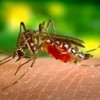
Brazil Measures Rain Against Dengue
Mosquitoes that transmit dengue fever need clean, still water and warm night temperatures to reproduce and thrive. That is common knowledge, but now scientists in Brazil have managed to measure the relation between increased rainfall and temperatures and the risk of dengue epidemics in this city.
Government “Continuity” Winning Over in Venezuela
While Hugo Chávez is being treated for serious illness in Havana, the premise of government “continuity” is winning out in his home country, along with plans to postpone his swearing-in ceremony for a new term as president of Venezuela, due to take place on Thursday Jan. 10.Cuban Sugar Sector Aims for Recovery in 2013
The Cuban sugar industry seems to be experiencing a rebirth thanks to an economic modernisation programme that has allowed for an injection of foreign capital as part of a strategy to strengthen and diversify this key sector.
Historic Mapuche Land Conflict Flares Up
A string of attacks in the southern Chilean region of Araucanía, where native Mapuche people are struggling for their land rights, puts the spotlight squarely on what analysts call the “supine ignorance” displayed by authorities about the country’s history.
Groups Decry Obama’s Failure to Close Guantanamo
Human rights groups are denouncing President Barack Obama’s failure to veto a defence bill that will make it far more difficult for him to fulfill his four-year-old pledge to close the Guantanamo detention facility this year.
Paediatricians for a Healthy Environment
A group of Argentine paediatricians has been combining work on environmental protection and child health for more than 10 years. It appears a basic principle to apply, but the task is turning out to be increasingly challenging and complex.
Controversial Anti-TB Drug Approved in U.S.
The U.S. Food and Drug Administration (FDA), the sector’s primary regulator, has given accelerated approval to a controversial new drug for use by patients suffering from forms of tuberculosis that have proven resistant to other medicines.
The Rise of Ethiopia’s Sole Rebels
Innovative Ethiopian footwear manufacturer Sole Rebels will open its second retail outlet in Taiwan this year. With ambitions to open 30 more franchise stores across the world in countries like the United States, Australia, Italy and Japan, Sole Rebels, the largest African footwear brand, is now fast becoming a global competitive brand.« Previous Page — Next Page »





The Week with IPS

NEXT STOP - SDGs
Tracking global progress towards a sustainable world
Tracking global progress towards a sustainable world
