Languages
Thursday, October 8, 2026



News and Views from the Global South
RIGHTS-PERU: Spying on Social Movements
Business Track, a private security firm, was engaged in spying on non-governmental organisations, environmental activists, social movements and opposition groups in Peru, sources in the police, prosecutor’s office and courts investigating the case told IPS.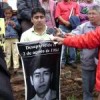
PERU: ‘My Father Was Killed for Reporting on Rights Abuses’
"I became a journalist to find out how they killed my father, to discover where his body is, and to take those responsible for his death to court," Boris Ayala told IPS. "I am not going to rest until I find out the whole truth."CORRUPTION-PERU: Parliament Investigates PetroTech Sale
At the government's request, the Peruvian parliament has set up a commission to investigate alleged irregularities in the sale of Petro Tech Peruana (PTP) to Ecopetrol, the Colombian state oil company, and the South Korean National Oil Corporation (KNOC). But opposition politicians are sceptical of the outcome and have refused to participate.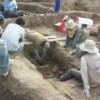
PERU: Furnaces Used to Remove Evidence of Dirty War Killings
The discovery of more and more bodies of victims of Peru’s dirty war on the grounds of the Los Cabitos military base, which served as a torture and extermination centre during the 1980-2000 armed conflict, have substantiated the accounts of political prisoners who managed to survive.PERU: Navy Intelligence Agents Arrested for Moonlighting as Private Spies
Peruvian prosecutors and police have busted a ring of active and retired Peruvian navy intelligence agents who moonlighted as telephone tapping experts allegedly engaged in spying.PERU: No Crisis for Arms Purchases
The global economic crisis apparently has not affected the Peruvian government’s plan to modernise the armed forces, which is to cost 650 million dollars from here to 2011.PERU: Foreign Drug Mules Can Serve Sentences at Home
Two couriers from the Netherlands caught trying to smuggle 3.2 kilos of cocaine out of Peru may now be able to serve out their sentences in their own country.RIGHTS-PERU: Advocates of Military Impunity, Back on the Bench
Members of the military and one police officer who sat on military tribunals and covered up for alleged human rights violators during the authoritarian regime of Alberto Fujimori (1990-2000) have been reappointed as military judges by Peruvian President Alan García.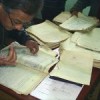
PERU: Undocumented War Survivors to Regain Identity Cards
More than half a million Peruvians who lost their personal documents during the 1980-2000 civil war will no longer have to assume the often impossible task of proving their identities, thanks to a new law.PERU: Guerrillas on the Warpath for Peace Talks
A column of Maoist Sendero Luminoso (Shining Path) guerrillas operating in the northeastern coca-growing valleys of the Upper Huallaga river in Peru appears to be carrying out attacks in pursuit of a peace agreement, to include an amnesty and the restoration of the rights of those who took up arms in 1980.PERU: El Fronton Massacre Case Heads Back to Inter-American Court
A ruling by Peru’s Constitutional Court that makes it impossible to bring the case of a 1986 massacre of 118 prisoners to trial will be taken to the Inter-American Court of Human Rights.RIGHTS-PERU: Fears of Bias in Fujimori Trial
Lawyers representing the families of the victims of two high-profile massacres committed in the early 1990s in Peru, and who are taking part in the trial against former president Alberto Fujimori, have questioned the independence of the future heads of the Supreme Court and Lima High Court.RIGHTS-PERU: Leftist Leaders Targeted by Anti-Terror Police
Based on information from a laptop computer belonging to Colombian guerrilla leader Raúl Reyes, Peru’s anti-terrorism police have requested arrest warrants for 14 leftist politicians and trade unionists from Peru for supposed ties to Colombia’s FARC guerrillas.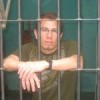
Q&A: "I Can't Be a Lifelong Suspect"
The prosecution in Peru has asked for a 20-year prison sentence for Roque Gonzáles La Rosa, a member of the now dismantled Peruvian chapter of the Continental Bolivarian Committee (CCB), inspired by the policies of left-wing Venezuelan President Hugo Chávez.ASIA-PACIFIC: More Public Spending to Ward Off Panic
With a call to the world not to allow fear and desperation to take over as a result of the economic crisis, Peruvian President Alan García closed the 16th summit of Asia Pacific Economic Cooperation (APEC) leaders Sunday.
LABOUR-PERU: Protest Against Bush and Alan Garcia
A demonstration in the Peruvian capital by left-wing political movements against U.S. President George W. Bush’s visit to the country turned into a protest Friday by hundreds of laid-off workers and trade unions in conflict with local and foreign companies.PERU: Army Chief to Appear Before Anti-Corruption Prosecutor
Peru’s army commander-in-chief, Edwin Donayre, will appear on Nov. 25 before anti-corruption prosecutor Marlene Berrú, who is investigating his alleged responsibility for 80,000 gallons of gasoline that are unaccounted for.RIGHTS-PERU: Activists Warn of “Impunity Measures”
The governing party in Peru is working to keep members of the military and police accused of human rights violations committed in the context of counterinsurgency operations out of the courts, on the argument that they are being unfairly targeted by the justice system.RIGHTS-PERU: Pressure to Amnesty Military, Police
The chairman of the congressional committee on defence and internal order in Peru, Edgard Núñez, has introduced a draft law to grant an amnesty to members of the military and police facing trial for human rights violations.
RIGHTS-PERU: Three More Bodies Found at Accomarca
The bodies of three civilians, victims of a 1985 massacre perpetrated by Peruvian soldiers in the highlands village of Accomarca, were disinterred by their families and judicial authorities. They may be the last to be exhumed by judicial order.PERU: Prosecutors Investigate Wiretapping Operation
Prosecutors in Peru are investigating illegal wiretapping allegedly committed by private security companies or police and military intelligence bodies.« Previous Page — Next Page »





The Week with IPS

NEXT STOP - SDGs
Tracking global progress towards a sustainable world
Tracking global progress towards a sustainable world
