Languages
Friday, October 9, 2026



News and Views from the Global South

Iranian Shadow Touches Egypt
The young activists who began Egypt’s popular uprising admit the online campaign that turned into the country’s largest ever anti-government street demonstrations has far exceeded their expectations. But as the movement gains momentum, protesters are beginning to think about what kind of state will emerge if President Hosni Mubarak falls. And many are worried.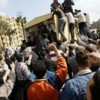
EGYPT: A Million Voices, One Message
Organisers called it Egypt’s "million man march". Whether they achieved that targeted head count is unclear, but their message was unequivocal.EGYPT: ‘Planned Anarchy’ Playing Into Mubarak’s Hands
The city squares where protesters battled riot police for four consecutive days were unexpectedly quiet late Sunday night, as Egyptians fighting to topple the Mubarak regime returned home to defend their neighbourhoods from looters and thugs.EGYPT: Endgame Approaches for Mubarak
Egyptian President Hosni Mubarak named a vice-president and agreed to form a new government, but protesters calling for Mubarak’s removal said that they would not let up until the 83-year-old "Pharaoh" stepped down.EGYPT: Army Loyalty to Mubarak Will be Crucial
Columns of tanks and armoured personnel carriers moved in to take up position vacated by weary riot police on Friday night as Egypt’s embattled president attempted to restore order to his nation’s capital.EGYPT: Eerie Silence Follows ‘Unprecedented Brutality’
Tear-gas and smoke wafted through the air of the Egyptian capital on Friday as police moved swiftly to disperse anti-government demonstrations throughout the city.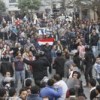
EGYPT: Embattled Regime Cuts Internet Services
Twitter was an early casualty. Then Facebook access became spotty. But when the Internet itself went down, Egyptian pro-democracy activists knew their protests were having an effect.Dispirited Arabs Burning for Change
Upset over a policy that prevented him from buying subsidised food, Egyptian restaurant owner Abdou Abdel Moneim travelled to Cairo to find someone in parliament to help. When security officers prevented him from submitting his complaint to MPs entering parliament, the 49-year-old man doused himself in fuel and cursed the Egyptian regime as he disappeared into a ball of fire.Arab Regimes Fear Bread Intifadah
"Break my heart but don’t come near my bread," goes an old Arabic proverb. Failure to observe it has often come at a high political price.
BIODIVERSITY: Pharaonic Palm at Risk of Extinction, Again
Environmentalists have called for more efforts to protect the argun palm, a rare desert tree prized by the ancient Egyptians that is on the verge of extinction.EGYPT: Church Bombing Fuels Sectarian Rift
It was a tragic year for Egypt’s minority Coptic Christian community that began with a drive-by shooting at a church in southern Egypt, and ended in deadly clashes near Cairo after authorities halted construction of a church. As 2010 came to a close, Copts ushering in the New Year with a midnight mass in the northern Egyptian city of Alexandria wondered if 2011 would be any better.MIDEAST: Egypt’s Duplicity Stands Exposed
More than 250,000 classified U.S. diplomatic cables released by online whistle- blower WikiLeaks include statements made behind closed doors that could prove embarrassing for Egypt’s government, say analysts.
No Sex Education Please, We’re Arab
Civil society has warned of adverse social and health consequences after the Egyptian government ordered the removal of content related to male and female anatomy, reproductive health and sexually transmitted diseases (STDs) from the school curriculum.
Fooling Fish to Grow and Multiply
Surrounded by glass jugs and beakers full of bubbling green slime, Mohamed Ashour appears to be experimenting with a new formula for pea soup. As part of his daily rounds, the Egyptian researcher checks the valves on the tubing connecting each vessel, ensuring their verdant-hued contents are adequately aerated.Finding More Fish, Between Egypt and Vietnam
Combine the experience of Africa's leading freshwater fish producer with that of one of Asia's fastest-growing mariculture sectors. Fisheries experts in Egypt and Vietnam hope it will lead to a robust aquaculture industry that utilises both river and sea to feed growing populations and generate export revenues.EGYPT: Gag Tightens on Media Ahead of Elections
Media watchdogs see the "invisible hand" of the ruling party behind a string of firings and resignations that have removed some of Egypt's most prominent government critics from their soapboxes just weeks before parliamentary elections.DEATH PENALTY: Arab Abolitionist Movements Seek Unity
Rights activists have called for nascent abolitionist movements of the Middle East and North Africa to coordinate their efforts to press Arab regimes to end capital punishment.DEATH PENALTY: Arab States Pushed Towards Abolition
Rights activists met in the Egyptian port city of Alexandria this week to discuss and adopt effective strategies to persuade Arab regimes to abolish the death penalty.
Poor Thirst as Nile Taps Run Dry
The midday sun punishes a group of veiled women as they wait in line to fill their buckets and jerrycans. They have travelled on foot to a rusty tap on the outskirts of Cairo that gushes irrigation water never intended for human consumption.EGYPT: Military Court Sentences Civilian Workers
An Egyptian military court handed down sentences Monday in the trial of eight civilian factory workers who led a protest against deteriorating safety conditions in an army-owned factory. Rights groups say the trial should never have taken place.
Food Cartels Feast on Ramadan Profits
Opportunistic food traders have been blamed for soaring food prices across the Middle East that have added a financial burden on families observing the Islamic holy month of Ramadan.« Previous Page — Next Page »





The Week with IPS

NEXT STOP - SDGs
Tracking global progress towards a sustainable world
Tracking global progress towards a sustainable world
