Languages
Sunday, October 18, 2026



News and Views from the Global South
COLOMBIA: Hostages and Peace as Pawns
This time, the Colombian government has not complained that they do not know the coordinates of the place where four politicians held as hostages by the Revolutionary Armed Forces of Colombia (FARC) are to be released.COLOMBIA: Newfound Hope on Sixth Anniversary of Ingrid’s Kidnapping
The sensation on the sixth anniversary of the kidnapping of former Colombian presidential candidate Ingrid Betancourt by the FARC guerrillas differs significantly from the utter pessimism of previous years. "Today there is hope," her husband Juan Carlos Lecompte told IPS.RIGHTS-COLOMBIA: Workers of the World Unite – in Anti-Paramilitary Vigil
The world’s largest trade union federation has called a Mar. 6 global demonstration to pay homage to victims of Colombia’s far-right paramilitary militias and their allies in the state, political establishment and business community.COLOMBIA: Gov’t Throws Support Behind Anti-Guerrilla March/CORRECTION*/
Colombian ambassador to China Guillermo Vélez had hoped to be the first to lead a march against the FARC rebels called for noon Monday in Colombia, but scheduled to take place on Sunday in Beijing.COLOMBIA: Interference and Belligerence
The Colombian government "is not committed to peace, but obsessed with war," the Venezuelan Foreign Ministry said in a communiqué Thursday.COLOMBIA: Hostages’ Release, Seen from the Other Side
While the international spotlight was shined on two women hostages released by Colombia’s FARC guerrillas, IPS interviewed by telephone a woman who reflects the other side of the hostage crisis.
COLOMBIA: Hostages Handed Over by Rebels
Two Colombian politicians held hostage by the FARC guerrillas are on their way to Caracas in Venezuelan helicopters sent to a secret location in the Colombian jungle early Thursday.
COLOMBIA: Black Communities Organise in Country’s Poorest Region
During the "high season" of popular festivals in Colombia’s Chocó region, "pregnant girls as young as 13 start flowing in," says a nursing assistant in the obstetrics department at the hospital of the provincial capital, Quibdó.COLOMBIA: Hostage Release “Blasted”
- "Uribe, reflect, my brother, let’s work for peace," said Venezuelan President Hugo Chávez when the release of three hostages by Colombia’s FARC guerrillas was postponed over the New Year’s holidays.RIGHTS-COLOMBIA: Walking from Bogota to Caracas for Peace
After walking 800 km from Bogota, Colombian teacher Gustavo Moncayo, known as the "peace walker", crossed into Venezuela on his way to Caracas. Escorted by hundreds of supporters, the 55-year-old Moncayo was handed a torch, and a Venezuelan flag was draped around his shoulders.
COLOMBIA: FARC to Release Three Hostages to Chavez
The leaders of Colombia’s FARC guerrillas ordered the release of two women hostages and the young son of one of them as a gesture of "compensation" for the frustrated facilitation efforts made by Venezuelan President Hugo Chávez and Colombian Senator Piedad Córdoba, and of goodwill towards the hostages’ families.
COLOMBIA: Jail the Messenger
The treatment given to messengers has sparked wars or has been seen as a sign of political will and mutual trust and confidence.
COLOMBIA-VENEZUELA: Diplomatic Crisis Worries Border Dwellers
Rubén Plata works like "fly-by-night" capital: wherever he finds the best returns is where he can be found. He moves from one activity to the next without looking back, although he draws the line at anything "crooked."VENEZUELA-COLOMBIA: ‘Freezing’ of Relations as Seen from the Border
When this correspondent crossed the border from Venezuela to Colombia at the Venezuelan town of Ureña on the way to Cúcuta, the border post was practically deserted.COLOMBIA: Door ‘Definitively’ Closed on Chavez’s Mediation
"Hey, I want to ask you a question. How many police officers and soldiers are being held hostage by the FARC?" Venezuelan President Hugo Chávez asked Colombian army chief General Mario Montoya.COLOMBIA: Chavez Asks Uribe for Patience in Hostage Talks
"Impatience is not a good thing," Venezuelan President Hugo Chávez responded to the Colombian government’s announcement of a December deadline for his efforts to broker an agreement for an exchange of imprisoned guerrillas for hostages held by the rebels.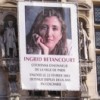
COLOMBIA: Chavez-FARC Meeting Moves Hostage Talks Forward
The start of direct talks between Venezuelan President Hugo Chávez and an envoy of the leader of Colombia’s FARC guerrillas took the Colombian government by surprise.
COLOMBIA: Malaria Winning the Battle in Choco
The Atrato River is "full of malaria", according to a dozen men in rubber boots, standing in the water that has inundated the village of Tanguí, in Colombia's north-western jungle.
COLOMBIA: A Painful Pilgrimage
"Father Antún! Father Antún is back!" were the happy, surprised shouts heard by the IPS news team accompanying Catholic priest Antún Ramos as he returned to his former parish in the village of Bellavista in northwestern Colombia.
Malaria Winning in Chocó
Malaria has taken hold in the Colombian department of Chocó and across almost the entire country, which will not meet the international goal of halving the disease by 2010.
ELECTIONS-COLOMBIA: The Going Rate for Votes
What was the going rate for a vote? "About 100,000 pesos (50 dollars)," says Víctor Raúl Mosquera, the ombudsman for the northwestern Colombian department (province) of Chocó.« Previous Page — Next Page »





The Week with IPS

NEXT STOP - SDGs
Tracking global progress towards a sustainable world
Tracking global progress towards a sustainable world
